New Caledonian Organic Law Drafting Begins Amidst Complex Political Landscape
The process of drafting the future organic law for New Caledonia officially commenced this week, as a dedicated committee began its function on Wednesday, March 11th. This development follows the signing of the Elysée-Oudinot Agreement in January, a pivotal moment in the ongoing negotiations surrounding the territory’s institutional future. The committee, led by a former Secretary-General of the High Commission, will focus on clarifying specific points within the constitutional reform outlined in the agreement, aiming to establish a framework for New Caledonia’s evolution. This move represents a significant step towards addressing the complex political challenges facing the French territory, though the absence of key independence groups from the initial agreement continues to cast a shadow over the process.
The Elysée-Oudinot Agreement, building upon the Bougival Accord signed in July 2025, seeks to define New Caledonia’s institutional framework. But, its ratification was notably achieved without the participation of the Front de libération nationale kanak et socialiste (FLNKS), the primary independence movement, which had previously rejected the Bougival proposal and boycotted subsequent discussions in Paris. This exclusion raises questions about the long-term stability and inclusivity of any resulting legislation. The agreement, as it stands, outlines a pathway for the progressive transfer of certain “sovereign” competencies – including defense, currency, security, public order, and justice – to the Caledonian government, contingent upon approval by a reinforced majority within the local Congress. Some observers have likened this process to a “scenario à l’africaine,” suggesting a gradual erosion of French sovereignty in the territory.
The Elysée-Oudinot Agreement: A Historical Context
The current situation is rooted in a long history of negotiations concerning New Caledonia’s political status. The 1960 constitutional law that granted independence to Madagascar and Mauritania serves as a historical parallel, according to Stéphane Diémert, an alumnus of the École nationale d’administration (ENA). Diémert argues that the Elysée-Oudinot agreement, like the 1960 law, appears to be moving towards independence without a formal referendum. This assertion is based on the agreement’s provisions for transferring competencies without necessarily requiring a direct vote from the Caledonian population.
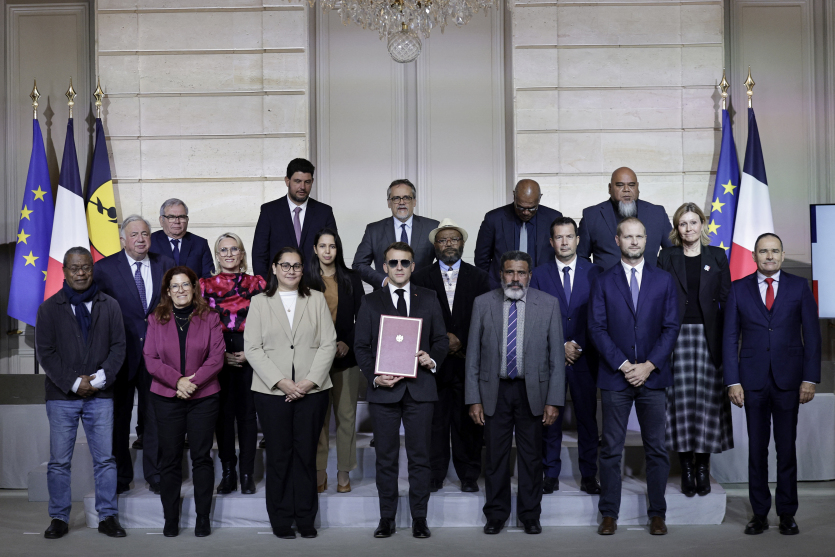
President Emmanuel Macron convened a meeting with representatives from New Caledonia on January 19, 2026, at the Élysée Palace, following three days of intensive discussions. The President emphasized the importance of compromise and responsibility in navigating the complex path towards institutional evolution. He also acknowledged the unacceptable threats faced by some participants during the negotiations, offering both personal and republican support. The agreement aims to address the future institutional setup of New Caledonia, a French overseas territory located in the southwest Pacific Ocean.
Key Provisions and Concerns
The core of the current process lies in the drafting of the organic law, which will translate the broad principles outlined in the Elysée-Oudinot Agreement into concrete legal provisions. This law will define the organization of the future Caledonian state, while reaffirming New Caledonia’s integration within the French Republic. A key element is the inclusion of recognition of the Kanak identity within the territory’s constitutional framework. However, the lack of consensus with the FLNKS remains a significant obstacle. The FLNKS’s absence from the negotiating table raises concerns about the legitimacy and representativeness of the final outcome.
The agreement stipulates that a “majority of Caledonians” must approve the progressive transfer of sovereign competencies, as determined by the local Congress voting with a reinforced three-fifths majority. This requirement introduces a complex political dynamic, as it necessitates broad support within the Congress to enact significant changes to the territory’s institutional structure. The specifics of how this “majority” will be defined and measured remain subject to further clarification during the drafting of the organic law. The transfer of competencies includes crucial areas such as defense, currency, security, public order, and justice, representing a substantial shift in the balance of power between New Caledonia and France.
The Role of the Drafting Committee
The committee tasked with drafting the organic law is led by a former Secretary-General of the High Commission, a position that historically held significant administrative authority in New Caledonia. This leadership suggests a focus on ensuring the legal and administrative coherence of the new framework. The committee’s mandate includes clarifying specific points within the constitutional reform, addressing potential ambiguities, and ensuring that the organic law aligns with the broader principles of the Elysée-Oudinot Agreement. The committee’s work is expected to be completed in the coming months, paving the way for the formal adoption of the organic law by the French Parliament and the New Caledonian Congress.
The drafting process is expected to be closely scrutinized by all stakeholders, including the French government, the various political factions within New Caledonia, and international observers. The outcome will have far-reaching implications for the territory’s political, economic, and social future. The success of the process hinges on the ability of the committee to navigate the complex political landscape and forge a consensus that is acceptable to a broad range of Caledonian voices. The potential for further political instability remains a concern, particularly if the FLNKS and its supporters feel excluded from the process.
Looking Ahead: Challenges and Opportunities
The coming months will be critical in determining the future of New Caledonia. The drafting of the organic law represents a crucial step towards implementing the Elysée-Oudinot Agreement and establishing a new institutional framework for the territory. However, significant challenges remain, including the necessitate to address the concerns of the FLNKS and ensure that the process is inclusive and transparent. The successful implementation of the agreement will require sustained dialogue, compromise, and a commitment to building a shared future for all Caledonians.
The situation in New Caledonia is being closely watched by other French overseas territories and by international observers interested in the evolving dynamics of decolonization and self-determination. The outcome of the current process could serve as a model – or a cautionary tale – for other territories grappling with similar challenges. The French government has a vested interest in ensuring a stable and prosperous future for New Caledonia, and its role in facilitating a successful outcome will be crucial. The next key development will be the publication of the draft organic law, expected in the coming months, which will provide a clearer picture of the proposed institutional framework.
The committee’s work is scheduled to continue throughout the spring, with the aim of presenting a draft organic law for consideration by the end of the year. Further updates on the progress of the drafting process will be closely monitored by the World Today Journal, providing ongoing coverage of this pivotal moment in New Caledonia’s history. Readers are encouraged to share their thoughts and perspectives on this important issue in the comments section below.
Worth a look