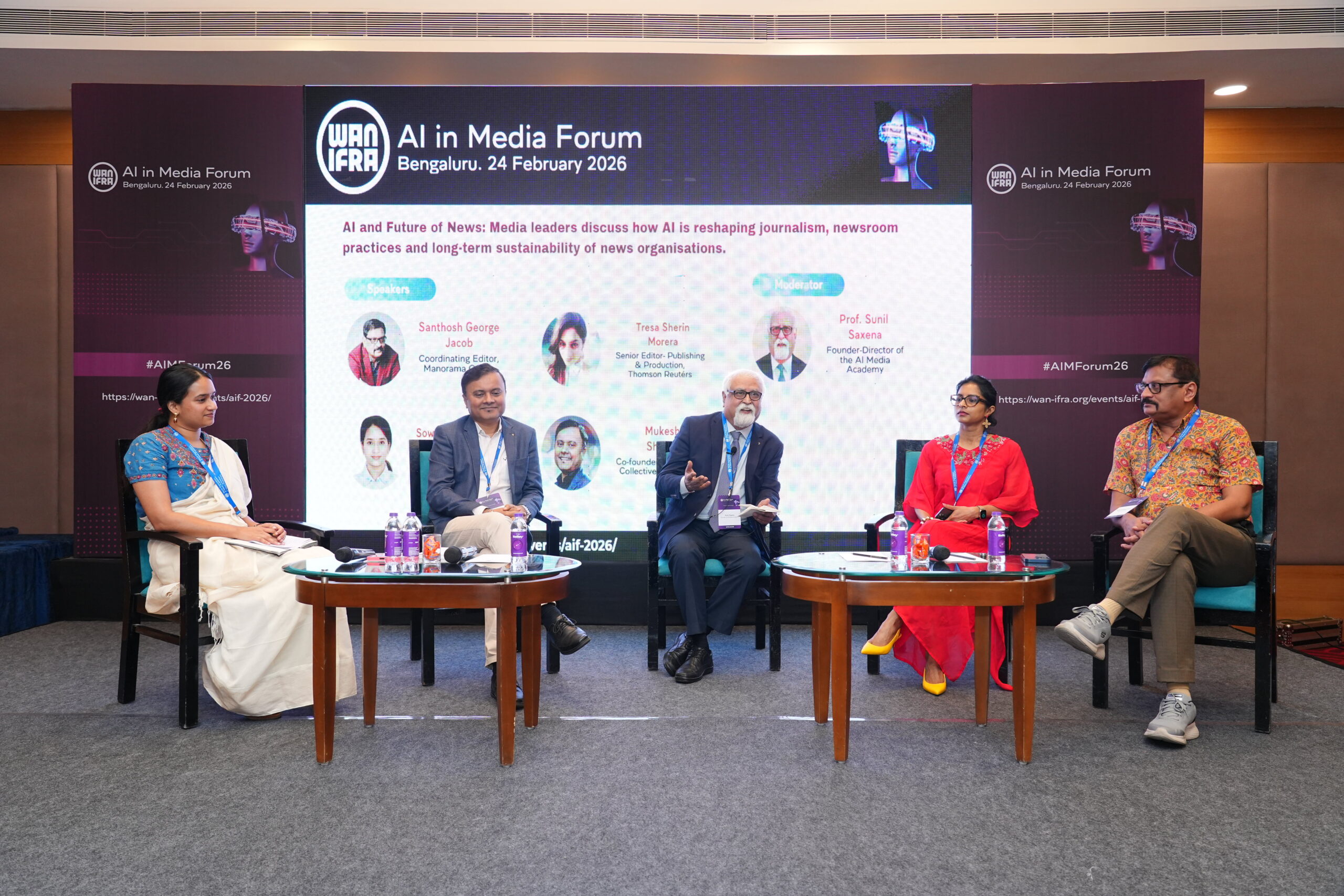
Bangalore, India – The rapidly evolving landscape of media and technology converged this week at the AI in Media Forum, hosted in Bangalore. Discussions centered on the responsible and business-driven adoption of artificial intelligence across newsroom operations, from content creation and distribution to audience engagement and revenue generation. The forum underscored a critical shift: AI is no longer a futuristic concept, but a present-day necessity for news organizations seeking to thrive in an era of information abundance and evolving consumer habits.
The event, organized by WAN-IFRA, brought together industry leaders to explore practical applications of AI, emphasizing measurable impact, robust governance, and the transformative potential of the technology. A key theme throughout the forum was the need to balance the efficiencies offered by AI with the preservation of editorial integrity and the vital role of human journalists. The discussions highlighted that AI should serve as a powerful tool to augment, not replace, the skills and expertise of news professionals.
Keynote Address Highlights the Challenges of Digital Abundance
The forum opened with a keynote address from Avinash Mudaliar, Co-founder and CEO of HT Labs. Mudaliar, a veteran of India’s digital media sector, addressed the implications of an “exploding content supply” and the resulting “collapsing scarcity” in the digital realm. According to WAN-IFRA, Mudaliar’s presentation focused on the challenges of building sustainable business models for both over-the-top (OTT) platforms and news organizations in this environment. He has a proven track record of innovation, having led the launch of platforms like OTTplay, Slurrp, HT School, Mint Genie, and Upublish since 2020. His function at HT Labs demonstrates a commitment to driving product development across content, technology, and consumer experiences.
Balancing Efficiency and Editorial Integrity
A leadership panel delved into how AI is reshaping editorial strategy and long-term sustainability within Indian news organizations. Participants emphasized the importance of leveraging AI to streamline workflows, reduce workloads, and enhance the credibility of news reporting, allowing journalists to focus on producing high-value, in-depth content. The panel featured Sowbhagyalakshmi K.T. (Director, The Printers Mysore), Mukesh Sharma (Co-founder & Dy CEO, Collective Newsroom), Tresa Sherin Morera (Senior Editor – Publishing & Production, Thomson Reuters), and Santhosh George Jacob (Coordinating Editor, Manorama Online). These leaders shared insights into their organizations’ experiences with AI implementation and the challenges they’ve encountered.
The discussion underscored the need for careful consideration of ethical implications and the potential for bias in AI algorithms. Panelists stressed the importance of transparency and accountability in the use of AI, ensuring that it aligns with journalistic principles and serves the public interest. The focus wasn’t solely on cost reduction, but on enhancing the quality and impact of journalism through intelligent automation.
AI Predictions for 2026 and Beyond
Looking ahead, Ezra Eeman, AI Expert and Director of Strategy & Innovation at NPO (Netherlands), offered predictions for the future of AI in media during a virtual session. While specific predictions weren’t detailed in the source material, Eeman’s participation highlights the growing interest in understanding the long-term implications of AI for the industry. WAN-IFRA’s speaker profile positions Eeman as a thought leader in the field of AI and its application to media.
Practical Implementation and Case Studies
The forum didn’t remain solely in the realm of theory. Afternoon sessions showcased practical implementations of AI in newsrooms, featuring case studies from the WAN-IFRA AI Catalyst South Asia Cohort 2 program. Examples included AI-assisted coding workflows at The Hindu, AI-powered fact-checking initiatives at The Logical Indian, and AI-driven Optical Character Recognition (OCR) technology for advertising and sales intelligence at Sakal Media Group. These examples demonstrate the diverse ways in which AI can be integrated into various aspects of newsroom operations.
The use of AI-powered fact-checking is particularly noteworthy, given the increasing prevalence of misinformation and disinformation. By automating the process of verifying information, news organizations can enhance the accuracy and reliability of their reporting, building trust with their audiences. AI-assisted coding workflows can also free up journalists from tedious tasks, allowing them to focus on more creative and analytical work.
Real-World AI Applications: Study Tour Insights
The AI Media Week culminated in a curated Study Tour across leading technology and media organizations in Bengaluru. Participants gained firsthand exposure to real-world applications of AI in areas such as cloud infrastructure, audience analytics, generative AI, localization technologies, and digital newsroom operations. The tour included visits to The News Minute, CleverTap, NeuralGarage, Bamboobox, and PocketFM. These visits provided valuable insights into how AI is being used to innovate and improve media products and services.
The News Minute, known for its independent reporting, likely showcased its use of AI for data analysis and content personalization. CleverTap, a customer engagement platform, likely demonstrated how AI can be used to understand audience behavior and deliver targeted content. NeuralGarage and Bamboobox, specializing in AI-driven solutions, likely showcased their cutting-edge technologies. PocketFM, a platform for audio content, likely demonstrated how AI can be used to enhance the user experience and personalize recommendations.
Prior to the main forum, a workshop enabled journalists and editors to build custom AI-powered newsroom applications, fostering hands-on learning and experimentation. This proactive approach to skill development is crucial for ensuring that news organizations are well-equipped to embrace the opportunities presented by AI.
WAN-IFRA’s AI in Media Initiative
The Bangalore forum is part of WAN-IFRA’s broader global AI in Media Initiative, which aims to support news organizations in adopting AI responsibly and strategically. WAN-IFRA provides resources, training, and networking opportunities to help news organizations navigate the complexities of AI and leverage its potential for innovation and growth. Further global editions of the forum are planned, indicating a continued commitment to fostering AI adoption within the media industry.
The Future of Journalism in the Age of AI
The AI in Media Forum in Bangalore represents a significant step towards understanding and harnessing the power of artificial intelligence in the news industry. The discussions highlighted the importance of a strategic and ethical approach to AI adoption, one that prioritizes editorial integrity, journalistic values, and the needs of audiences. As AI continues to evolve, news organizations that embrace these principles will be best positioned to thrive in the rapidly changing media landscape.
The integration of AI isn’t about replacing journalists; it’s about empowering them with new tools and capabilities. By automating routine tasks, AI can free up journalists to focus on investigative reporting, in-depth analysis, and storytelling – the core functions of a healthy and vibrant press. The challenge lies in ensuring that AI is used responsibly and ethically, and that its benefits are shared by all stakeholders.
The next step in WAN-IFRA’s AI in Media Initiative will be the announcement of further global editions of the forum, providing additional opportunities for knowledge sharing and collaboration. Stay tuned to WAN-IFRA’s website for updates on future events and resources. We encourage you to share your thoughts on the role of AI in journalism in the comments below.
Worth a look