The escalating conflict between Iran and its adversaries is entering a dangerous new phase, marked by a hardening of diplomatic positions and a significant increase in direct military engagements. After successfully absorbing the initial retaliatory strikes following an attack on Iranian soil, Tehran has signaled a complete closure of diplomatic channels with Washington, although simultaneously launching a series of operations targeting interests of both the United States and Israel throughout the region. The situation is raising fears of a wider regional war and, critically, potential disruption to global energy supplies.
The current crisis stems from a complex web of escalating tensions, beginning with the April 1, 2024, strike on the Iranian consulate in Damascus, Syria, which Iran blamed on Israel. This attack, which killed several Iranian military officials, prompted a retaliatory barrage of drones and missiles launched by Iran towards Israel on April 13th. While the vast majority of these projectiles were intercepted with assistance from the United States, the UK, and Jordan, the incident dramatically heightened anxieties about a potential full-scale conflict. Now, eleven days into a sustained period of heightened military activity, the situation appears increasingly volatile, with both sides signaling a willingness to continue operations.
The potential for miscalculation and escalation remains extremely high. The involvement of multiple actors – including the United States, Israel, Iran, and various proxy groups – complicates the situation and increases the risk of unintended consequences. The conflict is unfolding against a backdrop of existing regional instability, including ongoing conflicts in Syria, Yemen, and Iraq, further exacerbating the potential for a broader conflagration. The stakes are particularly high given Iran’s strategic importance in the global energy market, and the potential for disruptions to oil and gas supplies.
Diplomatic Breakdown and Iranian Resolve
In a significant escalation of diplomatic tensions, Iranian Foreign Minister Hossein Amir-Abdollahian announced that a return to negotiations with the United States is “off the table.” According to reports from Deutsche Welle, Amir-Abdollahian stated that Washington has chosen a path of escalation and support for attacks against Iran, despite previous progress made during earlier rounds of talks. This declaration effectively ends, at least for the foreseeable future, any prospect of a negotiated resolution to the underlying issues driving the conflict.
Mohammad Bagher Ghalibaf, the speaker of the Iranian parliament, further underscored this hardline stance, stating in a post on X (formerly Twitter) that Iran does not seek a ceasefire. He emphasized the require to “strike the aggressor in the face so that they learn a lesson and never suppose about attacking beloved Iran again.” This rhetoric signals a determination to respond forcefully to any perceived threats and a rejection of any attempts to de-escalate the situation through diplomatic means.
Fatemeh Mohajeran, a government spokesperson, echoed this sentiment, stating that the attacks against Iran are aimed at “tearing apart the unity of Iran” and are deliberately targeting civilians. She made these remarks from in front of Gandhi Hospital, which had reportedly been targeted in an attack. This framing of the conflict as an assault on Iranian sovereignty and its people is likely intended to galvanize public support for continued resistance.
Escalating Military Operations
On the military front, the Iranian armed forces have claimed responsibility for an attack targeting an oil refinery and fuel tanks in Haifa, Israel, using “destructive drones.” Deutsche Welle reports that this operation was presented as a direct response to attacks on Iranian oil facilities. The claim, if verified, represents a significant escalation in the direct targeting of Israeli infrastructure.
reports indicate that the Islamic Revolutionary Guard Corps (IRGC) launched five rockets at the headquarters of the U.S. Military in Harir Base, located in the Kurdistan Region of Iraq. This attack demonstrates Iran’s willingness to extend its military reach beyond its immediate borders and to directly challenge U.S. Interests in the region. The targeting of U.S. Forces raises the risk of a direct confrontation between Iran and the United States.
Internally, the IRGC announced the successful interception and destruction of a Heron TP drone in the airspace over Tehran, highlighting the heightened state of alert within Iran’s integrated air defense network. This demonstrates Iran’s commitment to defending its airspace and its ability to respond to perceived threats. The Heron TP is a medium-to-high-altitude long-endurance unmanned aerial vehicle (UAV) developed by Israel Aerospace Industries.
U.S. And Israeli Response and Concerns Over Energy Supplies
The United States and Israel have been engaged in a joint offensive against Iran for the past ten days, with Israel announcing the commencement of large-scale strikes against targets in Tehran, Isfahan, and southern Iran on Monday, March 10, 2026. Sky News Arabia reports that the Israeli military stated the strikes targeted infrastructure belonging to Iran’s “terrorist regime.” Specifically, the attacks reportedly focused on facilities involved in the production of ballistic missile engines and launch sites, as well as military infrastructure associated with the Islamic Revolutionary Guard Corps and the Basij paramilitary force.
The intensification of these strikes raises serious concerns about the potential for further escalation and the impact on regional stability. The targeting of infrastructure in Isfahan, a major industrial city and home to Iran’s nuclear facilities, is particularly sensitive and could be interpreted as a direct challenge to Iran’s nuclear program. The potential for a miscalculation or unintended consequence in this volatile environment is extremely high.
Beyond the immediate military implications, the conflict is also raising concerns about the potential disruption to global energy supplies. Iran is a major oil producer, and any significant disruption to its oil exports could have a significant impact on global oil prices. The Strait of Hormuz, a critical waterway for oil tankers, is located near the conflict zone, and any disruption to shipping through the strait could further exacerbate the situation. The potential for a “catastrophe” in energy markets, as some analysts have warned, is a growing concern.
Trump’s Warning and the Shifting Geopolitical Landscape
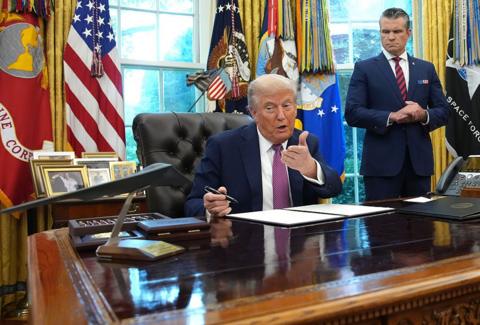
Adding another layer of complexity to the situation, former U.S. President Donald Trump has issued a stark warning to Iran, threatening them with “death and fire.” While the specifics of this warning remain unclear, it underscores the potential for a more aggressive U.S. Response should the conflict escalate further. Trump’s previous administration adopted a policy of “maximum pressure” against Iran, including the imposition of crippling economic sanctions, and his return to office could signal a renewed commitment to this approach.
The broader geopolitical implications of the conflict are also significant. The crisis is likely to further strain relations between the United States and Iran, and could lead to a realignment of alliances in the region. The involvement of other regional actors, such as Saudi Arabia, Turkey, and Qatar, could further complicate the situation and increase the risk of a wider conflict. The potential for a protracted and destabilizing conflict in the Middle East is a major concern for the international community.
Looking Ahead
The situation remains highly fluid and unpredictable. The cessation of diplomatic efforts, coupled with the intensification of military operations, suggests that the conflict is likely to continue for the foreseeable future. The risk of miscalculation and escalation remains extremely high, and the potential for a wider regional war cannot be ruled out. The international community must prioritize diplomatic efforts to de-escalate the situation and prevent a further deterioration of regional stability.
The next key development to watch will be the response from Iran to the latest Israeli strikes. Any further escalation by Iran could prompt a more forceful response from Israel and the United States, potentially leading to a full-scale conflict. The international community must remain vigilant and work to prevent a catastrophic outcome. The situation demands careful diplomacy and a commitment to finding a peaceful resolution to the underlying issues driving the conflict.
What are your thoughts on the escalating tensions in the Middle East? Share your perspectives in the comments below, and please share this article with your network to raise awareness about this critical situation.
Worth a look