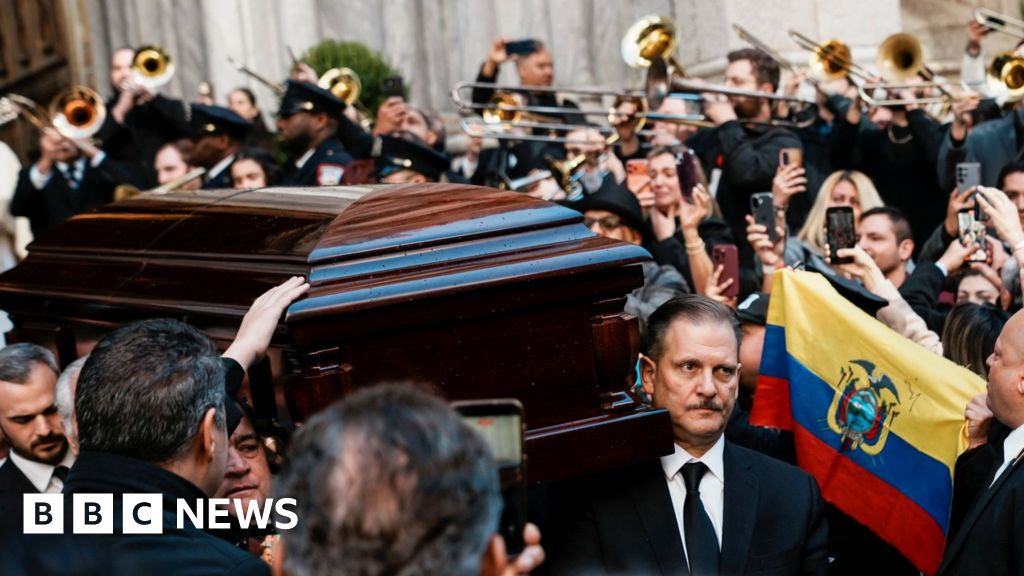
A Trombone Salute: New York Pays Tribute to Salsa Icon Willie Colón
New York City bid farewell to Willie Colón, the Grammy-nominated “architect of urban salsa,” with a moving funeral Mass held at St. Patrick’s Cathedral on Monday, March 9, 2026. The service, attended by family, friends, and a legion of fans, was a vibrant celebration of the life and legacy of the Bronx-born musician who passed away on February 21, 2026, at the age of 75. A particularly poignant moment came as Colón’s body departed the cathedral, accompanied by a resounding symphony of trombones – a fitting tribute to the instrument he mastered and the music that defined his career.
Colón’s influence extended far beyond the realm of music. He was a cultural icon, a social activist, and a voice for the Nuyorican community. His music, a dynamic blend of salsa, jazz, rock, and rhythms from across Latin America, resonated with generations and broke down musical barriers. The outpouring of grief and respect following his death underscores the profound impact he had on the music world and the hearts of countless individuals. The funeral Mass served not only as a mourning for a loss, but also as a celebration of a life dedicated to artistic expression and social commentary.
From the Bronx to St. Patrick’s: A Life in Music
Born William Anthony Colón Roman in the Bronx to Puerto Rican parents, Colón’s journey to musical stardom began at the age of 12 when he started learning the trumpet. He soon switched to the trombone, an instrument that would become synonymous with his name and his sound. He rose to prominence in the 1970s, pioneering a new style of salsa that reflected the realities of urban life. His music often addressed social issues, giving voice to the struggles and triumphs of marginalized communities.
Colón’s breakthrough album, El Malo, released in 1972, reportedly sold over 300,000 copies, according to his biography on the LA Philharmonic website, establishing him as a major force in the Latin music scene. He collaborated with numerous artists throughout his career, including the legendary Héctor Lavoe, with whom he formed a groundbreaking musical partnership. Their collaborations produced some of the most iconic salsa songs of all time, solidifying their place in music history.
A Cathedral Filled with Music and Memories
The funeral Mass at St. Patrick’s Cathedral was a testament to Colón’s widespread influence. The service included performances by musicians, many of whom were trombonists, paying homage to the instrument that defined Colón’s artistry. Images from the funeral, captured by Associated Press photographer Seth Wenig, showed musicians warming up and performing outside the cathedral, creating a vibrant and emotional atmosphere. One attendee was seen wearing a jacket emblazoned with an image of Colón, a visual representation of the deep connection fans felt with the artist.
According to reporting from NY1, the atmosphere inside the cathedral was equally moving. Colón’s sons delivered a heartfelt eulogy, sharing personal memories of their father and expressing gratitude for the outpouring of support from fans around the world. They revealed that it was their father’s dream to have his funeral held at St. Patrick’s Cathedral, a wish that was ultimately fulfilled. “Everyone knows Willie ‘El Malo,’ Willie El Salsero, Willie the composer, even Willie the sheriff, but to us he was Papa,” his son Diego Colón shared with those in attendance.
Beyond the Music: Colón’s Legacy of Activism
Willie Colón was more than just a musician; he was a passionate advocate for social justice. His music often tackled difficult topics, such as poverty, discrimination, and police brutality. He used his platform to raise awareness about the challenges faced by marginalized communities and to inspire positive change. His commitment to activism earned him respect and admiration from people across the political spectrum.
Colón’s Puerto Rican heritage was a central part of his identity and his music. He proudly celebrated his culture and used his art to promote understanding and appreciation of Puerto Rican traditions. He grew up in the South Bronx, a neighborhood with a large Puerto Rican population, and his experiences growing up in the community deeply influenced his music and his worldview. He remained a strong advocate for Puerto Rican rights throughout his life.
A Final Farewell and a Lasting Impact
Following the funeral Mass at St. Patrick’s Cathedral, Willie Colón’s burial was held privately. Although, the public outpouring of grief and respect served as a powerful reminder of his enduring legacy. His music continues to inspire and uplift audiences around the world, and his commitment to social justice remains a beacon of hope for future generations.
The rhythms of Willie Colón may have fallen silent, but his music will continue to echo through the streets of New York City, and beyond. He leaves behind a rich musical catalog, a legacy of activism, and a profound impact on the hearts of those who knew and loved his function. His contributions to salsa music and Latin culture will be celebrated for years to come.
Musicians, primarily trombonists, play music as the body of Willie Colon leaves St. Patrick’s Church in New York, Monday, March 9, 2026. (AP Photo/Seth Wenig)
The music world mourns the loss of a true innovator and a cultural icon. As fans continue to celebrate his life and legacy, Willie Colón’s music will undoubtedly continue to inspire and uplift generations to come. Further details regarding memorial events and initiatives honoring Colón’s life and work are expected to be announced in the coming weeks by his family and representatives.
What are your favorite memories of Willie Colón’s music? Share your thoughts in the comments below, and please share this article with others who may appreciate his legacy.