London, United Kingdom – Tensions in the Middle East escalated Tuesday as former U.S. President Donald Trump issued a stark warning to Iran, threatening unprecedented military consequences should the nation deploy mines in the strategically vital Strait of Hormuz. The warning, delivered via Trump’s social media platform Truth Social, comes amid heightened concerns over potential disruptions to global energy supplies and follows reports of Iranian mine-laying activity in the critical waterway.
“If for any reason mines were placed, and they are not removed forthwith, the military consequences to Iran will be at a level never seen before,” Trump wrote. He also suggested that removing any deployed mines would be “a giant step in the right direction.” Notably, Trump simultaneously stated that the U.S. Currently has “no reports of” Tehran placing mines in the Strait, a seeming contradiction that underscores the delicate and rapidly evolving situation.
The former president’s statement followed a CNN report detailing that Iran had begun laying mines in the Strait of Hormuz. According to sources cited by CNN, while only a few dozen mines had been deployed thus far, Iran retains the capacity to deploy hundreds more, possessing approximately 90% of its small boats and mine-laying vessels. This development has raised alarm bells internationally, given the Strait’s crucial role in global oil transportation.
The Strait of Hormuz: A Global Energy Lifeline
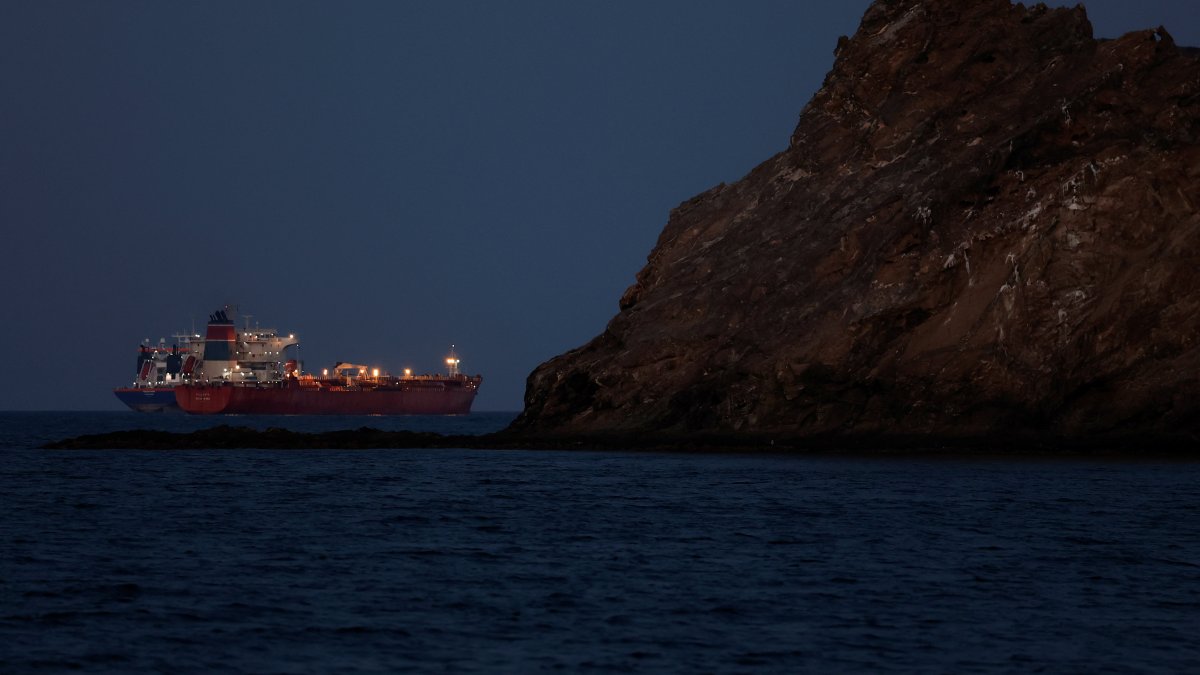
The Strait of Hormuz, a narrow waterway separating Iran and Oman, is arguably the world’s most important oil transit chokepoint. Approximately 20 million barrels of oil pass through the Strait daily, representing roughly one-fifth of global oil consumption and liquefied natural gas flows, according to the U.S. Energy Information Administration. The EIA estimates that in 2025, this volume represented about 21 million barrels per day.
The Strait’s narrowest point measures just 33 kilometers (approximately 21 miles) wide, making it particularly vulnerable to disruption. Around 100 tankers and cargo vessels typically transit the Strait each day under normal conditions, but currently, an estimated 400 tankers are reportedly stuck in the Persian Gulf due to the escalating conflict, as reported by energy analysts at Kpler. CNBC reported that ship owners are seeking a sustained period of safety before venturing through the Strait again.
Escalation Following Attacks
The current tensions are rooted in the recent escalation of conflict following a joint U.S.-Israeli attack on Iran on February 28th. The source material claims this attack resulted in over 1,200 fatalities, including Ayatollah Ali Khamenei, Iran’s Supreme Leader. However, this claim regarding the death of Ayatollah Khamenei has not been independently verified by credible news sources and should be treated with caution. The source also states that at least eight U.S. Service members have been killed since the beginning of the campaign, a detail that also requires independent verification.
Prior to Trump’s warning, Iran’s Islamic Revolutionary Guard Corps (IRGC) had announced its intention to close the Strait of Hormuz to transit following the attacks, a move that immediately sent shockwaves through global energy markets. The threat of closure pushed oil prices higher, raising fears of a prolonged global energy disruption. Brent crude, a global benchmark, rose 22% this week to $89 a barrel, while U.S. Oil prices surged 28% to above $86 a barrel, according to CNBC. While oil prices have since rebounded somewhat, they remain above pre-war levels.
Trump’s Proposed Response: Navy Escorts and Potential Takeover
In response to the potential disruption, Trump has indicated a willingness to utilize the U.S. Navy to escort tankers through the Strait of Hormuz. However, the feasibility of providing safe passage to the large volume of traffic currently stalled in the region remains a significant challenge. Analysts at CNBC point out that the U.S. May lack sufficient naval assets in the region to guarantee safe passage for all vessels.
Trump has suggested the possibility of the United States “taking over” the Strait of Hormuz, a move that raises complex questions under international law. Times Now News reports that this statement has prompted debate regarding the legality of such an action. The Strait of Hormuz is bordered by Iran, Oman, and the United Arab Emirates, and any unilateral U.S. Takeover would likely be met with strong opposition.
Economic Implications and Global Concerns
The potential closure of the Strait of Hormuz poses a significant threat to the global economy. Wall Street analysts warn that a prolonged closure could push Brent crude prices above $100 per barrel, potentially triggering a global recession. The value of trade passing through the Strait is estimated at approximately $600 billion annually, making it a critical artery for global commerce.
The situation is further complicated by the fact that the Strait is used not only by Iran but also by major energy exporters such as Iraq, Kuwait, Qatar, Saudi Arabia, and the United Arab Emirates. Any disruption to shipping lanes would have far-reaching consequences for energy markets and global trade.
Trump’s Assessment of the Conflict
In a phone interview with CBS News on Monday, Trump offered a confident assessment of the military campaign against Iran, stating, “I think the war is very complete, pretty much.” He claimed that Iran “has no navy, no communications, they’ve got no air force,” and that their missile and drone capabilities have been significantly degraded. CBS News reported that the U.S. Military had struck more than 3,000 Iranian targets in the first week of operations.
However, these claims have not been independently verified and should be viewed with caution. The extent of damage to Iran’s military capabilities remains unclear. Trump also stated he had “no message” for Iran’s new Supreme Leader, Ayatollah Mojtaba Khamenei, who recently replaced his father, and indicated he had someone else in mind to lead the country.
The U.S. Benchmark for crude oil initially dropped 13.7%, or around $13 per barrel, following the CBS News interview, before partially recovering. Major stock indices also closed in positive territory Monday after spending most of the day in the red, suggesting that markets are reacting cautiously to the evolving situation.
Key Takeaways:
- Former President Trump warned Iran of severe military consequences if mines are deployed in the Strait of Hormuz.
- The Strait of Hormuz is a critical global energy chokepoint, with approximately 20 million barrels of oil passing through it daily.
- Escalation follows a U.S.-Israeli attack on Iran, with claims of significant casualties that require independent verification.
- The potential closure of the Strait poses a significant threat to the global economy and energy markets.
The situation remains highly fluid and volatile. The international community is closely monitoring developments in the region, and further escalation could have significant global repercussions. The next key development to watch will be any official response from Iran regarding Trump’s warning and the alleged mine-laying activity. We will continue to provide updates as this story unfolds.
Do you have thoughts on this developing situation? Share your perspective in the comments below, and please share this article with your network.
Related reading
- Diverse Expert Witnesses Testify at High-Profile Weekly Hearings
- Cameroon’s Minim-Martap Bauxite Project Faces Delays and Doubts Amid Falling Prices and Financial Strain
- Phoenix Fire Warns of Longer Mountain Rescue Times Due to Extreme Heat (archynewsy.com)
- Why New Fronts Are Opening Across the Middle East (newsdirectory3.com)