Dollar Slides Below $900 Amid Hopes for De-escalation in Iran Conflict
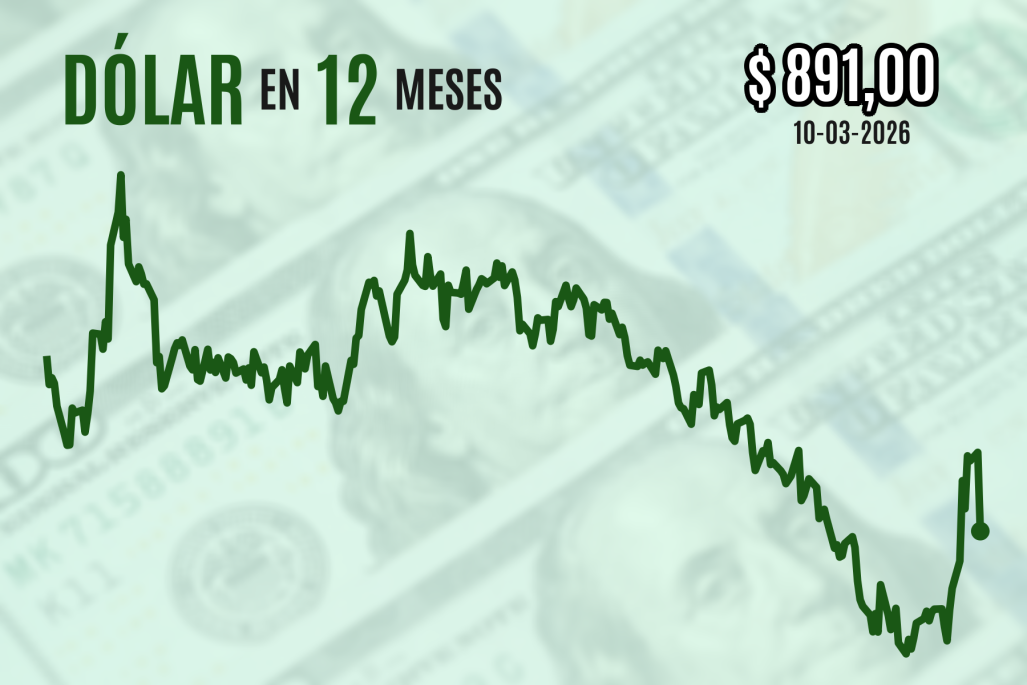
Global currency markets experienced significant shifts on Tuesday, March 10, 2026, as the U.S. Dollar weakened considerably, falling below $900 in trading. This decline was largely attributed to growing optimism surrounding a potential resolution to the ongoing conflict involving Iran, fueled by comments from U.S. President Donald Trump suggesting a swift end to hostilities. The easing of geopolitical tensions prompted a reassessment of risk, leading investors to move away from the dollar’s safe-haven status and towards riskier assets. This movement reflects a broader market sentiment that a de-escalation in the Middle East could alleviate concerns about disruptions to global oil supplies and broader economic instability.
The dollar-peso exchange rate saw a notable drop of $24.3, closing at $891, a level not seen since November 14, 2023, according to Bloomberg data. The Chilean peso emerged as the best-performing emerging market currency, followed by the Peruvian sol and the Colombian peso. Despite the Federal Reserve continuing to raise interest rates, the dollar index decreased by 0.4%, contrasting with falling rates in Europe. This divergence highlights the specific impact of the Iran conflict news on market sentiment, outweighing the influence of monetary policy in the short term. The fluctuations underscore the interconnectedness of global financial markets and their sensitivity to geopolitical events.
The recent volatility in currency markets underscores the delicate balance between geopolitical risk and economic fundamentals. Investors are closely monitoring developments in the Middle East, assessing the potential for further escalation or a peaceful resolution. The dollar’s decline reflects a temporary shift in risk appetite, but the long-term trajectory will depend on the sustainability of any de-escalation and the broader economic outlook. The situation remains fluid and continued vigilance is warranted as markets adjust to evolving circumstances.
Market Reaction and Expert Analysis
President Trump’s statement that attacks on Iran would end “very soon” triggered a wave of relief across international markets. However, Scotiabank Global strategists Shaun Osborne and Eric Theoret cautioned that the situation remains uncertain, noting that it is unclear whether the recent military actions have achieved U.S. Objectives. “The markets are much calmer after the President’s declaration that the attacks on Iran will end ‘very soon.’ That remains to be seen, as it is not clear that the bombing campaign has achieved U.S. Goals at this point,” they wrote. This cautious assessment reflects the inherent risks associated with geopolitical predictions and the potential for unforeseen developments.
Jorge Concha, an FX trader at Banco Bci’s Sales & Trading desk, highlighted the interplay between the Iran situation and domestic political factors in Chile. “The main driver now is the issue of Iran. That is fundamental, and what is happening now is the decompression of this conflict, but it comes more from expectations. We also have in Chile the implementation that could occur after this somewhat turbulent transition between the outgoing and incoming governments,” Concha stated. This observation underscores the complex interplay of global and local factors influencing currency movements in emerging markets like Chile.
Scotiabank analysts also noted tentative signs of moderating confidence in the dollar globally, suggesting that investors may be shifting their focus from short-term geopolitical risks to longer-term structural concerns. They observed that “operators of real money have taken advantage of the early March rally to unwind some overweight positions, which could be a further signal that markets are now looking past near-term geopolitical risks and refocusing on the longer-term structural negatives of the currency.” This shift in sentiment could have implications for the dollar’s performance in the coming months, as investors reassess its fundamental value.
Impact on Commodities and Global Trade
The easing of tensions in the Middle East also had a significant impact on commodity markets. Brent crude futures plummeted 10.2% to $88.9 per barrel, a substantial decline from the $120 peak reached earlier in the week. This drop reflects the reduced risk of supply disruptions in the region, a major source of global oil production. Simultaneously, most global stock markets experienced gains, indicating a broader improvement in investor confidence. Copper prices on the Comex exchange rose 1.4% to $5.93 per pound, supported by the weakening dollar, which makes the metal cheaper for buyers using other currencies.
Adding to the positive market sentiment, China’s trade figures exceeded expectations. Exports surged 21.8% year-on-year in January-February, significantly above the anticipated 7.2%, while imports grew 19.8%, exceeding the general estimate of 7%. This strong performance from the world’s second-largest economy suggests continued global demand and further supports the optimistic outlook for economic growth. The positive trade data from China contributed to the overall risk-on environment, encouraging investors to seek higher returns in emerging markets.
Foreign Exchange Positions and Chilean Peso Strength
The Chilean peso’s strong performance was also driven by increased foreign exchange positions. The net position of foreign agents increased by $4.8 billion last week, reaching over $10 billion against the Chilean peso – a level not seen since the “dólar a luca” (dollar to 1000 pesos) period in 2022, according to data from the Central Bank of Chile. The current position is the most aggressive against the peso since August 2020. This indicates a significant influx of foreign capital into Chile, driven by the favorable risk environment and the potential for higher returns.
Jorge Concha of Banco Bci explained that the “carry trade” – a strategy where investors borrow in a low-interest-rate currency to invest in a higher-interest-rate currency – plays a crucial role in the offshore position against the Chilean peso. “the carry trade plays a fundamental role in the offshore position for or against the Chilean peso. However, the unwinding and rebuilding of these positions have also been influenced by fluctuations in copper prices, the global strength of the dollar as a safe haven in the context of the US-Iran conflict, and the fiscal deterioration in Chile, giving it volatility depending on the strategy of non-residents,” Concha noted. This highlights the complex factors influencing currency movements in Chile and the importance of understanding the interplay between global and domestic forces.
The Chilean peso had previously reached new highs for 2026 before Trump’s comments regarding a potential resolution to the conflict with Iran. The energy shock caused by the crisis had particularly impacted Chile, an open economy that does not have large-scale energy production. This vulnerability made the peso particularly sensitive to changes in global oil prices and geopolitical risks.
Key Takeaways
- The U.S. Dollar weakened significantly on March 10, 2026, falling below $900, driven by optimism regarding a potential de-escalation in the Iran conflict.
- The Chilean peso was the best-performing emerging market currency, benefiting from increased foreign investment and a decline in geopolitical risk.
- Falling oil prices and strong Chinese trade data contributed to the positive market sentiment.
- The “carry trade” continues to play a significant role in influencing foreign exchange positions against the Chilean peso.
Looking ahead, market participants will be closely watching for further developments in the Iran situation and any official announcements from the U.S. Administration. The next key indicator will be the release of the Federal Reserve’s minutes from its March meeting on March 26, 2026, which may provide further insights into the central bank’s monetary policy outlook. Continued monitoring of geopolitical events and economic data will be crucial for navigating the evolving landscape of global financial markets.
Do you think the dollar’s decline will be sustained? Share your thoughts in the comments below, and be sure to share this article with your network.
Keep reading