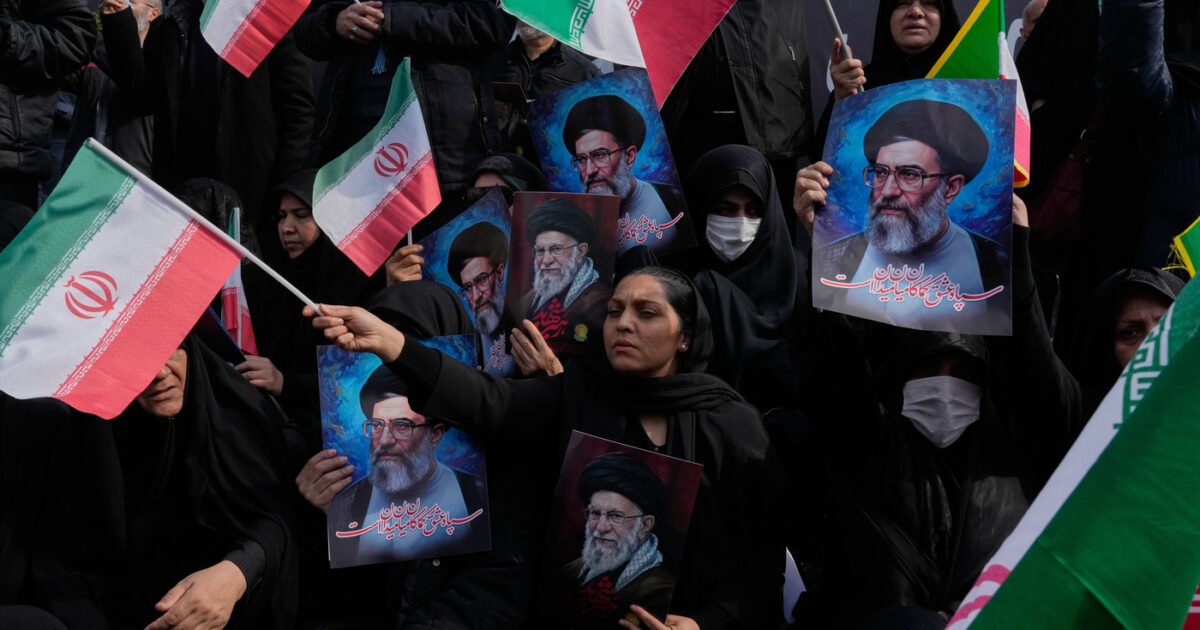
The Islamic Republic of Iran is navigating a period of profound uncertainty following the death of Supreme Leader Ayatollah Ali Khamenei on February 28, 2026, and the subsequent elevation of his son, Mojtaba Khamenei, to the position. While the transition of power was swift, with Mojtaba Khamenei formally appointed on March 8, 2026, the new Supreme Leader has yet to make a public appearance, fueling speculation about his well-being and the stability of the regime. This silence comes amid heightened regional tensions, following a joint Israeli-American attack and ongoing concerns about Iran’s nuclear program and its role in regional conflicts.
Mojtaba Khamenei, 56, inherits a nation grappling with economic hardship, social unrest, and external pressures. He is a figure steeped in the political and religious establishment, having served as his father’s chief of staff for over a decade, beginning in August 2008. His background within the Islamic Revolutionary Guard Corps (IRGC), where he served from 1987-1988 and again from 2009-2026, positions him as a staunch defender of the Islamic Republic’s revolutionary principles. However, unlike his father, Mojtaba Khamenei has largely remained behind the scenes, lacking significant public profile or direct governmental experience. This lack of public visibility is now contributing to the current atmosphere of uncertainty surrounding his leadership.
The absence of a public address or even a photograph of Mojtaba Khamenei since assuming the role of Supreme Leader has sparked a flurry of rumors. Reports circulating in Iranian media, as cited by Iran International, initially suggested a planned address on Monday, March 10, 2026, but this did not materialize. Speculation ranges from claims of serious injury sustained during the same attack that killed his father, to fears for his safety given the volatile geopolitical climate. State-run Iranian television referred to Mojtaba Khamenei as “janbaz,” a term denoting a veteran wounded in combat, further fueling the narrative of potential injuries. This terminology, used in reference to the ongoing conflict with the United States and Israel, which Iranian media terms the “war of Ramadan,” has been interpreted by some as tacit acknowledgement of harm sustained during the recent attacks.
The Shadow of the Recent Attacks and Questions of Succession
The circumstances surrounding Ayatollah Ali Khamenei’s death, reportedly in an Israeli-American raid on February 28, 2026, have undeniably cast a long shadow over the succession. While details remain scarce and official accounts are limited, the attack reportedly claimed the lives of not only the Supreme Leader but also his wife and a son. The timing and nature of the attack have raised serious questions about the security of the Iranian leadership and the potential for further escalation. The United States has remained tight-lipped regarding the specifics of the operation. When questioned about reports of Mojtaba Khamenei being injured, Pentagon spokesperson Pete Hegseth stated on March 11, 2026, “It’s something comment on at the moment.”
The selection of Mojtaba Khamenei represents a significant departure from precedent within the Islamic Republic. This marks the first dynastic succession since the 1979 revolution, raising concerns about the concentration of power within a single family and the potential erosion of the principles of religious legitimacy that underpinned the original revolutionary ideals. Ayatollah Ali Khamenei had carefully cultivated his son’s position within the system, but Mojtaba Khamenei’s relative lack of public experience and charisma have led to questions about his ability to command the same level of authority and respect as his father.
A History of Influence and Controversy
Mojtaba Khamenei’s influence within the Iranian political landscape has been growing for years. He is known to be a staunch conservative and a key figure in the IRGC, with close ties to its intelligence and security apparatus. According to the Wikipedia entry verified on March 10, 2026, he served as commander of the Basij organization, a paramilitary volunteer force, and held a prominent position within the IRGC’s intelligence wings. He is also reported to be fluent in English, a skill that has facilitated his dealings with international actors.
However, Mojtaba Khamenei is also a controversial figure, accused by critics of playing a key role in the suppression of dissent during the 2009 Green Movement protests. These protests, sparked by disputed presidential election results, were met with a brutal crackdown that resulted in the deaths of over 13,000 people, according to reports. He is also alleged to have been deeply involved in the internal repression of protests following the death of Mahsa Amini in 2022. These accusations have fueled resentment towards him among segments of the Iranian population and raised concerns about his commitment to human rights and political freedoms.
Financial Interests and International Holdings
Beyond his political and religious roles, Mojtaba Khamenei has also been linked to a network of financial holdings, including luxury properties in London. An investigation by Bloomberg, as reported by Wired Italia on March 9, 2026, revealed a complex web of companies connected to Khamenei, with assets spanning from London real estate to hotels in Europe and bank accounts linked to intermediaries operating between Western markets and the Iranian economy. These holdings, reportedly accumulated over the past fifteen years, raise questions about the source of his wealth and the extent of his financial influence. The investigation suggests a pattern of using offshore companies to conceal ownership and protect assets, a common practice among politically exposed persons seeking to shield their wealth from scrutiny.
The timing of these revelations, coinciding with his ascension to the Supreme Leadership, adds another layer of complexity to the situation. The scrutiny of his financial dealings comes at a time when Iran is facing severe economic sanctions and international pressure. The perception of corruption or illicit enrichment could further undermine the legitimacy of the regime and fuel public discontent.
The International Response and Future Implications
The international community is closely watching the situation in Iran, with governments around the world assessing the implications of Mojtaba Khamenei’s leadership. The United States and Israel have both expressed concerns about Iran’s regional ambitions and its nuclear program, and the change in leadership is likely to exacerbate these tensions. Former U.S. President Donald Trump has repeatedly questioned Khamenei’s ability to govern, stating, “I don’t know if he’ll last,” and expressing doubt that he could “live in peace.” Israeli Foreign Minister Gideon Sa’ar has similarly suggested that the new Supreme Leader could grow a target for Israel, stating, “Wait and notice.”
The lack of public appearances by Mojtaba Khamenei, coupled with the rumors surrounding his health and safety, has created a vacuum of leadership and heightened uncertainty within Iran. Whether he will emerge as a strong and decisive leader, capable of navigating the country through its current challenges, remains to be seen. The coming weeks and months will be critical in determining the future trajectory of Iran and its role in the region. The next key event to watch for is an official statement from the Iranian government regarding Mojtaba Khamenei’s health and plans for a public address.
Key Takeaways:
- Mojtaba Khamenei has been appointed as the new Supreme Leader of Iran following the death of his father, Ayatollah Ali Khamenei.
- He has yet to make a public appearance, fueling speculation about his health and the stability of the regime.
- His appointment marks the first dynastic succession in Iran since the 1979 revolution.
- Mojtaba Khamenei is a controversial figure with close ties to the IRGC and a history of involvement in the suppression of dissent.
- He has been linked to a network of financial holdings, including luxury properties in London.
The situation in Iran remains fluid and unpredictable. We will continue to monitor developments closely and provide updates as they become available. Share your thoughts and perspectives on this evolving story in the comments below.