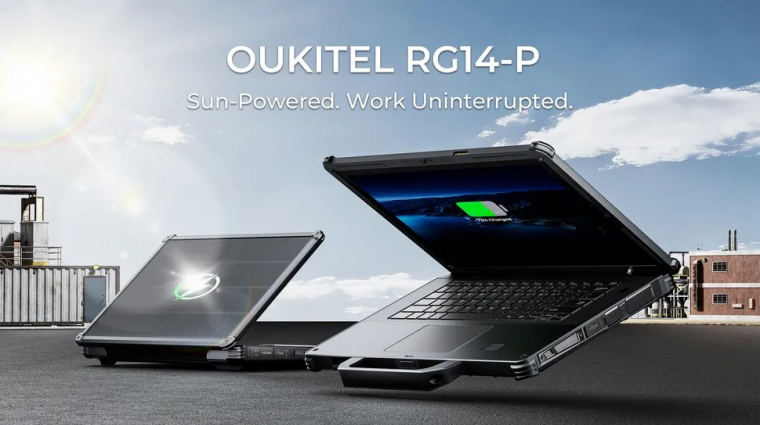
Oukitel Launches Solar-Powered Rugged Laptop Aimed at Field Professionals
The demand for reliable, off-grid computing solutions is driving innovation in the laptop market. Chinese manufacturer Oukitel has entered the fray with the RG14-P, a rugged laptop featuring an integrated solar panel and dual-battery system. Designed for professionals working in challenging environments, the RG14-P aims to provide uninterrupted power and durability where traditional laptops fall short. This new device represents a resurgence in solar-powered laptop technology, a concept that has seen limited success in the past but is now benefiting from advancements in battery technology and the increasing need for portable power solutions.
The Oukitel RG14-P is specifically engineered for deployment in physically demanding settings, such as construction sites, field research, and emergency response operations. The laptop boasts a 14.1-inch touchscreen display and incorporates a solar panel into its rear casing, positioned beneath the screen. Oukitel emphasizes that the RG14-P is intended for users who frequently operate away from stable power infrastructure and require a robust device capable of withstanding harsh conditions. The company is currently undergoing IP68 and IP69K certification testing, standards that demonstrate resistance to dust, water immersion, and high-pressure water spray, according to TechRadar.
Power and Performance for Remote Operations
The RG14-P is equipped with a dual-battery system, featuring a 3000 mAh primary battery and a 5200 mAh secondary battery. This configuration allows for continuous operation even during live battery replacements, minimizing downtime in critical situations. Both batteries support 65W rapid charging via a traditional AC adapter. The laptop runs the full Windows 11 operating system and is powered by a 14th Gen Intel Core i7 processor, paired with 16GB of RAM and a 512GB SSD. Oukitel claims this configuration delivers “desktop-class performance” suitable for diagnostics, data processing, and multitasking. Storage is also expandable to accommodate heavier workloads.
The integration of a solar panel is intended to supplement the battery system, providing a limited source of off-grid power. While Oukitel has not yet released detailed specifications regarding the panel’s output, the company suggests it will primarily serve to extend operating time. Previous attempts at solar-powered laptops, such as the Samsung NC215S, demonstrated limited effectiveness, with two hours of direct sunlight yielding approximately one hour of runtime. More recent concepts, like a Lenovo Yoga prototype, have claimed the ability to generate enough energy for an hour of video playback after just 20 minutes of sunlight exposure, as reported by TechSpot. The actual performance of the RG14-P’s solar panel remains to be seen.
Rugged Design and Portability
Weighing approximately 3.7kg (8.16 lbs), the Oukitel RG14-P prioritizes structural reinforcement over portability. The chassis is constructed with a metal frame and reinforced corners to protect against impacts. An integrated industrial-grade carry handle further enhances its usability in the field. The laptop features a comprehensive array of ports, including multiple USB ports, an Ethernet connector, and a VGA port, all protected by covers to prevent damage from dust and debris. Oukitel asserts the laptop can be submerged in water, a claim that will be subject to scrutiny pending the completion of IP68 and IP69K certification testing.
The Resurgence of Solar-Powered Laptops
The Oukitel RG14-P represents a renewed interest in solar-powered laptops, a technology that has largely remained on the periphery of the consumer market. Early attempts, like the Samsung NC215S, faced limitations in solar panel efficiency and battery capacity. However, advancements in these areas, coupled with the growing demand for sustainable and off-grid power solutions, are driving a resurgence in development. The RG14-P’s dual-battery system and ruggedized design address key shortcomings of previous models, potentially making it a viable option for professionals who require reliable computing power in remote locations.
The laptop’s focus on durability and extended battery life positions it as a competitor in the rugged laptop market, traditionally dominated by companies like Panasonic and Dell. These manufacturers offer laptops designed to withstand extreme temperatures, shocks, and vibrations, but often at a premium price point. Oukitel’s entry into the market could potentially disrupt the status quo by offering a more affordable and feature-rich alternative. According to Gagadget, the RG14-P is being marketed as a tool for professionals who need a dependable device away from traditional power sources.
Key Takeaways
- The Oukitel RG14-P is a rugged laptop with an integrated solar panel and dual-battery system.
- It is powered by a 14th Gen Intel Core i7 processor, 16GB of RAM, and a 512GB SSD.
- The laptop is designed for professionals working in challenging environments where access to power is limited.
- Oukitel is currently undergoing IP68 and IP69K certification testing to validate its durability claims.
- The RG14-P represents a renewed interest in solar-powered laptops, driven by advancements in battery technology and the demand for off-grid solutions.
The Oukitel RG14-P is currently available for pre-order, with shipping expected to begin in the coming weeks. The company has not yet announced official pricing details, but it is anticipated to be competitive within the rugged laptop segment. As the demand for portable and reliable computing solutions continues to grow, the RG14-P could represent a significant step forward in providing professionals with the tools they need to function effectively in any environment. Further updates regarding certification results and pricing will be reported as they become available.
Stay tuned to World Today Journal for continued coverage of the Oukitel RG14-P and other emerging technologies in the rugged computing space. We encourage you to share your thoughts and experiences with similar devices in the comments below.