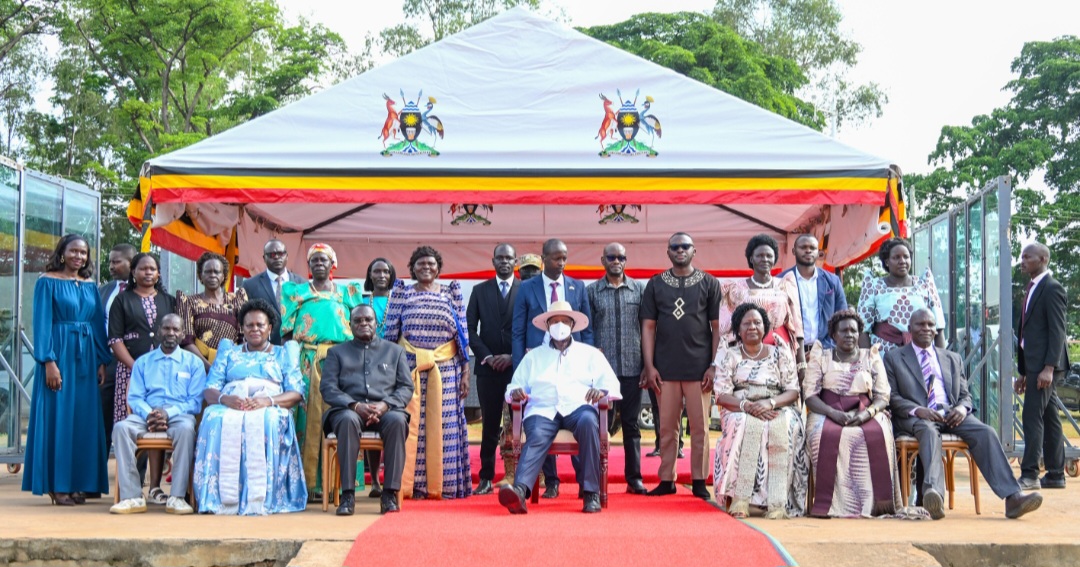
Gulu, Uganda – A grand homecoming ceremony held at Kaunda Grounds in Gulu City on Saturday celebrated the distinguished career of Alfonse Chigamoy Owiny-Dollo, the recently retired Chief Justice of the Republic of Uganda. The event, attended by a diverse cross-section of national leaders, cultural figures, religious representatives, family, friends, and local residents, served as a testament to Owiny-Dollo’s significant contributions to the Ugandan judiciary and his role in fostering national unity. President Yoweri Kaguta Museveni was among those present, personally commending the former Chief Justice for his integrity and dedication to public service.
The celebration wasn’t merely a recognition of a career concluded, but a public acknowledgement of Owiny-Dollo’s impact on a nation navigating a complex path toward stability and justice. His tenure as Chief Justice coincided with a period of significant legal and social change in Uganda, and his commitment to strengthening the judiciary, particularly through the expansion of alternative dispute resolution mechanisms, has been widely praised. The event underscored the importance of recognizing leaders who champion the rule of law and contribute to the ongoing process of reconciliation, especially in regions like Northern Uganda that have experienced prolonged conflict.
President Museveni, in his address, highlighted three key aspects of Owiny-Dollo’s service. He lauded the former Chief Justice’s unwavering integrity, stating he had never heard allegations of corruption leveled against him, a particularly noteworthy commendation in a region where concerns about corruption persist. He also praised Owiny-Dollo’s support for Alternative Dispute Resolution (ADR), a strategy Museveni himself has long advocated to alleviate court congestion and improve access to justice for all citizens. Finally, the President emphasized Owiny-Dollo’s crucial role in promoting unity and reconciliation in Northern Uganda, a region still recovering from years of internal conflict and instability.
Strengthening the Judiciary and Promoting Reconciliation
The emphasis on Alternative Dispute Resolution (ADR) reflects a broader effort within Uganda’s judicial system to address the backlog of cases and build justice more accessible. ADR methods, such as mediation and arbitration, offer a less formal and often more efficient way to resolve disputes, reducing the burden on the courts and empowering communities to find their own solutions. The Ugandan Judiciary’s official website details various ADR initiatives and their impact on case resolution rates. This approach aligns with international best practices in judicial reform, aiming to create a more responsive and effective legal system.
Owiny-Dollo’s contribution to reconciliation in Northern Uganda is particularly significant given the region’s history. For decades, Northern Uganda was ravaged by conflict, most notably the brutal insurgency led by the Lord’s Resistance Army (LRA). The conflict resulted in widespread displacement, atrocities, and a deep-seated sense of trauma within the communities. Human Rights Watch has extensively documented the impact of the LRA conflict on Northern Uganda, detailing the human rights abuses and the challenges of rebuilding communities. Owiny-Dollo’s efforts to promote dialogue, healing, and accountability have been instrumental in fostering a sense of closure and rebuilding trust among the affected populations.
Economic Transformation and Household Empowerment
Beyond the legal sphere, President Museveni used the occasion to underscore the importance of economic transformation, particularly at the household level. He outlined the government’s strategy of promoting slight-scale enterprises suitable for households with limited land, emphasizing sectors like poultry farming, dairy production, coffee growing, fruit cultivation, and fish farming. This focus on intensive agriculture, rather than relying on large-scale cash crops like cotton, maize, sugarcane, and rubber, is intended to empower more families to generate income and improve their livelihoods.
Museveni stressed the need for farmers to produce for established markets, cautioning against encouraging production without guaranteed demand. He highlighted the potential for expanding trade within the East African Community and across the African continent, advocating for enterprises that ensure sustainable income for Ugandan farmers. This emphasis on market-driven agriculture aligns with broader efforts to promote economic diversification and reduce Uganda’s reliance on traditional exports. According to the Trade Law Centre (tralac), Uganda’s key exports include coffee, gold, and fish, and the country is actively working to expand its trade relationships within the region.
Owiny-Dollo’s Future Focus: Community Revival and Wealth Creation
Looking ahead, retired Chief Justice Owiny-Dollo announced his intention to dedicate his efforts to championing community revival and wealth creation within the Acholi sub-region. Recognizing the lasting economic disadvantages caused by decades of conflict, he called for a renewed focus on rebuilding livelihoods through productive economic activities. He specifically highlighted the need for community-led initiatives, including the productive leverage of idle land and the adoption of mechanized agriculture, with support from programs like Operation Wealth Creation, led by General (Rtd) Salim Saleh.
Owiny-Dollo also proposed the establishment of an irrigation scheme at Agoro, aiming to enhance agricultural productivity in the region. He further urged the government to review the effectiveness of socio-economic empowerment funds previously allocated to Northern Uganda, ensuring they are achieving their intended outcomes. This call for accountability underscores the importance of transparent and effective resource allocation in post-conflict recovery efforts. He also advocated for local by-laws to encourage greater participation in wealth creation initiatives, emphasizing the role of community leadership in driving socio-economic transformation.
Principal Judge Jane Frances Abodo, speaking on behalf of the judiciary, echoed the sentiments of gratitude and appreciation for Owiny-Dollo’s service. She commended his dedication to upholding the rule of law and inspiring public confidence in the administration of justice. The ceremony, punctuated by traditional Acholi cultural performances and prayers, served as a powerful symbol of unity and a collective commitment to building a brighter future for Uganda.
President Museveni concluded his remarks by urging continued collaboration among leaders and communities across the country to strengthen institutions, promote unity, and accelerate Uganda’s socio-economic transformation. The event in Gulu City served as a potent reminder of the importance of recognizing dedicated public servants and fostering a shared vision for a more just and prosperous Uganda.
The Ugandan government is expected to continue its focus on economic development initiatives in Northern Uganda, with ongoing assessments of existing programs and potential modern investments in infrastructure and agriculture. Further updates on these initiatives will likely be released through official government channels, including the Office of the President’s website. Continued monitoring of these developments will be crucial to understanding the long-term impact of these efforts on the region’s recovery and prosperity.
Key Takeaways:
- Retired Chief Justice Alfonse Chigamoy Owiny-Dollo was honored for his distinguished service to Uganda’s judiciary and his contributions to national unity.
- President Museveni praised Owiny-Dollo’s integrity, support for Alternative Dispute Resolution, and role in promoting reconciliation in Northern Uganda.
- The government reaffirmed its commitment to economic transformation through household empowerment and the promotion of small-scale enterprises.
- Owiny-Dollo announced his future focus on community revival and wealth creation in the Acholi sub-region.
What are your thoughts on the importance of judicial independence and reconciliation in post-conflict societies? Share your comments below, and please share this article with your network.
- PRA Group Strengthens European Financial Base with Revolving Credit Facility Amendment
- Spain-Italy Border Dispute Escalates: Madrid Issues Ultimatum and Imposes Counter-Controls Over Ceuta
- Project Jupiter Boosts Economic Opportunity in Southern New Mexico (news-usa.today)
- Tanzania and Uganda Sign Agreement with Vitol for Tanga Energy Hub (archyworldys.com)