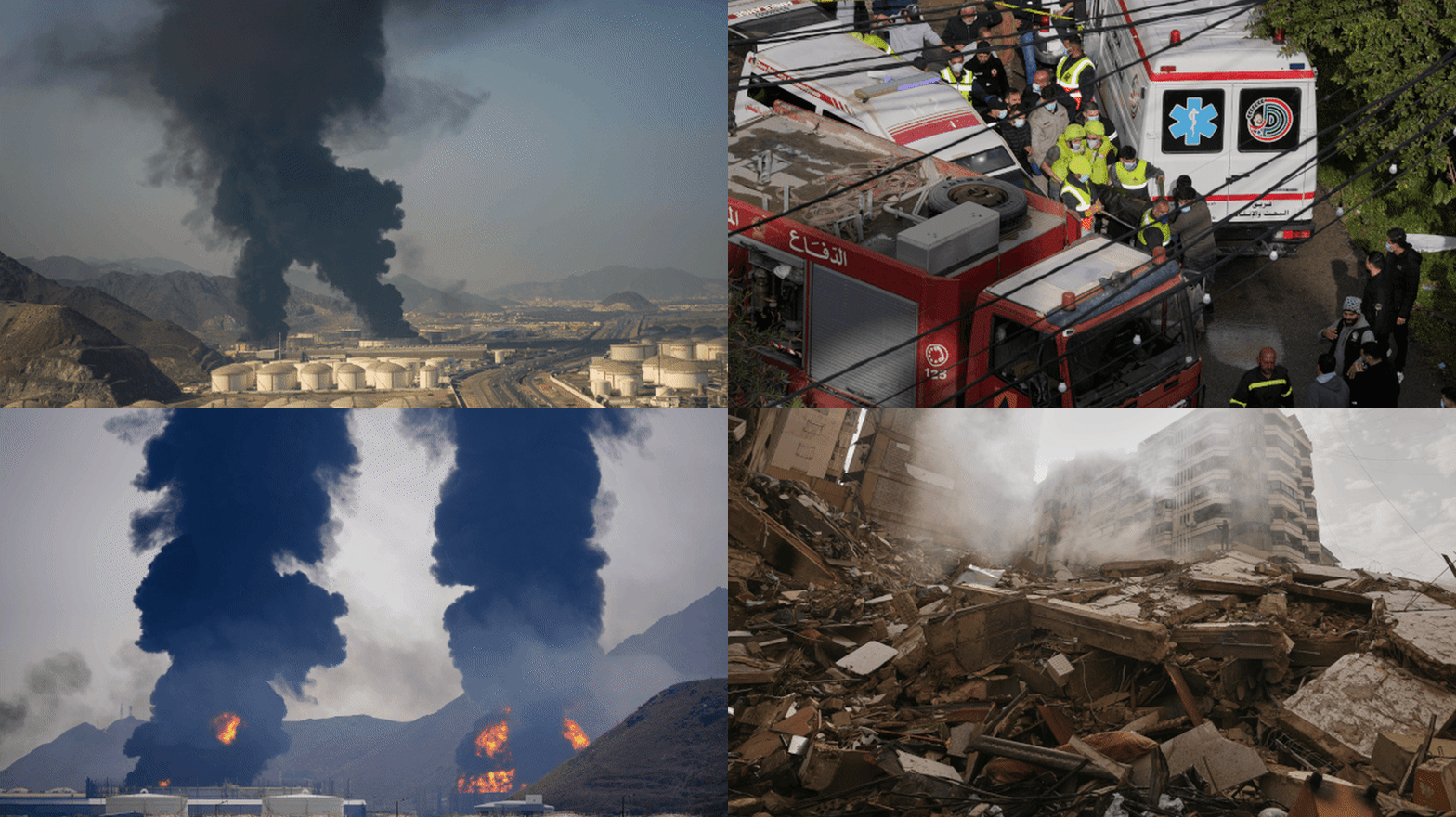
Sofia, Bulgaria – Tensions in the Middle East escalated sharply on Sunday, March 15, 2026, as Iran accused the United States of launching attacks on two Iranian islands – Kharg and Abu Musa – from the United Arab Emirates. The accusations, leveled by Iranian Foreign Minister Seyed Abbas Araghchi, come amid a backdrop of heightened regional instability and follow recent Israeli strikes within Iran. The situation is further complicated by calls for international intervention and concerns over the potential for wider conflict. This latest exchange raises critical questions about the security of vital shipping lanes and the potential for miscalculation in a volatile region.
Araghchi stated that the attacks, carried out overnight, utilized HIMARS short-range rocket systems and targeted Kharg Island, a crucial hub for Iran’s oil exports, and Abu Musa, a strategically important island near the Strait of Hormuz. He specifically claimed the rockets originated from locations within the UAE, including Ras Al Khaimah and an area close to Dubai. “They launched these rockets from the soil of our neighbours. It is crystal clear they are using our neighbours’ territory to attack us, and this is absolutely unacceptable,” Araghchi said, according to reports from Iranian state media Press TV. Iran has vowed to respond to the attacks, while emphasizing a commitment to avoiding civilian casualties.
Accusations and Denials
The Iranian accusations have been met with denials from both the United States and the United Arab Emirates. US Central Command has not issued a response to the claims, while the UAE has publicly refuted any involvement in the attacks. Anwar Gargash, a diplomatic advisor to the UAE’s president, stated on social media that the country reserves the right to defend itself but “still prioritises reason and logic, and continues exercising restraint.” This statement underscores the UAE’s delicate position as a key regional ally of the United States while also seeking to avoid direct confrontation with Iran.
The conflicting narratives highlight the challenges in verifying information amidst the ongoing tensions. Independent confirmation of the attacks and their origin remains elusive. Yet, the accusations themselves are significant, as they represent a direct challenge to the UAE’s neutrality and could potentially draw the country further into the escalating conflict. The potential for escalation is particularly concerning given the strategic importance of the Persian Gulf, a vital waterway for global oil supplies.
Details of the Strikes and Iranian Response
According to Iran’s semi-official Fars news agency, the strikes on Kharg Island did not cause damage to oil infrastructure but did target an air defence facility, a naval base, the airport control tower, and an offshore oil company’s helicopter hangar. US Central Command, however, claims to have destroyed naval mine storage facilities, missile storage bunkers, and other military sites. This discrepancy in reported damage underscores the difficulties in independently assessing the extent of the attacks and their impact.
Araghchi indicated that Iran’s response will focus on targeting American bases, facilities, assets, and interests located within neighboring countries, while taking precautions to avoid hitting residential areas. “What we are doing within the framework of legitimate defence is targeting American bases, facilities, assets and interests, which unfortunately are located in the territories of our neighbours,” he stated. This suggests a strategy of calibrated retaliation aimed at deterring further attacks without triggering a full-scale regional war. The precise nature and timing of Iran’s response remain uncertain, adding to the prevailing anxiety.
Israeli Strikes in Iran and Regional Context
The accusations against the US and UAE come on the heels of another wave of Israeli strikes targeting infrastructure within Iran. Israel announced that its air force had hit more than 200 targets in the past 24 hours, including missile launchers, defence systems, and weapons production sites. These strikes are widely believed to be in response to Iran’s recent drone and missile attacks on Israel, marking a significant escalation in the long-standing shadow war between the two countries. The tit-for-tat exchanges have raised fears of a wider regional conflict, drawing in other actors and potentially destabilizing the entire Middle East.
The current situation is rooted in decades of geopolitical rivalry and mistrust between Iran and its regional adversaries, particularly Israel and Saudi Arabia. The United States has historically played a key role in mediating these conflicts, but its influence has waned in recent years. The recent attacks and accusations underscore the fragility of the regional security architecture and the urgent need for diplomatic efforts to de-escalate tensions and prevent further bloodshed.
International Reactions and Calls for De-escalation
The international community has largely responded to the escalating tensions with calls for restraint and de-escalation. United Nations Secretary-General António Guterres has urged both Israel and Hezbollah to cease fighting, warning of the devastating consequences of a full-scale conflict. However, these calls have so far gone largely unheeded, as both sides appear determined to pursue their objectives. The lack of a unified international response further complicates the situation and increases the risk of miscalculation.
Several countries have expressed concern over the potential impact of the conflict on global energy markets. The Strait of Hormuz, through which a significant portion of the world’s oil supply passes, is located near the areas affected by the recent attacks. Any disruption to shipping through the strait could have severe economic consequences, potentially leading to higher oil prices and global recession. The United States has deployed additional naval assets to the region in an effort to deter further attacks and ensure the free flow of commerce.
Trump Calls for Warships, UN Urges Restraint
Adding another layer to the complex situation, former US President Donald Trump has called for countries to send warships to reopen the Strait of Hormuz, suggesting a more assertive military posture. This call contrasts with the current Biden administration’s emphasis on diplomacy and de-escalation. Meanwhile, the UN continues to urge all parties to exercise restraint and engage in dialogue to resolve the conflict peacefully. The divergent approaches highlight the lack of consensus on how to address the escalating tensions in the region.
The situation remains highly fluid and unpredictable. The coming days and weeks will be critical in determining whether the region can avoid a full-scale war. Continued diplomatic efforts, coupled with a commitment to restraint from all parties, are essential to prevent further escalation and protect regional and global stability.
The next key development to watch will be the Iranian response to the alleged US attacks. Further statements from US Central Command and the UAE regarding the accusations are also anticipated. The international community will be closely monitoring the situation for any signs of further escalation and will likely continue to call for de-escalation and dialogue.
What are your thoughts on the escalating tensions in the Middle East? Share your comments below and join the conversation. Don’t forget to share this article with your network to raise awareness about this critical issue.
Keep reading
- Former Director Admitted to Preventing Lawful Burial of 89-Year-Old Mother
- Dubai Offers Rewards Up to $800 to Attract Tourists After Decline
- Qatar Reports Progress in Diplomatic Efforts to End US-Iran Conflict (archyworldys.com)
- Man Utd Pursue Lewis Hall: Transfer Race and Release Clause Updates (archynewsy.com)