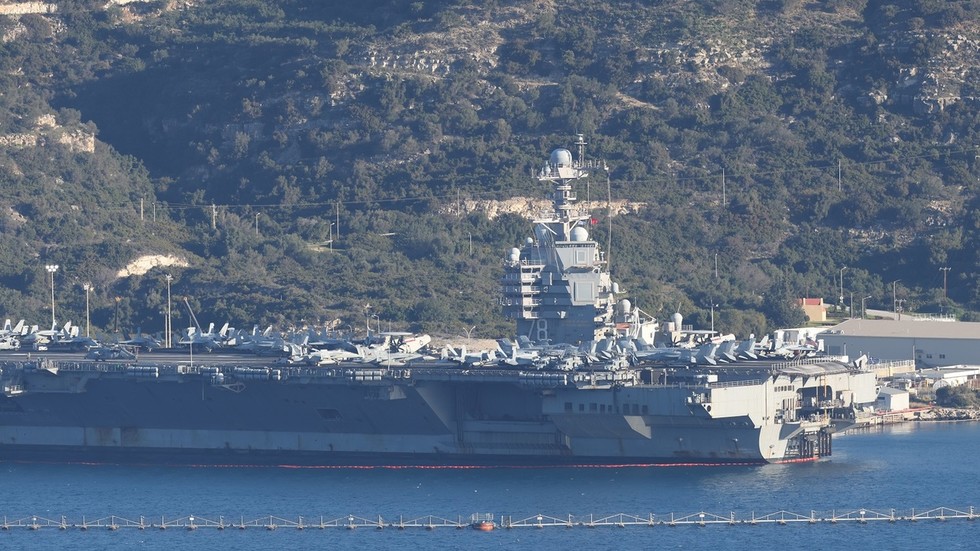
Fire Aboard USS Gerald R. Ford Leaves Hundreds of Sailors Displaced, Raises Questions About Deployment
The U.S. Navy’s newest and most advanced aircraft carrier, the USS Gerald R. Ford, is facing logistical challenges and scrutiny following a fire that broke out in a laundry room last week. The blaze, which took over 30 hours to extinguish, has left approximately 600 sailors without assigned berthing, forcing them to sleep in temporary accommodations throughout the vessel. While U.S. Central Command has downplayed the incident as not combat-related and stated there was no damage to the ship’s propulsion systems, the extended firefighting effort and displacement of crew members highlight potential vulnerabilities during the carrier’s lengthy deployment.
The USS Gerald R. Ford, carrying over 4,500 sailors and pilots, is currently operating in the northern Red Sea, a region of heightened geopolitical tension. The ship’s extended deployment, now approaching its tenth month, is already raising concerns about crew fatigue and maintenance demands. According to reports, crew members had anticipated the mission would extend into May, exceeding the typical six-month deployment length for aircraft carriers before scheduled port calls for maintenance and crew rest. This prolonged period at sea, coupled with the recent fire, is placing additional strain on the vessel and its personnel.
Fire Origin and Extent of Damage
The fire originated in a dryer vent within the ship’s laundry facility, as initially reported by U.S. Central Command. However, subsequent reporting from the New York Times reveals the situation was more extensive than initially disclosed. The blaze spread through ventilation ducts, impacting berthing areas designated for over 600 sailors. This displacement has forced many to sleep on floors and tables, creating significant discomfort and disruption to daily routines. While two sailors received treatment for non-life-threatening injuries, dozens more reportedly suffered from smoke inhalation, according to sources cited by the New York Times.
The firefighting effort required a sustained response lasting more than 30 hours, indicating the complexity of containing the blaze within the confines of a naval vessel. The incident underscores the inherent risks associated with operating a complex warship in a demanding environment. U.S. Central Command maintains the fire was an accident, not the result of hostile action, but the incident nonetheless raises questions about fire safety protocols and the effectiveness of damage control measures aboard the ship.
Recurring Issues and Operational Concerns
The fire aboard the USS Gerald R. Ford is not an isolated incident. The vessel, commissioned in 2017 at a cost of approximately $13 billion, has been plagued by technical difficulties since its inception. A 2020 report by the Government Accountability Office (GAO) detailed persistent problems with the ship’s sewage system, which is similar to those found in commercial aircraft. The system is prone to clogging, requiring costly and time-consuming acid flushing procedures – costing around $400,000 per instance – that can only be performed while the ship is in port. The GAO report highlighted these ongoing maintenance challenges and their impact on the ship’s operational readiness.
Further compounding these issues, a January 2026 report by NPR revealed that the USS Gerald R. Ford had required outside assistance 42 times since 2023, with the frequency of these requests increasing over time. This reliance on external support suggests ongoing technical problems and a potential strain on the ship’s internal resources. The combination of these recurring issues – from plumbing malfunctions to now a significant fire – raises concerns about the overall reliability and sustainability of the Navy’s newest supercarrier.
Deployment Context and Regional Implications
The USS Gerald R. Ford’s deployment to the Red Sea is part of a broader U.S. Military presence in the Middle East, intended to deter aggression and maintain regional stability. The carrier strike group is operating far from the high-risk zones in the Gulf of Oman and Arabian Gulf, but remains a visible symbol of American power and commitment to the region. The ship’s extended deployment, however, is occurring against a backdrop of escalating tensions, including the ongoing conflict in Gaza and broader concerns about Iranian influence.
The incident aboard the USS Gerald R. Ford comes amid heightened scrutiny of U.S. Military operations in the Middle East. The ship’s participation in a military incursion in Venezuela in January, which reportedly involved the abduction of President Nicolas Maduro, has also drawn criticism and raised questions about the scope and objectives of U.S. Foreign policy. The combination of these factors – the prolonged deployment, the technical challenges and the controversial involvement in Venezuela – is contributing to a complex narrative surrounding the USS Gerald R. Ford and its role in global affairs.
Impact on Crew and Future Operations
The immediate impact of the fire is the displacement of 600 sailors, who are currently sleeping in makeshift accommodations throughout the ship. This situation is undoubtedly impacting crew morale and potentially affecting operational efficiency. The inability to access laundry facilities is also creating hygiene concerns and adding to the discomfort experienced by those affected. While the Navy has not disclosed specific plans to address these issues, We see likely that efforts are underway to restore berthing areas and provide adequate support to the displaced sailors.
Looking ahead, the USS Gerald R. Ford is still expected to remain on station and potentially set a new record for the longest carrier deployment. However, the recent fire and the ship’s ongoing technical challenges raise questions about the long-term sustainability of this operational tempo. The Navy will need to carefully assess the impact of these issues on crew fatigue, maintenance requirements, and overall readiness to ensure the USS Gerald R. Ford can continue to fulfill its mission effectively.
You sign up feeling proud, ready to serve in the mighty US Navy and defend your country.Then you uncover out your real deployment isn’t combat, it’s fighting for your life in a full-blown toilet apocalypse.😂😂😂(Crisis erupts on the USS Gerald R. Ford as 80% of the ship’s…
The USS Gerald R. Ford represents a significant investment in U.S. Naval power, but its operational history to date has been marked by challenges. Addressing these issues will be crucial to ensuring the ship can fulfill its intended role as a cornerstone of American maritime dominance. The Navy is expected to provide further updates on the fire investigation and the status of repairs in the coming days. Readers are encouraged to share their thoughts and perspectives on this developing story in the comments below.
Worth a look