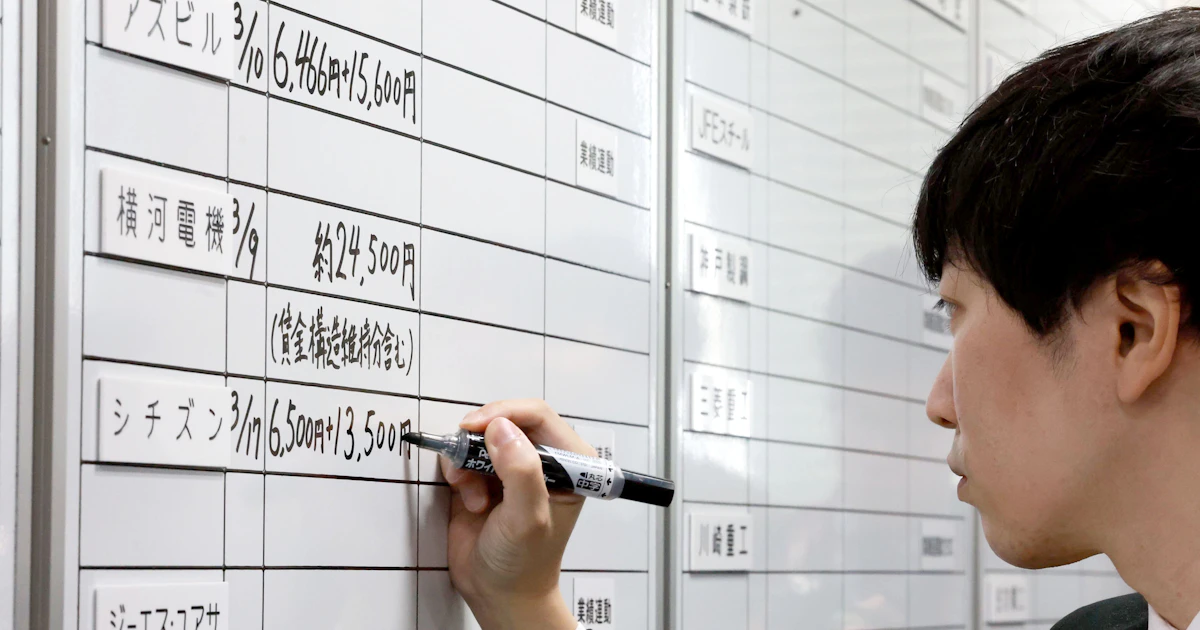
Tokyo, Japan – Major Japanese corporations are responding to union demands with substantial wage increases as the 2026 shunto, or spring wage negotiations, reach a critical phase. The concentrated response day on March 18th saw commitments from industry giants like Toyota, Hitachi and NEC, signaling a potential shift towards sustained wage growth in the world’s third-largest economy. This year’s negotiations are particularly significant as Japan grapples with persistent inflation and seeks to bolster domestic demand.
The moves by these key companies come as the Japanese Trade Union Confederation (Rengo) aims to secure a total wage increase of 5% for the third consecutive year. While the global economic landscape remains uncertain, with geopolitical tensions and fluctuating energy prices adding complexity, the initial responses from major corporations suggest a willingness to address rising living costs and improve employee livelihoods. The outcome of these negotiations will have ripple effects throughout the Japanese economy, influencing consumer spending and overall economic performance.
Toyota Leads with Significant Wage Hikes
Toyota Motor Corporation has agreed to fully meet the demands of its labor union, offering wage increases of up to 21,580 yen per month, depending on job grade and position. This marks the sixth consecutive year Toyota has fully responded to union requests. In addition to the base salary increases, Toyota also agreed to a bonus equivalent to 7.3 months’ salary, despite a slight reduction of 0.3 months compared to the 2025 spring wage negotiations, as reported by Tokai TV. The company’s commitment to substantial wage increases underscores its confidence in its financial performance and its dedication to its workforce.
【速報】トヨタ自動車が労働組合の要求に満額回答。月額の賃上げは最大2万1580円。ボーナスも満額回答。6年連続の満額回答となりました。詳細はこちら→ https://t.co/qJq9q9q9q9 #春闘 #トヨタ pic.twitter.com/qJq9q9q9q9
— 共同通信公式アカウント (@kyodo_official) March 18, 2026
Broad-Based Agreement Across Major Industries
Toyota isn’t alone in offering substantial wage increases. Hitachi, NEC, Mitsubishi Heavy Industries, and Mitsubishi Electric have all agreed to meet union demands for base salary increases, often referred to as “base-up” or “bea.” Hitachi and NEC are providing monthly wage improvements of 18,000 yen, while Mitsubishi Heavy Industries and Kawasaki Heavy Industries are offering 16,000 yen. Nippon Steel and Kobe Steel have agreed to increases of 10,000 yen and 13,000 yen respectively, while union requests were for slightly higher amounts of 15,000 yen. Nippon Steel’s overall wage increase, including regular pay rises, is approximately 5.3%, according to reports from Yahoo! News Japan.
The widespread agreement to meet union demands reflects a growing recognition among Japanese corporations of the need to address rising costs of living and stimulate domestic consumption. The Japanese economy has faced decades of deflation, and policymakers are hoping that sustained wage growth will help to break this cycle and foster a more robust and sustainable economic recovery.
Impact of Global Economic Factors
Despite the positive signals from major corporations, the negotiations are taking place against a backdrop of global economic uncertainty. Rising oil prices, driven by geopolitical tensions in the Middle East, are adding to cost pressures for businesses. This situation casts a shadow over negotiations with smaller and medium-sized enterprises (SMEs), which may have less capacity to absorb increased costs. The financial difficulties of Nissan, which reported a loss exceeding 60 billion yen, highlight the challenges faced by some companies in offering substantial wage increases. However, Nissan still responded fully to union demands, offering a monthly increase of 10,000 yen, prioritizing employee morale.
Focus Shifts to Small and Medium-Sized Enterprises
With the major corporations largely concluding their wage negotiations, the focus is now shifting to SMEs, which account for a significant portion of Japan’s workforce. These companies often operate with tighter margins and may be more vulnerable to economic fluctuations. The outcome of negotiations with SMEs will be crucial in determining the overall impact of the 2026 shunto on the Japanese economy. The government is expected to play a role in encouraging SMEs to offer wage increases, potentially through financial incentives or policy support.
The ability of SMEs to respond positively to union demands will be a key indicator of the sustainability of the current trend towards wage growth. If SMEs are unable to offer meaningful wage increases, it could limit the overall impact of the shunto on consumer spending and economic recovery. The government is keenly aware of this challenge and is exploring various options to support SMEs in navigating the current economic environment.
NEC’s Response and Broader Trends
NEC Corporation has also responded fully to union demands, offering a base salary increase of 18,000 yen. This, alongside full responses from Toyota and Nissan, highlights a growing trend of companies prioritizing employee compensation. FNN Prime Online reports that this positive momentum is now turning attention to the challenges faced by smaller businesses.
Key Takeaways
- Major Japanese corporations, including Toyota, Hitachi, and NEC, have largely met union demands for wage increases.
- Toyota is offering wage increases of up to 21,580 yen per month, with a bonus equivalent to 7.3 months’ salary.
- The focus is now shifting to small and medium-sized enterprises (SMEs), which may face greater challenges in offering substantial wage increases.
- Geopolitical tensions and rising oil prices are adding to cost pressures for businesses.
- The outcome of the 2026 shunto will have significant implications for the Japanese economy, influencing consumer spending and overall economic performance.
The 2026 spring wage negotiations represent a pivotal moment for the Japanese economy. The willingness of major corporations to offer substantial wage increases is a positive sign, but the sustainability of this trend will depend on the ability of SMEs to follow suit. The government’s role in supporting SMEs and addressing broader economic challenges will be crucial in ensuring that the benefits of wage growth are widely shared.
The next key development to watch will be the outcome of wage negotiations with SMEs in the coming weeks. Further updates and analysis will be provided as they become available. We encourage readers to share their thoughts and perspectives on this important issue in the comments section below.
Related reading