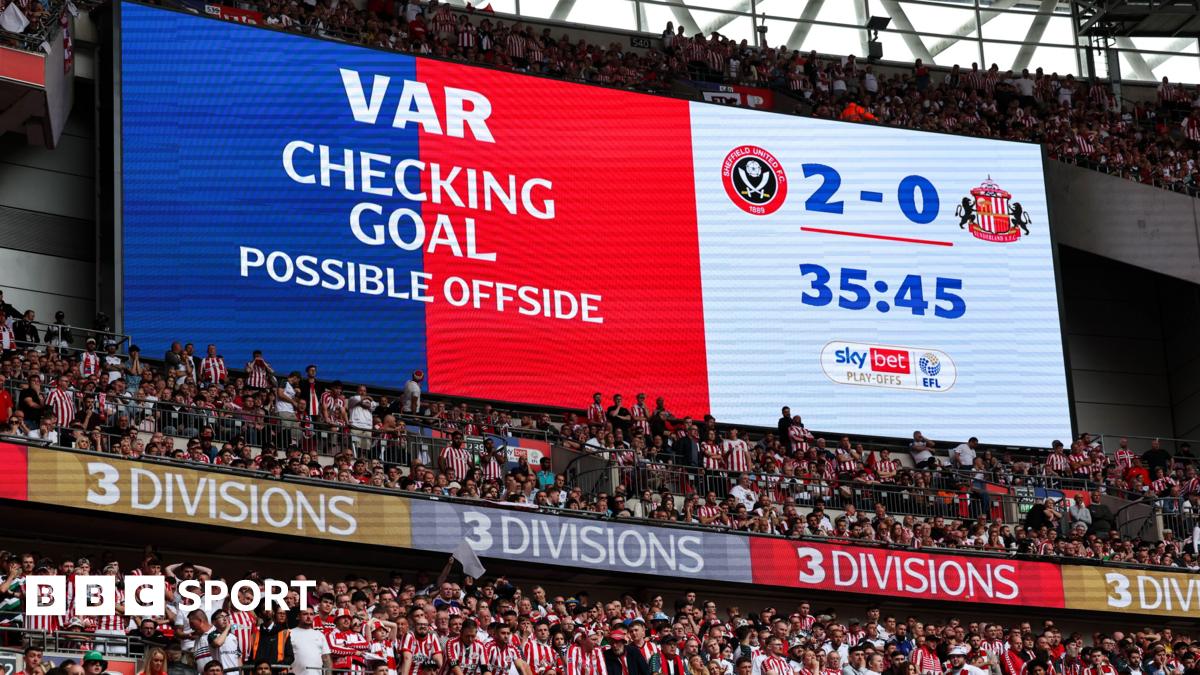
The debate surrounding the implementation of Video Assistant Referee (VAR) technology in the EFL Championship is intensifying as the 2025-26 season progresses. With numerous contentious decisions already impacting matches, the question of whether to introduce VAR beyond its current limited use in the play-off final is gaining traction among fans, managers, and pundits alike. The current season, which runs until May 2, 2026, has already seen 453 matches played, with a total of 1,171 goals scored – an average of 2.58 per match, according to data available as of March 16, 2026.
The Championship, known for its fast-paced action and often dramatic finishes, has been no stranger to refereeing controversies this season. Reports indicate a pattern of disputed calls, including incorrectly awarded offside goals, legitimate goals disallowed, missed red card offenses, and questionable penalty decisions. As highlighted by the BBC, these incidents underscore the potential impact of human error on match outcomes, particularly in a league where margins are often incredibly tight.
The Current Landscape: Championship Standings and Key Contenders
As of mid-March 2026, the race for promotion to the Premier League is fiercely contested. According to NBC Sports, Coventry City currently leads the Championship table with 77 points and a goal difference of +38, positioning them strongly for automatic promotion. Middlesbrough follows closely with 70 points and a +22 goal difference, also vying for a direct spot in the top flight. Ipswich Town, Millwall, Hull City, and Wrexham are all in contention for the play-off places, creating a dynamic and unpredictable battle for promotion.
Coventry City, managed by Frank Lampard, are aiming to return to the Premier League for the first time since their relegation in 2001. Their success has been fueled by a potent attack, featuring USMNT striker Haji Wright. Wrexham, meanwhile, are making a remarkable ascent through the English football pyramid, seeking a fourth consecutive promotion after reaching the Football League as recently as 2023. Their progress, backed by owners Ryan Reynolds and Rob McElhenney, has captured the attention of football fans worldwide. The current season also sees Žan Vipotnik of Swansea City leading the goalscoring charts with 17 goals.
VAR in Football: A Global Perspective
The use of VAR has become increasingly prevalent in professional football leagues around the world. Introduced by FIFA, the system aims to minimize clear and obvious errors in key match situations, including goals, penalties, direct red cards, and cases of mistaken identity. While VAR has been credited with improving the accuracy of officiating in many instances, it has also faced criticism for its implementation, perceived inconsistencies, and the disruption it can cause to the flow of the game.
In the Premier League, VAR was fully implemented in the 2019-20 season and continues to be a subject of debate. The system has been praised for correcting blatant errors but also criticized for its subjective interpretations and the time taken to review decisions. The German Bundesliga was one of the first major leagues to adopt VAR, and its experience has provided valuable insights into the challenges and benefits of the technology. Similarly, Serie A in Italy has utilized VAR extensively, leading to ongoing discussions about its effectiveness and impact on the game.
Arguments For and Against VAR in the Championship
Proponents of introducing VAR in the Championship argue that it would enhance the fairness and integrity of the league. They believe that the technology would help to eliminate game-changing errors made by referees, ensuring that results are determined by the players on the pitch rather than officiating mistakes. The potential to reduce controversy and improve the overall quality of officiating are key arguments in favor of VAR. Supporters suggest that VAR would bring the Championship in line with other major leagues that have already adopted the system.
However, opponents of VAR raise concerns about its potential drawbacks. One common argument is that VAR can disrupt the natural flow of the game, leading to lengthy delays and frustrating interruptions. Critics also point to the subjective nature of some VAR decisions, arguing that the technology does not always provide clear-cut answers and can still be open to interpretation. Another concern is the cost of implementing and maintaining VAR, which could be a significant burden for Championship clubs. The potential for VAR to stifle celebrations and diminish the emotional impact of goals is also a frequently cited objection.
Recent Incidents Highlighting the Demand for Debate
The 2025-26 Championship season has already provided several examples of incidents where VAR could have potentially altered the outcome of matches. Coventry City’s impressive form has been punctuated by a 7-1 victory over Queens Park Rangers and a 5-0 away win at Sheffield Wednesday, both of which were played without the benefit of VAR review. Similarly, West Bromwich Albion’s 0-5 defeat to Norwich City and Derby County’s 5-0 win at Bristol City occurred under the current officiating system. These matches, along with others, have fueled the debate about whether VAR could have prevented controversial decisions and ensured fairer results.
The record attendance for a Championship match this season was 34,988 for Middlesbrough’s 1-1 draw with Bristol City on March 14, 2026, demonstrating the growing popularity of the league. However, the lowest attendance of just 7,081 for Sheffield Wednesday’s 0-1 loss to Middlesbrough on October 22, 2025, highlights the challenges faced by some clubs in attracting fans, potentially exacerbated by concerns about officiating and match quality. The total attendance for the season, reaching 9,922,847 with an average of 21,905 per game, underscores the league’s broad appeal.
The Impact on Sheffield Wednesday
Sheffield Wednesday has faced a particularly challenging season, experiencing a lengthy winless run of 32 games and a losing streak of 13 games. These struggles have raised questions about the team’s performance and the impact of officiating decisions on their results. The club’s low attendance figures suggest that fan morale has been affected by their on-field difficulties, further emphasizing the need for improvements in all areas, including officiating.
Looking Ahead: The Future of VAR in the Championship
The EFL is currently evaluating the possibility of introducing VAR in the Championship for the 2026-27 season. A key consideration will be the cost of implementation, which includes the purchase of VAR equipment, the training of officials, and the establishment of a dedicated VAR center. The EFL will also need to address concerns about the potential disruption to the flow of the game and the subjective nature of some VAR decisions. A thorough assessment of the experiences of other leagues that have adopted VAR will be crucial in informing the EFL’s decision.
The debate over VAR is likely to continue as the 2025-26 Championship season draws to a close. The decision of whether to introduce VAR will depend on a careful weighing of the potential benefits and drawbacks, as well as the financial and logistical considerations. The outcome will have a significant impact on the future of officiating in the Championship and the fairness of the competition.
The next key date for the Championship is May 2, 2026, when the regular season concludes and the play-off picture becomes clear. The play-off final, where VAR is currently used, will provide a further opportunity to assess the effectiveness of the technology in a high-stakes environment. We encourage readers to share their thoughts on VAR in the comments below and to join the conversation on social media.
Keep reading