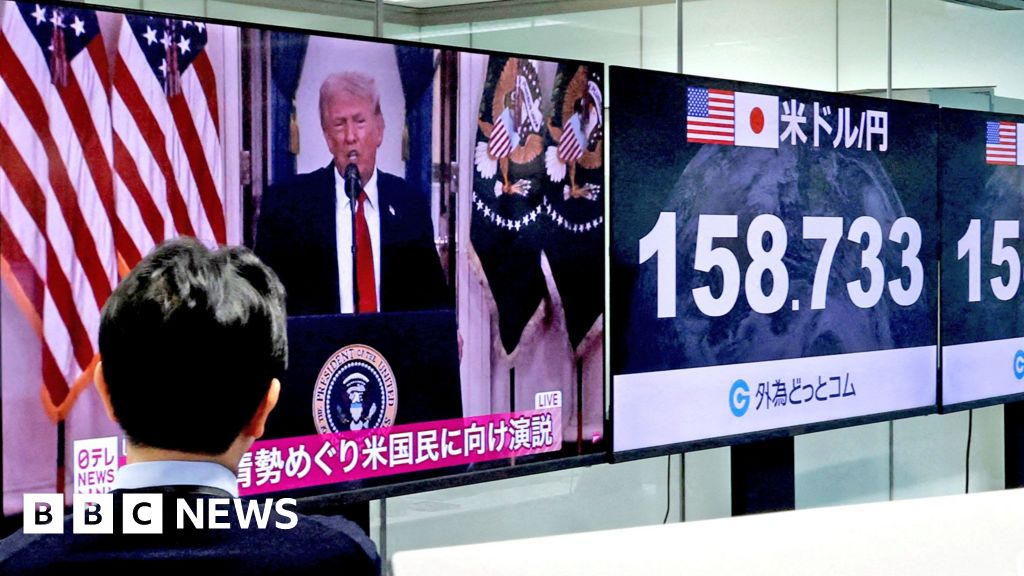
LONDON – Global markets reacted sharply Thursday to escalating tensions in the Middle East, triggered by a series of strikes and counter-threats between the United States, Israel, and Iran. Oil prices surged even as stock markets experienced widespread declines following a national address by the US president, as investors braced for potential disruption to global energy supplies and increased geopolitical instability. The situation remains highly volatile, with both sides signaling a willingness to escalate the conflict.
The immediate catalyst for the market turbulence was the US president’s address, during which he vowed a strong response to recent actions by Iran and its proxies. While details of any potential military action were scarce, the rhetoric employed – described by some as unusually forceful – rattled investors already on edge due to ongoing regional instability. The lack of a clear articulation of an end-game strategy, however, added to the uncertainty.
Oil Prices Climb Amid Supply Fears
Brent crude, the international benchmark, jumped more than 4% in early trading, reaching levels not seen in months. West Texas Intermediate (WTI), the US benchmark, also saw significant gains. Al Jazeera reports that the price increase reflects concerns about potential disruptions to oil shipments through the Strait of Hormuz, a critical chokepoint for global oil supplies.

“The market is pricing in a risk premium,” explained Dr. Emily Carter, a senior energy analyst at the London School of Economics. “Any military conflict in the region has the potential to significantly impact oil production and transportation, leading to higher prices. The uncertainty surrounding the duration and scope of the conflict is exacerbating these concerns.” The Strait of Hormuz handles approximately 20% of the world’s oil supply, according to the US Energy Information Administration.
Stock Markets Fall as Investors Seek Safe Havens
Global stock markets largely moved lower on Thursday, as investors sought safer assets such as gold and government bonds. The S&P 500, Dow Jones Industrial Average, and Nasdaq Composite all experienced declines. European markets followed suit, with the FTSE 100, DAX, and CAC 40 all closing in negative territory.
“Investors are reacting to the increased geopolitical risk,” said Michael Thompson, a portfolio manager at BlackRock. “The situation in the Middle East is creating a significant amount of uncertainty, and investors are understandably pulling back from riskier assets.” The flight to safety was particularly evident in the bond market, where yields on US Treasury bonds fell sharply, indicating increased demand for these assets.
Iran Vows Retaliation, US and Israel Step Up Strikes
The escalating tensions follow a series of recent incidents, including strikes attributed to Israel against Iranian targets in Syria. Iran has vowed to retaliate for these attacks, raising fears of a wider regional conflict. The US has reaffirmed its support for Israel, while also urging restraint.
According to reports, the US and Israel have stepped up their military preparations in the region, signaling a potential for further escalation. The exact nature of these preparations remains unclear, but analysts suggest they include increased troop deployments and the positioning of naval assets. The Iranian president, in a letter to the US public, questioned whether the current course of action truly represents “America First,” a slogan frequently used by the US president. CNN reported on the contents of the letter, which accused the US of pursuing policies that destabilize the region.
Impact on Global Economy
The potential for a wider conflict in the Middle East poses a significant threat to the global economy. Beyond the immediate impact on oil prices, a prolonged conflict could disrupt supply chains, increase inflation, and dampen economic growth. The International Monetary Fund (IMF) has warned that a significant escalation of tensions could have severe consequences for the global economy.
“The Middle East is a strategically significant region for global trade and energy supplies,” said Gita Gopinath, the IMF’s First Deputy Managing Director. “Any disruption to these flows could have a significant impact on the global economy.” The IMF is closely monitoring the situation and is prepared to provide assistance to countries affected by the conflict.
What Happens Next?
The immediate future remains uncertain. Diplomatic efforts to de-escalate the situation are ongoing, but progress appears limited. The US president is expected to address the nation again in the coming days, outlining his administration’s strategy for dealing with Iran. The Iranian government has also indicated that it will respond to any further aggression.
Analysts warn that the risk of miscalculation is high, and that a small incident could quickly escalate into a full-blown conflict. The coming days and weeks will be critical in determining whether the situation can be contained or whether the region is headed for a wider war. The next key event to watch will be the outcome of ongoing diplomatic discussions between the US and regional powers, expected to conclude by the end of the week.
This is a developing story and will be updated as more information becomes available.
Do you have thoughts on this developing situation? Share your perspective in the comments below. Please also share this article with your network to keep others informed.
Keep reading