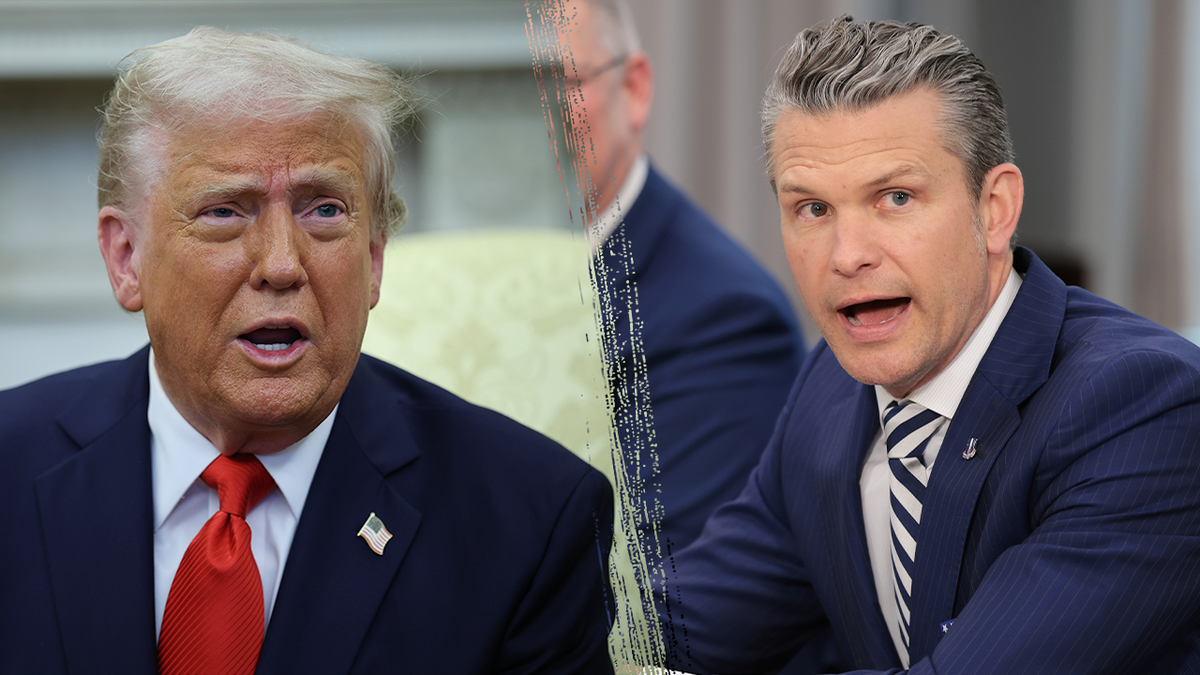
Defense Secretary Pete Hegseth has shaken the foundations of the U.S. Army’s top leadership, demanding the immediate retirement of Army Chief of Staff Gen. Randy George. The abrupt removal of the service’s top uniformed officer marks one of the most significant leadership upheavals in recent military history, occurring while the United States is engaged in a conflict with Iran.
The decision to oust Gen. George is not an isolated event but part of a broader pattern of dismissals since Hegseth took office in January. According to sources familiar with the matter, the Defense Secretary is seeking a leadership team that will strictly implement the vision for the Army held by both Hegseth and President Donald Trump CBS News.
Chief Pentagon spokesperson Sean Parnell confirmed the transition in a statement, noting that George “will be retiring from his position as the 41st Chief of Staff of the Army effective immediately.” Parnell added that the Department of War expressed gratitude for General George’s decades of service to the nation CBS News.
A String of High-Profile Dismissals
The removal of the Army Chief of Staff is the latest in a series of high-profile exits within the U.S. Armed forces. Alongside Gen. George, two other senior officers were removed from their roles: Gen. David Hodne, who led the Army’s Transformation and Training Command, and Maj. Gen. William Green, the head of the Army’s Chaplain Corps CBS News.
The timing of these removals has drawn significant attention due to the current geopolitical climate. The leadership changes are taking place amid the ongoing war between the U.S., Israel, and Iran, leading to questions regarding the stability of the military chain of command during active wartime operations Al Jazeera.
The Career and Legacy of Gen. Randy George
Gen. Randy George, 61, is a West Point graduate and a career infantry officer with extensive operational experience. His service record spans several decades, including deployments during the first Gulf War as well as the more recent conflicts in Iraq and Afghanistan CBS News.
Before ascending to the role of Chief of Staff, George served as the senior military assistant to former Defense Secretary Lloyd Austin from 2021 to 2022 during the Biden administration CBS News. He was nominated for the position of Chief of Staff by President Joe Biden and confirmed by the Senate in 2023 CBS News.
Typically, the Army Chief of Staff serves a four-year term, which would have seen Gen. George in the position until 2027. During his tenure, George was credited with efforts to modernize the force, specifically by removing redundancies and integrating advanced technologies, including artificial intelligence-powered targeting systems and low-cost missile interceptor drones Al Jazeera.
New Leadership: Enter Gen. Christopher LaNeve
With Gen. George’s immediate departure, Gen. Christopher LaNeve has stepped in as the acting Army chief of staff. LaNeve’s appointment is seen by some as a move toward a more aligned leadership structure, as he previously served as Pete Hegseth’s military aide CBS News.

Gen. LaNeve brings a background of high-level command to the acting role, having served as the commanding general of the Army’s 82nd Airborne Division from 2022 to 2023 CBS News. His elevation suggests a shift toward the “warrior mentality” and specific strategic goals favored by the current administration.
Summary of Leadership Changes
| Officer | Former Role | Status |
|---|---|---|
| Gen. Randy George | Chief of Staff of the Army | Retired (Immediate) |
| Gen. David Hodne | Lead, Transformation and Training Command | Removed |
| Maj. Gen. William Green | Head, Army Chaplain Corps | Removed |
| Gen. Christopher LaNeve | Vice Chief of Staff | Acting Chief of Staff |
Analysis: Military Alignment and Wartime Stability
The removal of a Chief of Staff during a wartime period is a rare and stark move. A senior Defense Department official told CBS News that while the department was grateful for George’s service, “it was time for a leadership change in the Army” CBS News.
This transition underscores a desire for total alignment between the civilian leadership of the Department of Defense and the uniformed military. By replacing officers appointed under a previous administration with those who share the current administration’s strategic outlook, Secretary Hegseth is effectively reshaping the Army’s operational philosophy. This shift comes at a critical juncture, as the U.S. Navigates the complexities of the conflict with Iran, where strategic agility and leadership cohesion are paramount.
For the global community, these changes signal a potential shift in how the U.S. Army will approach future engagements and technological integration. While Gen. George focused on AI and efficiency, the new leadership under Gen. LaNeve may prioritize different tactical and strategic objectives as defined by the White House.
The Pentagon has not yet announced a permanent successor to the 41st Chief of Staff, leaving Gen. LaNeve in the acting role for the foreseeable future. Further updates regarding permanent appointments and the administration’s specific “vision” for the Army are expected as the current conflict evolves.
World Today Journal will continue to monitor these developments. We invite our readers to share their perspectives on these leadership shifts in the comments below.
Keep reading