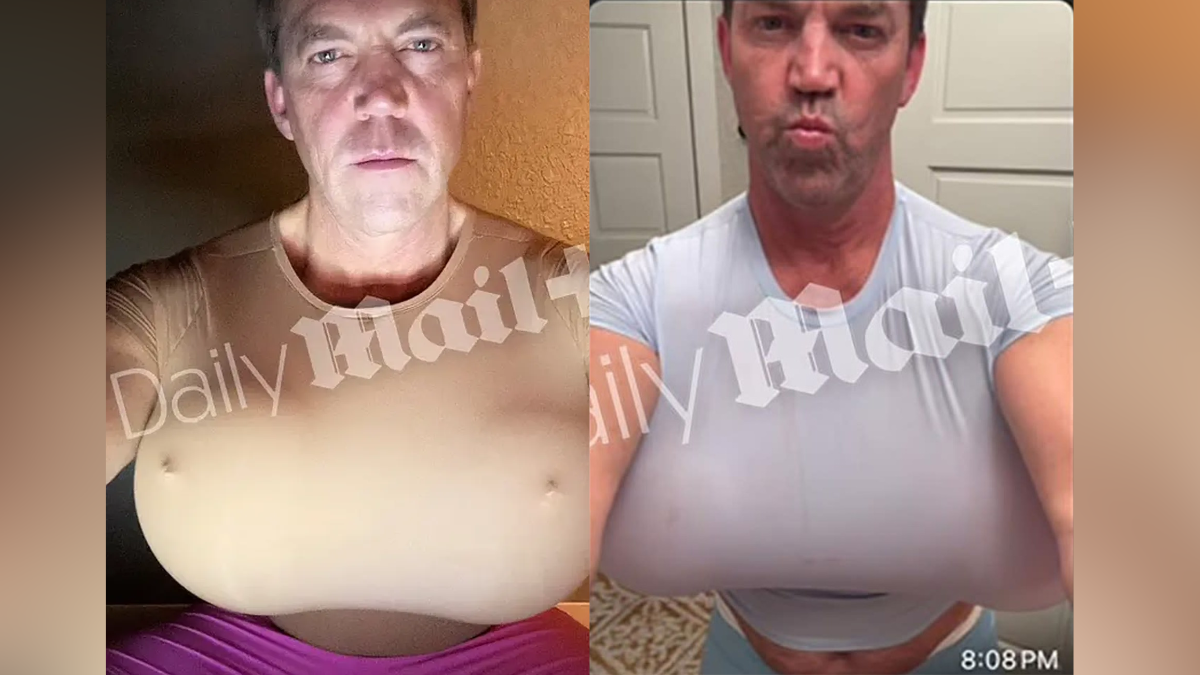
A digital double life involving a niche sexual fetish has ignited a firestorm of controversy surrounding the family of Kristi Noem, the former head of the U.S. Department of Homeland Security. Leaked photographs and messages have revealed that her husband, Bryon Noem, has been deeply immersed in the world of “bimbofication,” a practice centered on the extreme, artificial hyper-feminization of the human form.
The scandal broke following an investigation by the British tabloid Daily Mail, which published images of the 56-year-old Bryon Noem dressed in feminine attire, featuring exaggerated physical attributes and sensual posing. The revelations have left the former official “devastated,” according to sources close to her, coming just one week after she vacated her high-profile role leading the nation’s security apparatus reported by La Voz Arizona.
Beyond the visual shock of the leaked imagery, the investigation uncovered a significant financial commitment to the subculture. Bryon Noem reportedly spent at least $25,000 to engage and chat with models within the bimbofication scene per La Voz Arizona. The images, which include Noem wearing pink shorts and utilizing large, inflatable breast prosthetics made from balloons, have since circulated widely across social media and fetish forums.
Understanding ‘Bimbofication’: From Archetype to Fetish
To the general public, the term “bimbo” has long been a derogatory slur. However, the modern “bimbofication” movement has transformed this stereotype into a specific sexual and aesthetic fetish. At its core, the practice seeks to achieve a “fake” and extremely sexualized image of femininity. This is typically characterized by voluminous lips, oversized breast implants (or prosthetics), heavy makeup, and exceptionally long, polished nails according to El Mundo.
The etymology of the word “bimbo” reveals a surprising shift in meaning. Originally derived from Italian, the term was used to describe a childish or foolish man. By the late 20th century, the English-speaking world co-opted the word as a pejorative for women who were perceived as physically exuberant but intellectually superficial. Cultural icons such as Marilyn Monroe, Pamela Anderson, and Paris Hilton were often reduced to this archetype by the male gaze, framed as successful women who were nevertheless viewed as mere sexual objects per La Voz Arizona.
In the digital age, this archetype has evolved into a curated online identity. Platforms like TikTok and Instagram have seen the rise of “bimbo” creators, such as Chrissy Chlapecka, who lean into the hyper-feminine aesthetic. While primarily associated with women, the trend has expanded to include men who adopt these traits as part of a fetishistic exploration of gender and sexuality, treating the human body as a customizable, doll-like object as noted via Instagram.
The Political Collision: Public Persona vs. Private Desire
The scandal is particularly jarring given the political standing of Kristi Noem. As a prominent conservative figure and former head of the Department of Homeland Security, Noem has built a public image rooted in traditional values and strict governance. The contrast between this rigid public persona and the surreal, hyper-sexualized nature of her husband’s private habits has created a profound narrative clash.
For many observers, the story is less about the act of cross-dressing and more about the specific nature of the “bimbofication” fetish, which emphasizes the erasure of intellect in favor of artificial, exaggerated sexual appeal. The fact that Bryon Noem—the former first gentleman of South Dakota—was actively participating in these forums and spending thousands of dollars on virtual interactions has turned a private preference into a public liability.
Key Elements of the Bimbofication Aesthetic
- Hyper-feminization: The pursuit of an exaggerated, often “plastic” female appearance.
- Artificial Enhancements: Heavy reliance on prosthetics, such as inflatable breasts or voluminous lip fillers.
- Performative Sexuality: The use of “sexy” poses and heavy, theatrical makeup to mimic a doll-like state.
- Digital Community: A reliance on hashtags like #bimbofication to find like-minded practitioners and models on TikTok and Instagram.
The Fallout and Social Impact
The leak has sparked a wider conversation about the boundaries of privacy for the spouses of high-ranking government officials. While Bryon Noem held no official government role during his wife’s tenure as DHS chief, the nature of the images—and the financial transactions associated with them—has led to intense scrutiny of the family’s private life.
In South Dakota, the reaction has been mixed, with some neighbors expressing sympathy for the husband amidst the public shaming, while others view the scandal as an embarrassment to the state’s former leadership. The psychological toll on Kristi Noem, described as being “devastated,” highlights the collision between the hidden worlds of online fetishism and the unforgiving light of political fame.
Timeline of the Scandal
| Date | Event | Detail |
|---|---|---|
| March 31, 2026 | Initial Investigation | Daily Mail publishes photos and messages of Bryon Noem via La Voz Arizona. |
| April 1, 2026 | Financial Disclosure | Reports emerge of at least $25,000 spent on bimbofication models. |
| April 2, 2026 | Mainstream Analysis | Global outlets analyze the “bimbofication” fetish and its roots via El Mundo. |
As the story continues to evolve, the focus remains on whether this personal scandal will have lasting implications for Kristi Noem’s future political aspirations or her legacy as a security chief. For now, the Noem family remains in the crosshairs of a global audience fascinated by the intersection of high-level politics and the deepest corners of internet subculture.
We find currently no scheduled public statements or hearings regarding this matter. We will provide updates as official responses are released.
What are your thoughts on the intersection of private life and public office in the digital age? Share your views in the comments below.
Keep reading