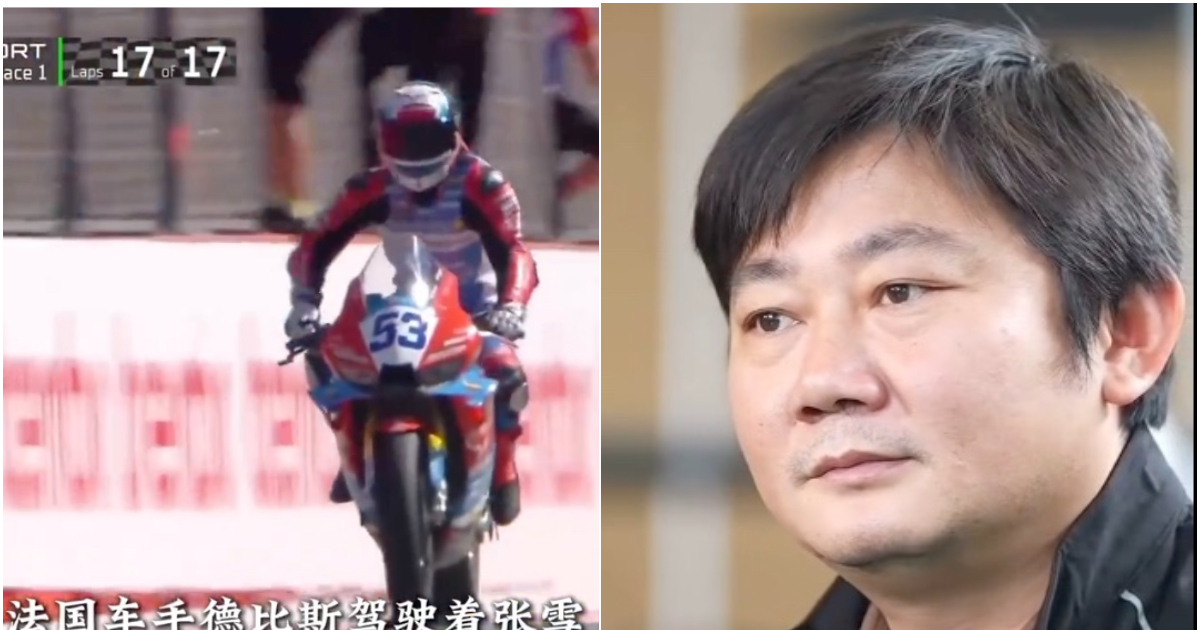
The global landscape of high-performance motorcycling, long dominated by a tight circle of European and Japanese giants, has been shaken by an unexpected disruptor. In a stunning turn of events at the World Superbike Championship (WSBK) Portugal round, a Chinese brand has not only competed but dominated, marking a historic shift in the industry’s power dynamics.
The Zhang Xue Motorcycles WSBK win represents more than just a podium finish; it is a statement of engineering maturity from a region previously labeled as a producer of low-cost, low-quality machinery. By securing consecutive victories in the SSP category, Zhang Xue Motorcycles has dismantled the long-standing monopoly held by brands like Ducati, Yamaha and Kawasaki, proving that the “Made in China” label can now compete at the absolute pinnacle of motorsport.
The victory was characterized by a level of dominance rarely seen in top-tier racing. In the first round, the team managed to pull away from the competition with a staggering lead of nearly four seconds before crossing the finish line. This “gap” has since grow a talking point across social media and industry forums, symbolizing a “breakthrough” in both technical capability and strategic execution.
The Anatomy of a Victory: Technical Precision and the “Late Braking” Edge
Success in the World Superbike Championship is not merely about the rider’s bravery; it is a symbiotic relationship between human skill and mechanical engineering. Because WSBK requires vehicles to be based on mass-produced models with limited modifications, the results are a direct reflection of a manufacturer’s production-line engineering and overall technical prowess as noted in industry reports.
For Zhang Xue Motorcycles, the victory was steered by French rider Valentin Debise (Rider #53). According to founder Zhang Xue, the win was the result of a perfect alignment between the bike’s performance and Debise’s aggressive riding style. Debise is categorized as a “heavy braking, late braking” type of athlete, a technical approach that allows a rider to maintain higher speeds for longer before decelerating into a turn.
The difference in performance was measurable. Zhang Xue analyzed that while typical riders begin their braking phase approximately 100 meters before a turn, Debise was able to delay this action until the 90-meter mark without losing control. This 10-meter advantage, compounded over dozens of laps, created a decisive edge that the opposing riders could not overcome.
Beyond the rider’s technique, the race dynamics played a crucial role. Zhang Xue noted that once Debise broke away from the main pack, he was able to maintain his own rhythm and optimal racing line without interference. Meanwhile, the riders in second, third, and fourth place remained locked in a battle of attrition, mutually obstructing each other’s lines and losing critical fractions of a second every lap, which only widened the gap to the leader.
Engineering the Breakthrough: The Three-Cylinder Powerhouse
The mechanical heart of this victory is a self-developed three-cylinder engine that defies previous expectations of Chinese motorcycle engineering. This engine is capable of reaching 16,000 RPM, providing a power-to-weight ratio that outperforms many of its direct competitors in the same class according to technical analyses.

The commitment to vertical integration is evident in the bike’s construction. The manufacturer utilized a 100% autonomous technical chain, incorporating:
- Custom engine casting processes.
- High-performance titanium alloy valves.
- Advanced carbon fiber bodywork to minimize weight.
This shift from relying on foreign technology imports to defining their own performance standards indicates a structural change in how high-end motorcycles are developed in China.
The Chongqing Connection: A Supply Chain Revolution
While the engine was a feat of internal R&D, the victory was supported by a massive industrial ecosystem. The brand leverages the unique industrial clustering of Chongqing, known globally as the “Motorcycle Capital.” This geographic advantage provides a density of suppliers that is nearly unmatched by European or Japanese competitors.
In Chongqing, more than 400 critical component enterprises are located within a 100-kilometer radius according to industry data. This proximity allows for a rapid iteration cycle where a design on a blueprint can be prototyped and mass-produced with extreme speed. This supply chain synergy, extending into Guangdong and Jiangsu, allowed Zhang Xue Motorcycles to achieve breakthroughs in lightweighting and performance that would typically take years of development in more fragmented markets.
This “extreme cost-performance” ratio is now allowing the brand to offer specifications that rival or exceed imported bikes while maintaining a price point that is often half that of their European counterparts, creating a significant competitive threat in markets across Southeast Asia, Latin America, and Europe.
From Grassroots Mechanic to Global Competitor
The rise of Zhang Xue Motorcycles is as much a human story as it is a technical one. The founder, Zhang Xue, did not start in a corporate boardroom but as a grassroots repairman. His journey is a testament to long-term obsession and relentless work ethic.
For two decades, Zhang Xue dedicated his life to the study and manufacture of motorcycles. His commitment was absolute; he reportedly took fewer than five days of rest per year over a long period, pouring every resource into R&D as detailed in biographical accounts. This 20-year investment provided the foundational knowledge necessary to transition from a local manufacturer to a brand capable of winning a world-class championship.
A Victory Beyond the Track: Philanthropy and Public Image
The sudden fame following the WSBK win brought unexpected attention and a unique philanthropic gesture. Following the victory, entrepreneur Chen Guangbiao offered to gift Zhang Xue a limited-edition Rolls-Royce Phantom, valued at approximately 13 million RMB according to public reports.
In a move that has garnered significant positive attention on social media, Zhang Xue responded that if the gift were realized, he would sell the luxury vehicle at a discounted price and donate the entire proceeds to the Yanran Angel Foundation, a charity founded by actor Li Yapeng to help children with cleft lips and palates as reported by multiple news outlets. This gesture has helped pivot the brand’s image from a purely technical disruptor to a socially conscious enterprise.
Key Takeaways: What This Win Means for the Industry
| Area of Impact | Previous Status | Current Shift |
|---|---|---|
| Market Perception | Chinese bikes seen as “cheap/low quality” | Recognized for “extreme technical core” |
| Technical Capability | Dependent on foreign technology | Autonomous 16,000 RPM engine development |
| Industry Structure | European/Japanese hegemony | Emergence of Chinese vertical integration |
| Competitive Strategy | Following established standards | Defining recent performance-to-price benchmarks |
The implications of this victory extend far beyond the trophy. For the global motorcycle industry, it signals that the barrier to entry for high-performance machinery has been lowered by the combination of aggressive R&D and highly efficient supply chain clusters. The “断层式” (stratified/gap-creating) victory in Portugal serves as a warning to established brands that the gap in engineering is closing rapidly.
As the racing season continues, the focus will shift to whether Zhang Xue Motorcycles can maintain this consistency across different tracks and conditions. The world will be watching to see if this win was a one-time “upset” or the beginning of a new era in motorsport dominance.
We will continue to monitor official WSBK standings and technical updates as the season progresses. For those interested in the intersection of global industry and sport, this story remains a critical case study in rapid industrial ascension.
Do you think the rise of Chinese high-performance brands will force European and Japanese manufacturers to lower their prices or increase their innovation? Share your thoughts in the comments below.
Related reading
- Gov. Andy Beshear Demands Sen. Mitch McConnell Address Health and Absence from Congress
- América Player Commits Foul During Ball Dispute
- Netanyahu Meets Trump in Washington to Prioritize Iran Security Strategy (time.news)
- Spider-Man: Brand New Day Premiere Highlights and Box Office Predictions (newsdirectory3.com)