
In the desolate stretches of the Atacama Desert, where the landscape mirrors the stark, unforgiving terrain of another world, scientists have uncovered a discovery that could redefine our search for extraterrestrial life. Researchers have identified what they describe as a biological time capsule in Chile, finding ancient microorganisms still clinging to existence within salt crystals millions of years after their entrapment.
The find, located in the Salar de Pajonales, suggests that life possesses a far more resilient capacity for survival than previously understood. By thriving in one of the most extreme environments on Earth, these microorganisms provide a critical terrestrial analog for the conditions found on Mars, offering a roadmap for where NASA and other space agencies should look for signs of ancient or extant Martian life.
For those of us following the intersection of technology and planetary science, this isn’t just a biological curiosity; We see a strategic breakthrough. If life can be preserved in mineral repositories on Earth despite lethal radiation and extreme temperature swings, the probability of finding similar “time capsules” in the sulfate-rich deposits of the Red Planet increases significantly.
The Secret of Salar de Pajonales
The discovery took place at the Salar de Pajonales, a high-altitude salt flat situated 3,500 meters above sea level in northern Chile according to reports on the region’s biological secrets. This environment is characterized by conditions that would be fatal to most known life forms: scorching solar radiation, negligible precipitation, and violent winds that frequently exceed 100 km/h as detailed in recent scientific analysis.
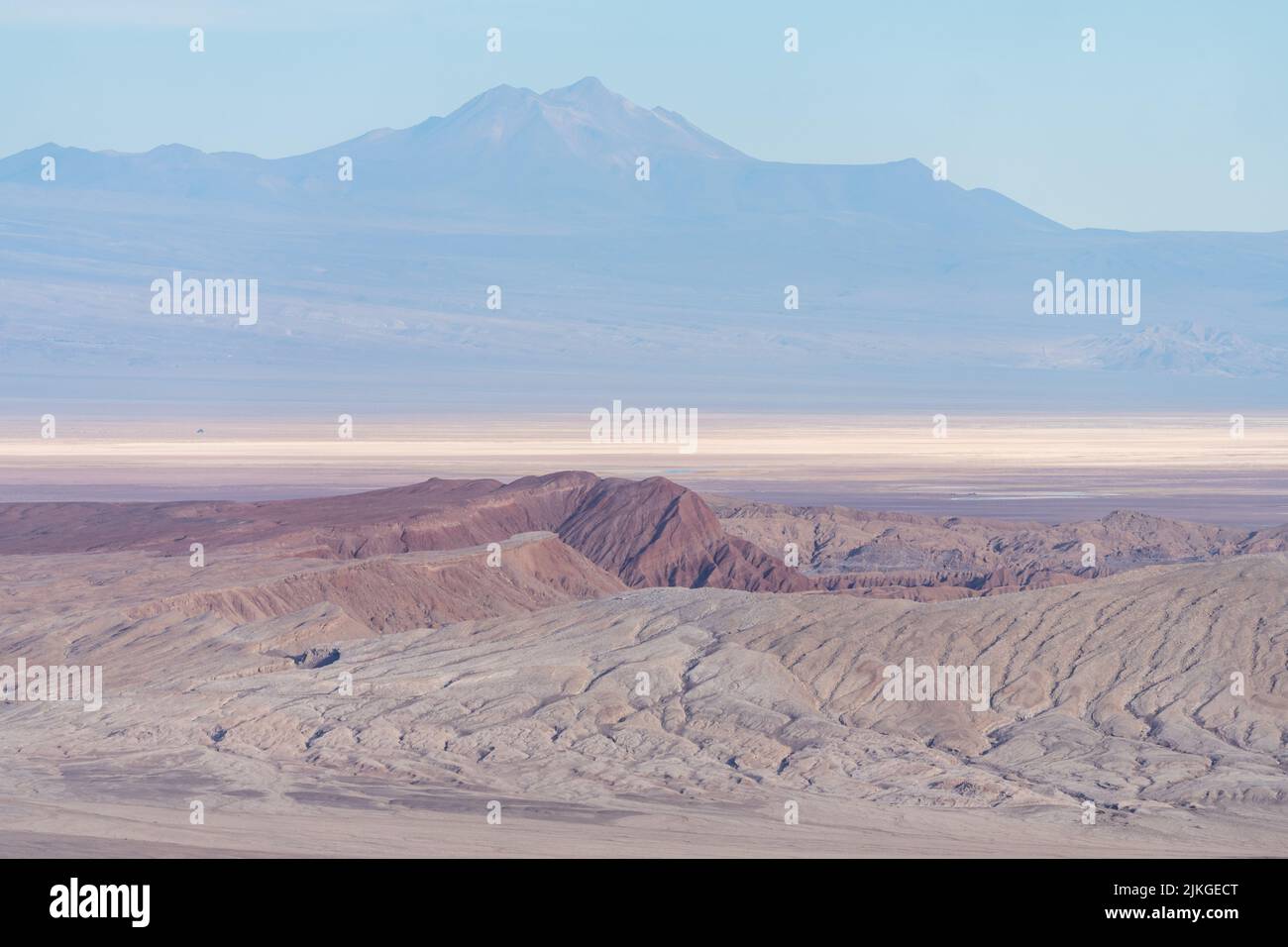
Temperature fluctuations in the Salar are equally brutal, oscillating between a freezing -23°C and a high of 26°C per research data. Despite these hostile parameters, a team of researchers discovered that life has not only survived but has found a way to persist across geological timescales.
The key to this survival is the mineral gypsum. The research indicates that gypsum is not merely a sedimentary rock but functions as a sophisticated biological repository. It acts as a protective shield, preserving organic material from degradation for millions of years and harboring microorganisms within its crystalline structures.
Why Gypsum is a Biological Goldmine
To understand why this is a “time capsule,” one must look at the molecular level. Gypsum is capable of preserving both current life—microorganisms living within the crystals—and “molecular fossils,” which are microscopic structures and organic traces of organisms that lived eons ago as reported by Xataka.
This ability to sequester and protect biological matter from the elements makes gypsum an “immanent magnet” for biological preservation in hyper-arid conditions. In the Salar de Pajonales, the mineral effectively freezes biological data in time, protecting it from the lethal UV radiation and the desiccating winds of the Atacama.
This discovery transforms our understanding of “extreme” life. It proves that the absence of liquid water on the surface does not necessarily mean the absence of life; rather, it suggests that life may migrate into the mineral subsurface to survive periods of planetary drying.
From the Atacama to the Red Planet
The implications for astrobiology are immediate and profound. Gypsum is a common mineral on both Earth and Mars. Because the Salar de Pajonales serves as such an effective biological archive, scientists now have a specific target for Martian exploration: sulfate deposits.
One of the most promising locations identified is the Gale Crater on Mars, which is known for its abundant sulfate deposits according to verified research contexts. If the Martian version of these minerals behaves like the gypsum in Chile, they could be harboring the very evidence of extraterrestrial life that scientists have sought for decades.
Historically, the search for life on Mars focused on where water used to be—such as the ancient oceans that covered half the planet 3.370 billion years ago per geological data. However, the Chilean discovery suggests that we should be looking at where life could have hidden as the planet dried out.
Key Takeaways: The Chile-Mars Connection
- The Discovery: Microorganisms were found alive in millions-of-years-classic salt crystals in the Atacama Desert as noted by MSN Science.
- The Mechanism: Gypsum acts as a biological repository, protecting organic matter and molecular fossils from degradation.
- The Environment: Survival was confirmed in conditions of extreme radiation and temperatures ranging from -23°C to 26°C.
- The Mars Target: Sulfate deposits, such as those in the Gale Crater, are now prime targets for searching for Martian life.
The Logistics of the Search: Artemis II and Beyond
This scientific breakthrough arrives at a pivotal moment in space exploration. While researchers on the ground in Chile are decoding the secrets of gypsum, engineering efforts are underway to return humans to deep space. The Artemis II mission is currently viewed as a critical bridge of engineering and logistics, serving as a long-duration trial for future interplanetary voyages per mission outlines.
The synergy between the biological findings in the Atacama and the logistical progress of the Artemis program creates a clear trajectory: we are refining where to look while simultaneously perfecting how to get there. The discovery in Chile provides the “what” (gypsum/sulfates) and the “why” (biological preservation), while Artemis provides the “how.”
As we move closer to potential crewed missions to Mars, the ability to identify “biological time capsules” will be essential for selecting landing sites and sampling locations. The Salar de Pajonales has effectively provided a terrestrial blueprint for the first successful detection of extraterrestrial biological signatures.
The next critical checkpoint for the broader space community remains the continued progression of the Artemis missions, which will pave the way for the eventual human exploration of the Martian surface and the search for these elusive mineral repositories. We will continue to monitor updates on the Artemis timeline and further astrobiological findings from the Atacama region.
Do you believe the evidence in the Atacama makes the discovery of Martian life inevitable? Share your thoughts in the comments below or share this article with your network.
Related reading