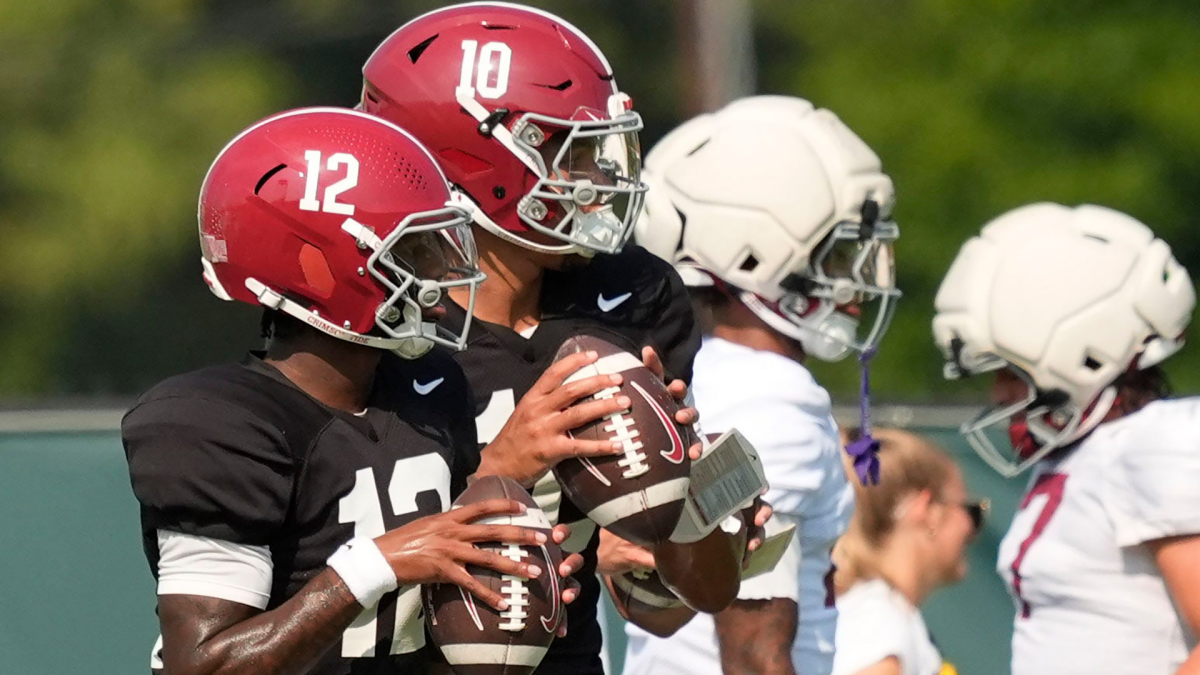
As the collegiate football calendar turns toward the final stretch of spring practice, the intensity surrounding quarterback competitions has reached a fever pitch. For programs across the Power Four ranks, these 15 allotted spring sessions are far more than simple drills; they are the primary window for schematic installation, player development, and the high-stakes determination of who will lead the huddle come August.
The current landscape of college football spring QB battle updates reveals a volatile mix of unexpected vacancies and strategic patience. While some coaching staffs are leaning toward established internal candidates, others are relying on the transfer portal to inject veteran stability into young rooms. With the three-month offseason looming, the pressure is mounting for competitors to separate themselves during final scrimmages and upcoming spring games.
For transfer quarterbacks, this period is critical. Beyond the physical reps, the spring serves as the only opportunity to establish chemistry with personnel and master complex terminology before the real fight for the starting role begins in fall camp. From the SEC to the ACC, the battle for the most influential position in sports is currently unfolding with varying degrees of certainty.
Tennessee: A Legal Twist and a Three-Way Race
The quarterback situation in Knoxville has evolved into one of the most mysterious and difficult-to-project competitions in the SEC. The volatility was triggered when a Knoxville judge denied Joey Aguilar’s request for another season with the Volunteers, forcing head coach Josh Heupel to pivot to a “Plan B” strategy to fill the void.
Currently, the competition focuses on three primary challengers: redshirt freshman George MacIntyre, five-star true freshman Faizon Brandon, and Colorado transfer Ryan Staub. According to recent reports, MacIntyre has emerged as the frontrunner in the race. His experience is limited, having recorded only nine total passing attempts last season behind Aguilar, but he is currently battling for the top spot as spring practice concludes.
Adding depth to the room is Ryan Staub, who brings a different pedigree having started two games over three years during his tenure with the Colorado Buffaloes. Following Tennessee’s second spring scrimmage this month, Heupel remained guarded about his preference, though he noted that MacIntyre and Brandon appeared to split repetitions. The head coach expressed satisfaction with the decision-making displayed by the pair, leaving the final determination for the upcoming Saturday spring game.
Georgia Tech: Prioritizing Long-Term Development
While some programs are racing toward a decision, Georgia Tech head coach Brent Key is taking a more measured approach. The Yellow Jackets have maintained an open competition at the position, treating the quarterback room as a “developmental position” rather than a race for an immediate, locked-in starter.
To balance the room, Georgia Tech brought in Alberto Mendoza, a transfer from Indiana, to provide veteran leadership among a group of younger players. Key has praised Mendoza’s ability to handle the mental load of the offense, specifically citing his proficiency with communication, tempo plays, and long verbiage. However, the competition remains wide open, with Grady Adamson—who redshirted last season—and the patient Graham Knowles also vying for playing time.
The room also features Cole Bergeron, a highly touted former four-star prospect from the 2026 recruiting cycle. In a recent update, Coach Key noted that while Mendoza is doing a “good job,” Adamson also produced several strong plays in recent sessions during the wind-down of spring. Given the developmental focus, a final decision on the depth chart is unlikely to be reached until the summer or the early stages of fall camp.
Shifting Dynamics at Clemson
The ripple effects of spring practice are also being felt at Clemson, where the quarterback dynamic has seen “stunning” changes. Internal reports indicate that a player named Reynolds has been drawing increasingly positive reviews as the spring progressed, performing at a level that has frequently positioned him as the second-string option in the rotation.
Key Takeaways for the 2026 Spring QB Battles
- Legal Impacts: Tennessee’s depth chart was fundamentally altered after a judicial ruling denied Joey Aguilar’s request for an additional season.
- Transfer Influence: Programs like Georgia Tech and Tennessee are utilizing the transfer portal (Alberto Mendoza and Ryan Staub, respectively) to add veteran experience to youth-heavy rooms.
- Developmental Timelines: Not all programs are rushing to name a starter; Georgia Tech is intentionally keeping the position open through the summer to prioritize growth.
- Recruiting Pedigree: High-profile recruits, such as four-star Cole Bergeron at Georgia Tech and five-star Faizon Brandon at Tennessee, are being integrated into active competitions.
As these programs break for their three-month offseason, the data gathered from 15 practices and multiple scrimmages will serve as the blueprint for the 2026 season. For the athletes, the focus now shifts to off-field conditioning and continued study of the playbook before the final battles resume in August.
The next confirmed checkpoint for these programs will be the conclusion of their respective spring games and the subsequent transition into summer workouts. We will continue to monitor the depth chart shifts as fall camp approaches.
Do you think the “developmental” approach is the right move for Georgia Tech, or should they name a starter now? Share your thoughts in the comments below.