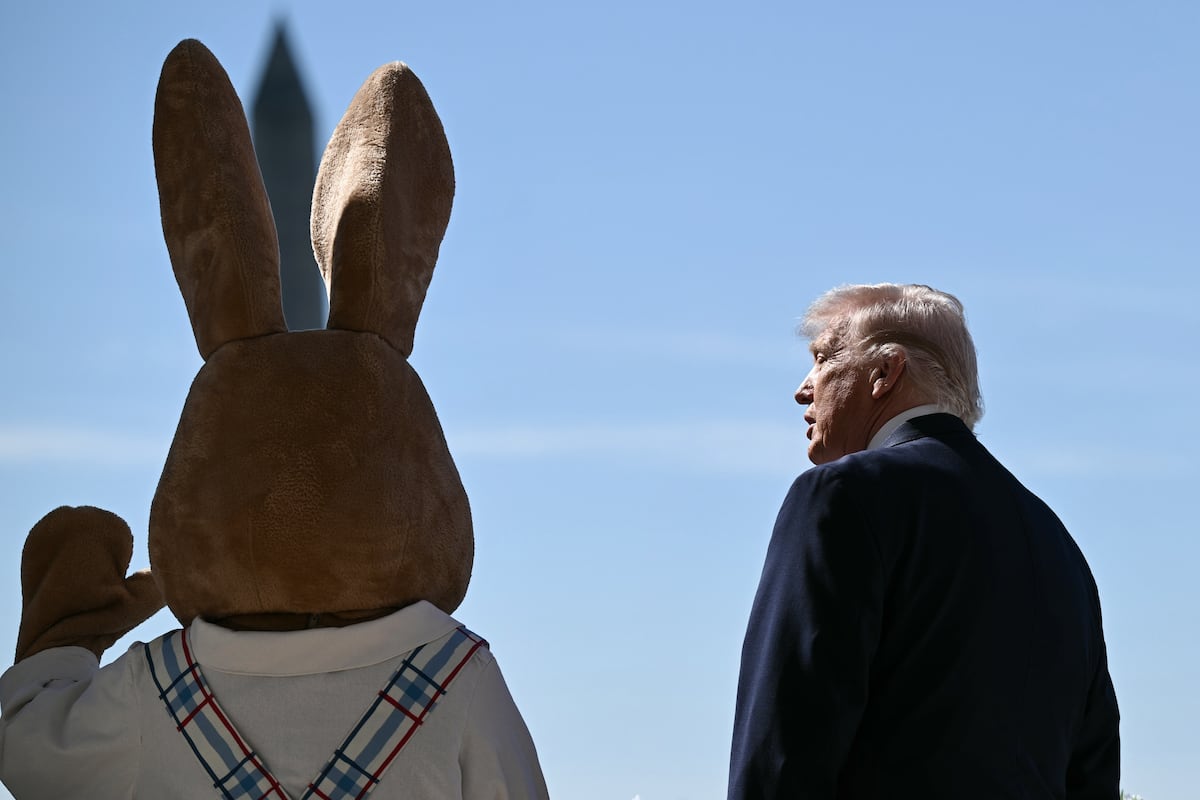
President Donald Trump revealed on Monday that the United States conducted a failed operation to deliver weaponry to rebels in Iran during a wave of anti-regime protests in January. The disclosure, made during an annual Easter celebration at the White House, highlights a clandestine effort to support internal opposition that ultimately collapsed due to the failure of intermediaries to distribute the arms caches.
The revelation follows a series of informal, short telephone interviews conducted by the president over the weekend, in which he first alluded to the operation. Speaking publicly on Monday, April 6, 2026, Trump detailed the collapse of the mission, noting that while the weapons were intended for those fighting the current regime, the intermediaries tasked with the delivery failed to ensure the alijos reached their intended targets.
Failure of Distribution and the Kurdish Connection
While President Trump did not specifically name the intermediaries during his formal remarks on Monday, he had previously accused Kurdish groups of being involved in the failure during his informal phone conversations over the weekend. The president characterized the failure as a theft, promising that those responsible for the missing weaponry “van a pagar un precio muy caro por ello” (will pay a very high price for it).
The operation took place in January 2026, a period marked by intensified protests against the Iranian regime. The U.S. Strategy appeared to be aimed at capitalizing on a perceived moment of weakness within the Islamic Republic to embolden rebel forces on the ground. However, the inability to secure the distribution chain left the rebels without the promised support.
Broader Strategy and the Desire for Freedom
The failed arms delivery comes amid a volatile period of U.S.-Iran relations. In a press conference on April 6, 2026, President Trump asserted his belief that the Iranian people possess a deep aspiration to be free, but are deterred from open rebellion by the threat of state violence. Trump claimed that Iranians “gain angry” when bombs do not fall on the Republic because they desire liberation, yet they refrain from taking to the streets due to the very real fear of being imprisoned or executed .
This ideological stance aligns with a more aggressive military posture. Reports indicate that the U.S. Administration has been weighing the possibility of a ground war in Iran . While the president has expressed a preference for negotiation, those negotiations remain stalled, as Iranian officials have stated they will not engage until a ceasefire is declared .
Key Implications of the Disclosure
- Operational Security: The public admission of a failed covert arms operation may impact future U.S. Efforts to collaborate with regional intermediaries and rebel groups.
- Regional Tension: The specific accusation against Kurdish groups, though made informally, could strain relations with key non-state actors in the region.
- Escalation Risks: The combination of failed covert operations and the consideration of ground troops suggests a high-risk phase in U.S. Foreign policy toward Tehran.
As the administration continues to evaluate its options, the focus remains on whether the U.S. Will pursue further covert support for Iranian rebels or shift toward the more direct military interventions currently being considered.
The next confirmed checkpoint regarding this matter will be the administration’s response to the missing arms caches and whether formal charges or sanctions are levied against the intermediaries mentioned by the president.
World Today Journal encourages readers to share this story and provide their perspective on U.S. Foreign policy in the comments section below.
- Prophet’s Birthday 2026: Official Dates and Holiday Rescheduling Rules for Public and Private Sectors
- Reform UK: The Rise of Nigel Farage’s New Party After Brexit
- Trump Pushes SAVE Act to Mandate Voter ID and Proof of Citizenship (newsdirectory3.com)
- Tariff vs. Price Floor: What Trump's New Solar Rule Does (daybreakwire.com)