Taiwan opposition leader Cheng Li-wun’s peace mission to China began Tuesday, April 7, 2026, as the Kuomintang (KMT) chairperson departed from Taipei Songshan Airport amid a climate of extreme cross-strait tension April 7, 2026. The trip, which Cheng has characterized as a “historic journey for peace,” comes at the invitation of Chinese President Xi Jinping, reflecting a strategic attempt to open diplomatic channels while Beijing intensifies its efforts to bring the self-governed island under its control.
The departure was marked by a stark divide in public sentiment, with supporters cheering the KMT leader and protesters gathering at the airport to voice their opposition. This diplomatic outreach occurs as China continues to refuse communication with Taiwan’s President Lai Ching-te, whom Beijing has labeled a “separatist,” effectively leaving the opposition as the primary conduit for high-level dialogue between Taipei and Beijing.
However, the timing of the mission is fraught with irony. Even as Cheng Li-wun seeks to “transform the most dangerous place in the world into the safest place in the world,” the physical reality around Taiwan suggests a different trajectory. The diplomatic gesture is unfolding against a backdrop of increased Chinese military pressure and a domestic political deadlock in Taiwan that has stalled critical national security funding.
Military Pressure and Warship Deployments
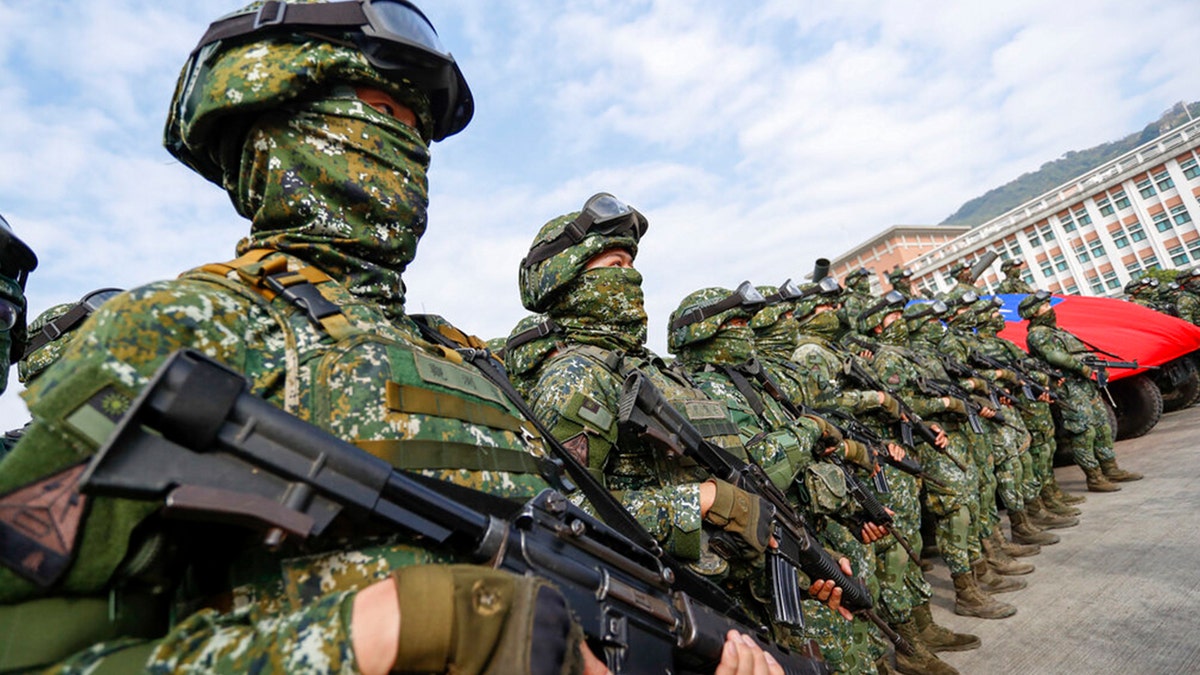
The “peace mission” is shadowed by a confirmed increase in Chinese naval activity. Late Monday, Kuan Bi-ling, the head of Taiwan’s Ocean Affairs Council, provided specific details regarding the current deployment of Chinese warships around the island Kuan Bi-ling, Ocean Affairs Council. According to reports, there are currently two warships deployed off the east coast, and one ship each positioned to the north, northwest, and southwest of the island.
This military posture serves as a constant reminder of Beijing’s refusal to renounce the use of force to achieve reunification. The presence of these vessels during a high-profile opposition visit underscores the complex “carrot and stick” approach employed by the Chinese government—offering diplomatic engagement to the KMT while maintaining a visible military threat against the island’s administration.
Internal Deadlock Over Defense Spending
While the KMT seeks a diplomatic resolution, the party’s influence in Taiwan’s legislature has created a significant hurdle for the government’s security strategy. The opposition-dominated parliament is currently stalling a government proposal for $40 billion in additional defense spending $40 billion extra defence spending.
This budgetary impasse has raised concerns among security analysts and government officials who argue that the lack of funding limits Taiwan’s ability to modernize its military capabilities in the face of growing Chinese aggression. The KMT’s dual role—as the party attempting to negotiate peace with Beijing and the legislative force blocking defense appropriations—has become a central point of contention in Taiwan’s domestic political discourse.
The Stakes of the ‘Journey for Peace’
Speaking to reporters at party headquarters prior to her departure, Cheng Li-wun acknowledged the anxiety surrounding her trip but defended the necessity of engagement. “If you truly love Taiwan, you will seize even the slightest chance, every possible opportunity, to keep Taiwan from being ravaged by war,” Cheng stated Cheng Li-wun quote.

The mission represents a gamble for the KMT, which hopes to position itself as the only party capable of maintaining stability and preventing a kinetic conflict. By accepting President Xi Jinping’s invitation, Cheng is attempting to establish a rapport that could potentially lower the temperature of the conflict, though critics argue that such visits only embolden Beijing’s claims of sovereignty over the island.
Key Context: The Diplomatic Divide
The current state of cross-strait relations is defined by a rigid dichotomy in how Taipei is represented. On one side is the official government under President Lai Ching-te, which emphasizes Taiwan’s autonomy and is ignored by Beijing. On the other is the KMT, which maintains a more flexible approach toward the “One China” framework, allowing for the kind of high-level access Cheng is currently utilizing.
This division creates a precarious situation where the most significant diplomatic breakthroughs may occur through unofficial or opposition channels rather than through the recognized head of state. For the global community, particularly the United States and its allies, the outcome of this visit may provide critical insights into Beijing’s current appetite for a negotiated settlement versus a forced reunification.
| Region | Number of Warships |
|---|---|
| East Coast | 2 |
| North Coast | 1 |
| Northwest Coast | 1 |
| Southwest Coast | 1 |
As Cheng Li-wun begins her talks in China, the international community will be watching for any signs of a shift in Beijing’s rhetoric or a tangible reduction in military activity. The success or failure of this “journey for peace” may heavily influence Taiwan’s internal political landscape and its future defense posture.
The next confirmed checkpoint for this story is the potential meeting between KMT Chairperson Cheng Li-wun and President Xi Jinping during her visit to China.
We invite our readers to share their perspectives on this development in the comments section below. Please share this report to keep others informed on the evolving situation in the Taiwan Strait.
Keep reading