For years, the global tech industry operated under a comfortable assumption: the cloud was a utility, as stable and predictable as the water coming out of a tap. For businesses and developers, the “cheap cloud” era allowed for rapid scaling and lean operations, predicated on the idea that infrastructure costs would remain relatively flat. However, as we move through April 2026, that illusion of stability is evaporating.
The current volatility is not a result of a sudden change in cloud provider pricing models, but rather a stark revelation of the underlying dependencies of digital infrastructure. The reality is that cloud computing costs and energy markets are inextricably linked. As the conflict in West Asia escalates, the tech world is discovering that the economics of the cloud have always been downstream from the volatility of energy markets.
This structural vulnerability is now manifesting as a crisis, particularly for European markets. While the digital world often feels detached from physical geography, the servers powering the global economy require massive amounts of electricity. When energy markets destabilize, the cost of maintaining that infrastructure rises, threatening the viability of the low-cost cloud model that the modern internet was built upon.
The Geopolitical Catalyst: The 2026 Iran War
The catalyst for this current economic ripple effect is the ongoing military conflict that began on February 28, 2026. The war commenced with surprise airstrikes conducted by the United States and Israel targeting various sites and cities across Iran. The conflict has rapidly escalated, involving the assassination of top Iranian officials, including Ali Khamenei and Ali Larijani, and the subsequent election of Mojtaba Khamenei as the Supreme Leader of Iran.

While the military engagements are concentrated in West Asia, the economic impact is global due to Iran’s strategic position. A critical development in the conflict is the establishment of Iranian control over the Strait of Hormuz. Iran has begun collecting tolls for oil sold through the strait, notably requiring these payments in Chinese yuan. This disruption of one of the world’s most vital energy arteries has sent shockwaves through global fuel markets, directly impacting the cost of power generation.
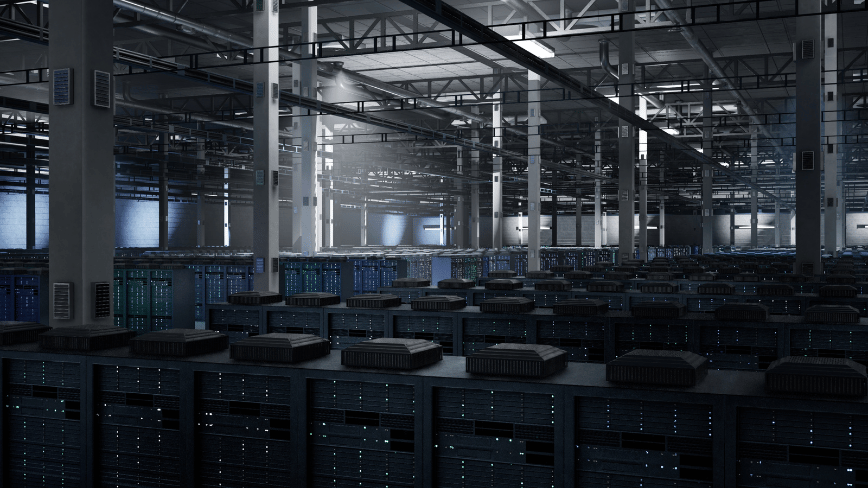
For a technology editor with a background in computer science, the connection is straightforward: data centers are among the most energy-intensive buildings on earth. They require constant power not only to run thousands of servers but to cool them. When the cost of energy spikes due to geopolitical instability in the Middle East, the operational expenditure (OpEx) for cloud providers climbs. These costs are eventually passed down to the end-user, ending the era of predictably cheap compute and storage.
Europe’s Structural Exposure
While the entire world is feeling the effects, Europe is structurally more exposed to these energy-driven cloud costs. Many European economies are still in the process of recovering from the energy crisis of 2022, leaving them with less resilience to new price shocks. The dependency on imported energy means that any disruption in the Middle East translates almost immediately into higher utility bills for the massive data center hubs located across the continent.
This economic pressure is coinciding with a diplomatic crisis. The strain of the conflict is pushing the U.S.-Europe alliance toward a breaking point. As the costs of the war and its economic fallout mount, trans-Atlantic ties are being tested, complicating the coordinated response needed to stabilize both energy markets and the digital economy.
The “structural exposure” mentioned by industry analysts refers to the lack of energy autonomy in many European regions. Unlike some U.S. Providers who may have more diversified or localized energy sources, European cloud infrastructure is often tied to a grid that is highly sensitive to global oil and gas fluctuations. When the Strait of Hormuz becomes a toll booth, the price of a virtual machine in Frankfurt or Dublin is inevitably affected.
Why Cloud Stability is Changing
The transition from a stable to a volatile cloud environment is driven by several converging factors:
- Energy Correlation: Cloud pricing was historically decoupled from daily energy fluctuations through long-term contracts, but sustained geopolitical crises force a repricing of these agreements.
- Infrastructure Rigidity: Data centers cannot simply “move” to cheaper energy regions overnight; they are fixed assets tied to specific power grids.
- Cascading Costs: Higher energy costs affect not just the electricity bill, but the entire supply chain, including the manufacturing of the hardware that powers the cloud.
What This Means for the Global Tech Economy
The shift in cloud economics suggests that the “pay-as-you-go” model may become more expensive and less predictable. For startups and enterprises that have built their business models on the assumption of low, stable infrastructure costs, this represents a significant financial risk. We are moving toward a world where “cloud architecture” must include “energy architecture”—where the location of data and the source of power are as important as the code itself.
the use of the Chinese yuan for tolls in the Strait of Hormuz introduces a new layer of currency risk and geopolitical alignment into the energy equation. This shift potentially alters the flow of energy and, by extension, the cost of the power that fuels the digital world. The intersection of energy, currency, and compute power is creating a new paradigm for global tech operations.
| Event | Direct Impact | Cloud Economy Effect |
|---|---|---|
| Strait of Hormuz Control | Energy supply disruption and yuan-based tolls | Increased operational costs for data centers |
| Regional Conflict Escalation | Instability in West Asia | Supply chain volatility for hardware |
| US-Europe Alliance Strain | Diplomatic friction | Reduced coordination on energy subsidies/stability |
The Path Forward
As the conflict continues, the tech industry must reckon with the fact that the cloud is not an ethereal entity but a physical one, dependent on the stability of the physical world. The current crisis serves as a wake-up call for companies to diversify their infrastructure and seek more sustainable, autonomous energy solutions to power their digital needs.
The situation remains fluid. The world continues to monitor the ongoing armed conflict in West Asia and the stability of the Strait of Hormuz. The next critical checkpoint will be the continued evolution of the conflict and any potential diplomatic efforts to stabilize energy corridors, which will ultimately determine if cloud costs will stabilize or continue their upward trajectory.
Do you believe your business is over-reliant on the “cheap cloud” model? Share your thoughts in the comments below or share this analysis with your network to start the conversation.