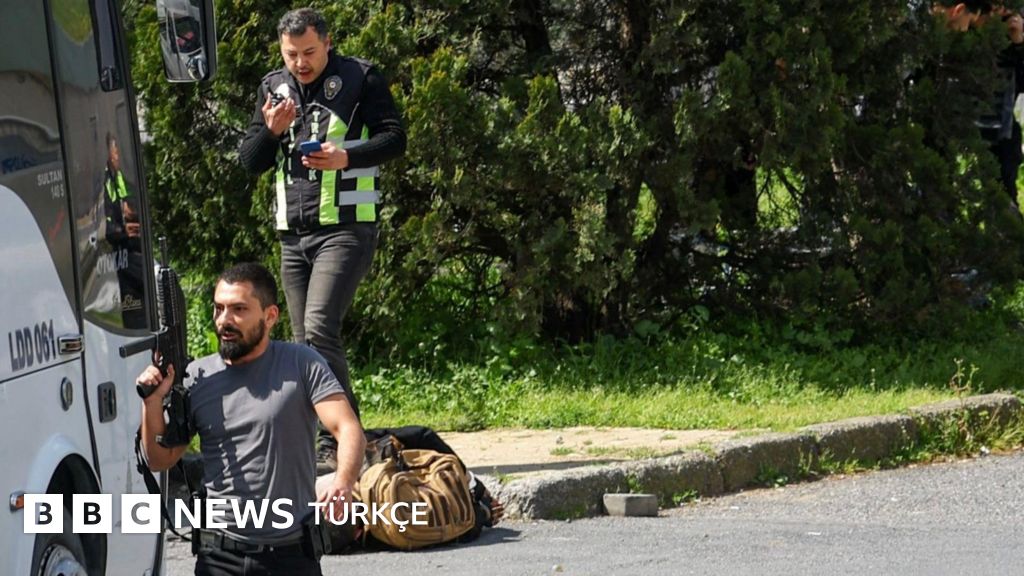
A violent confrontation erupted in Istanbul’s Beşiktaş district on Tuesday, April 7, 2026, as armed attackers targeted police officers stationed in front of the Yapı Kredi Plaza blocks, the building which houses the Israeli Consulate. The incident resulted in a lethal shootout that left one attacker dead and several others in custody, highlighting a security breach in one of the city’s most high-profile diplomatic zones.
The Istanbul Israeli Consulate clash saw the intervention of riot police who engaged the assailants in a gunfight. According to official reports, three terrorists were neutralized during the initial confrontation: one was killed and two others, identified as brothers Onur Ç. And Enes Ç., were captured while wounded via Halk TV. Two police officers sustained light injuries during the exchange of fire via Turkish Post.
The Ministry of Interior has linked the attack to a “terrorist organization that exploits religion,” though the ministry initially refrained from naming the group. Although, subsequent investigative details have identified the deceased attacker as Yunus Emre Sarban, a member of the Islamic State (ISIS/IŞİD) via Halk TV. The scale of the security operation expanded rapidly following the shootout, with Turkish authorities conducting sweeps of the surrounding area to dismantle the wider cell involved in the plot.
Interior Minister Mustafa Çiftçi provided updates via social media, confirming that the terrorists had traveled from İzmit to Istanbul using a rental vehicle. Minister Çiftçi noted that while one suspect had ties to the religious-exploitation organization, one of the two brothers captured also had a prior record related to narcotics via Turkish Post.
The Profile of Yunus Emre Sarban
Investigative reports into the background of the deceased attacker, Yunus Emre Sarban, reveal a history of violent crime and extremist ties. Born in 1994, Sarban was previously involved in a domestic homicide in Adana in 2018. During that legal proceeding, his father, Ahmet Sarban, was sentenced to 18 years in prison, while Yunus Emre Sarban spent three months in custody before being released under judicial control via Turkish Post.

Beyond his criminal record for violence, Sarban had been flagged by state authorities as an extremist. On April 7, 2021, his assets were frozen by the government due to his membership in ISIS via Turkish Post. This financial restriction remained in place for several years until August 31, 2024, when the measure was lifted on the grounds that “reasonable causes had ceased to exist” via Halk TV.
while Sarban’s assets were frozen due to ISIS membership, there is no available record indicating that he had served a prison sentence specifically for the charge of ISIS membership prior to the April 2026 attack via Turkish Post.
Operation Details and Arrests
The immediate aftermath of the clash in Beşiktaş involved a rapid deployment of security forces to secure the perimeter of the Israeli Consulate. Following the neutralization of the three primary attackers, Turkish police launched a series of coordinated raids in the vicinity. Initially, three additional suspects were detained shortly after the incident via Halk TV.
The number of detainees grew as the investigation progressed. Interior Minister Mustafa Çiftçi later announced on X (formerly Twitter) that two more individuals believed to be linked to the attack were taken into custody. This brought the total number of suspects detained in connection with the Istanbul Israeli Consulate clash to seven via Halk TV.
Timeline of Key Events
| Date | Event |
|---|---|
| 2018 | Involved in domestic homicide in Adana; spent 3 months in prison. |
| April 7, 2021 | Assets frozen due to ISIS membership. |
| August 31, 2024 | Financial restrictions/assets freeze lifted. |
| April 7, 2026 | Attack on Israeli Consulate vicinity; Sarban killed in shootout. |
The attack is viewed as a significant security event given the target’s diplomatic nature and the involvement of a known extremist with a prior history of violence. The use of a rental car from İzmit suggests a level of planning and coordination between the attackers and the wider support network now being investigated by Turkish intelligence.
Turkish authorities continue to interrogate the six surviving suspects to determine if the cell had intentions to target other diplomatic missions or if there were further operatives embedded within the city. The recovery of weapons and digital evidence from the rental vehicle is expected to provide further insight into the group’s communications and objectives.
Official updates regarding the status of the detained suspects and the results of the forensic investigation are expected to be released by the Ministry of Interior as the legal process moves forward. We encourage our readers to share this report and leave their comments below on the security implications of such attacks in urban centers.
Related reading