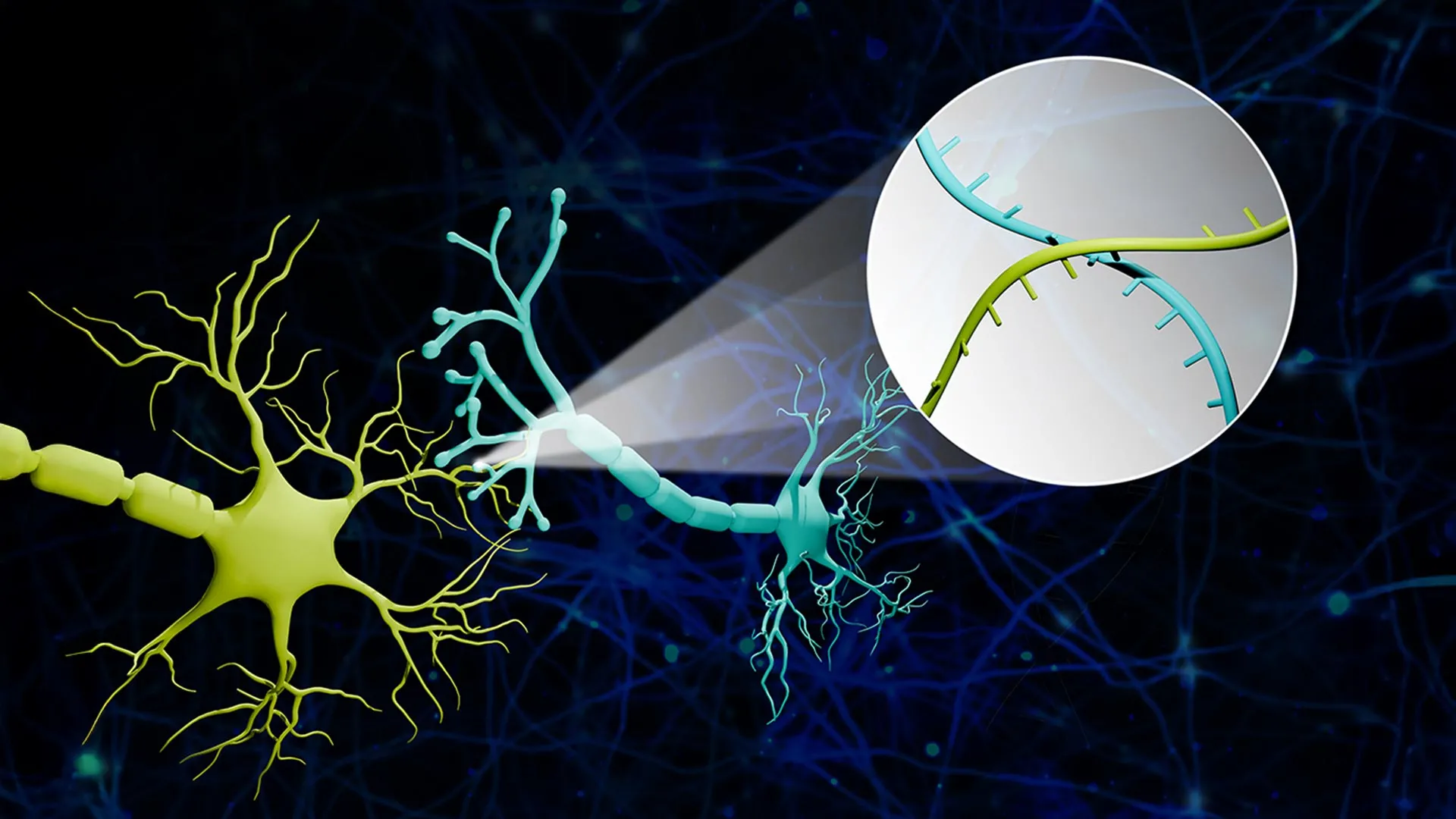
For decades, understanding the human brain has been akin to trying to map a sprawling, ancient city without a blueprint. While scientists have long known that neurons communicate through complex networks, the sheer scale and intricacy of these connections—the “hidden wiring” of the mind—have remained largely elusive. Yet, a major breakthrough from researchers at the University of Illinois Urbana-Champaign is changing that narrative, offering a way to map the brain’s hidden wiring with unprecedented speed and precision.
By utilizing molecular “barcodes” made of RNA, a research team led by Boxuan Zhao has developed a method to chart thousands of neural connections simultaneously. This technique, which transforms the laborious process of brain mapping into a high-throughput sequencing task, allows scientists to identify links between neurons with single-synapse resolution. In initial tests conducted on mouse brains, the technology revealed surprising new connections between cells that were previously unknown to science.
The implications of this discovery extend far beyond basic anatomy. By uncovering the precise circuitry of the brain, researchers hope to gain a deeper understanding of how complex neural networks are organized and how they function in real-time. More importantly, this capability provides a critical window into the mechanics of neurological dysfunction, potentially paving the way for the earlier detection and more targeted treatment of neurodegenerative conditions.
Beyond the Microscope: A New Era of Brain Mapping
To appreciate the scale of this breakthrough, it is necessary to understand the limitations of traditional neuroanatomy. Historically, mapping the brain has been a grueling and slow process. Researchers typically had to cut brain tissue into incredibly thin slices, image those slices using various types of microscopes and then manually or computationally attempt to reconstruct the neural pathways from those fragments.
While more recent sequencing-based techniques allowed for the labeling of thousands of neurons at once, they often lacked specificity. Most of these methods could trace where a neuron reached, but they could not pinpoint exactly which partner neuron it connected with at the synapse—the tiny gap where chemical signals pass from one cell to another. This lack of resolution meant that the “who is talking to whom” aspect of brain communication remained a mystery.
The new platform, known as Connectome-seq, solves this problem by tagging individual neurons with unique RNA barcodes. Since these barcodes can be sequenced, the process of mapping connections becomes a data-driven sequencing task rather than a visual reconstruction task. This shift makes the process significantly faster and more scalable than any previous approach, enabling the simultaneous mapping of thousands of connections at the University of Illinois Urbana-Champaign.
The Mechanics of Connectome-seq: How RNA Barcodes Work
The core of this innovation lies in the utilize of molecular barcodes. In the Connectome-seq system, each neuron is tagged with a specific RNA sequence that acts as a unique identifier. When two neurons connect at a synapse, these barcodes commingle. By sequencing these RNA markers, researchers can determine exactly which neurons are linked, effectively creating a high-resolution directory of the brain’s circuitry.
Boxuan Zhao, a professor of cell and developmental biology and the study’s leader, compares this effort to computer engineering to illustrate the necessity of such precision. “When engineering a computer, you need to grasp the circuitry of the central processing unit. If you don’t know how everything is wired together, you can’t understand its function, optimize it or fix it when something breaks. We are approaching the brain the same way,” Zhao stated.
By achieving single-synapse resolution, Connectome-seq provides a level of detail that did not exist in previous technologies. This allows researchers to see not just the general neighborhood of a neural pathway, but the exact point of contact between two specific cells. This precision is what allowed the team to discover previously unknown connections in the mouse brain, suggesting that our current maps of neural architecture may be missing significant pieces of the puzzle.
From Mouse Models to Human Medicine: Why Precision Matters
The ability to map neural connections with such accuracy has profound implications for the study of brain diseases. Many neurological disorders are characterized by “circuit dysfunction,” where the wiring of the brain is altered, degraded, or misconnected. Diseases such as Alzheimer’s often involve the progressive breakdown of these connections, leading to the cognitive decline associated with the condition.
With the Connectome-seq platform, scientists can now observe exactly how these connections change as a disease progresses. Rather than observing general atrophy in a brain region, researchers can pinpoint which specific synapses are failing. This level of detail is essential for developing “circuit-guided therapeutic interventions,” which would target the specific broken links in the brain’s wiring rather than treating the brain as a whole.
The research, which was published in the journal Nature Methods, suggests that this technology could lead to much earlier detection of neurological diseases. If clinicians can identify the earliest signs of synaptic miswiring before physical symptoms appear, the window for intervention opens significantly.
Key Comparison: Traditional Mapping vs. Connectome-seq
| Feature | Traditional Mapping | Connectome-seq |
|---|---|---|
| Primary Method | Thin slicing and microscopy | RNA barcode sequencing |
| Resolution | General pathway tracing | Single-synapse precision |
| Speed/Scale | Slow and laborious | Rapid and highly scalable |
| Outcome | Visual reconstruction | Data-driven connection map |
The Future of Neural Circuitry Research
As this technology matures, the focus will likely shift toward applying these findings to a wider array of neurological conditions. The ability to map thousands of connections simultaneously means that researchers can move beyond small, isolated clusters of neurons to study larger, more complex networks that govern behavior, memory, and emotion.
The discovery of “surprising new connections” in mice indicates that the brain’s architecture is even more complex than previously hypothesized. This suggests that many of the functions we attribute to specific brain regions may actually be the result of intricate, long-distance wiring that traditional microscopy simply could not detect. As reported by ScienceDaily, this breakthrough transforms the way scientists approach the brain, moving it from a descriptive science to a more precise, engineering-like discipline.
While the current research has focused on mouse models, the scalability of the RNA barcode method makes it a promising candidate for broader application. The goal is to create a comprehensive map of neural circuitry that can serve as a baseline for healthy brain function, against which diseased brains can be compared to identify specific points of failure.
The next phase of this research will likely involve refining the Connectome-seq platform to map even larger sections of the brain and testing its efficacy in different disease models to validate its use as a diagnostic tool. By treating the brain’s wiring as a readable code, science is moving closer to “fixing” the circuitry of the mind.
World Today Journal will continue to monitor updates on the application of Connectome-seq in human clinical trials and its impact on Alzheimer’s research. We invite our readers to share their thoughts on this medical innovation in the comments below.