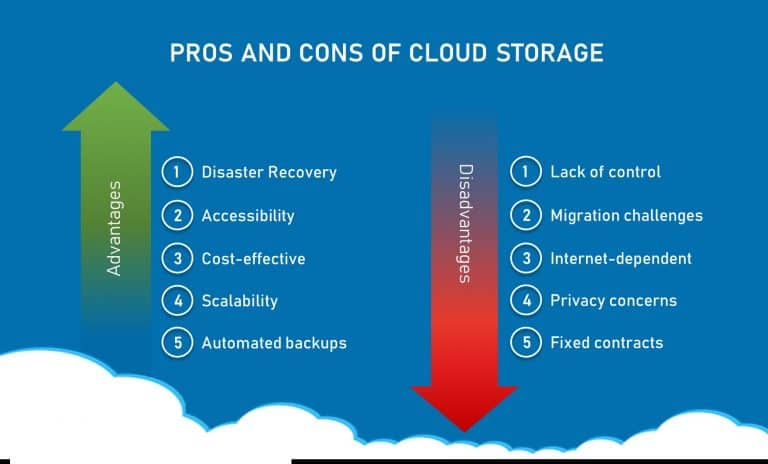
The shift toward digital infrastructure has transformed how individuals and governments manage information, moving from physical archives to the invisible architecture of the cloud. While the convenience of remote access and scalability is undeniable, the transition has introduced a complex set of tensions between efficiency, and security. For many, the decision comes down to a simple evaluation of the pros and cons of online cloud storage, but for sovereign nations, the stakes involve national security and legal autonomy.
At its core, cloud storage allows users to save files on remote servers accessed via the internet, managed by various providers. This model offers significant advantages in terms of accessibility and backup, yet it simultaneously creates dependencies on third-party entities. As the reliance on these services grows, the conversation is shifting from mere technical utility to a broader debate over who truly controls the data once it leaves a local device.
In recent developments, this tension has reached a boiling point within the Dutch government. The House of Representatives in the Netherlands has begun advocating for a significant shift toward national and European cloud storage, specifically for highly sensitive information such as tax records and medical dossiers. This move is driven by growing concerns that the current reliance on foreign infrastructure exposes critical state data to external legal jurisdictions according to reports on the Dutch government’s digital strategy.
The Trade-off: Convenience vs. Control
For the average user, the appeal of popular cloud services lies in their ability to synchronize data across multiple devices and provide a safety net against hardware failure. Though, these benefits are balanced against risks regarding privacy and the terms of service dictated by the providers. The primary concern for many is the lack of physical control over where data resides and how it is managed by the hosting company.

When this model is applied to government operations, the risks scale upward. A significant portion of sensitive Dutch government information is currently stored in public cloud services operated by American corporations, including Amazon and Microsoft. The primary legal friction point is the U.S. Cloud Act, a mandate that allows the United States government to compel U.S.-based companies to provide data, even if that data is physically stored on servers located within Europe as detailed in recent legislative discussions.
The Push for Digital Sovereignty
The drive for “digital independence” in the Netherlands is not merely a technical preference but a strategic necessity. Members of the House of Representatives, including Jesse Six Dijkstra of the NSC, have highlighted the dangers of depending on the unpredictable nature of U.S. Policy. The argument is that storing sensitive state data in foreign clouds creates a vulnerability that could be exploited or disrupted based on the geopolitical climate.
There is currently a strong push from political parties such as D66 and PvdA/GL to increase the use of European and national IT service providers. The goal is to ensure that sensitive data remains under the jurisdiction of the state and the European Union, thereby eliminating the reach of foreign laws like the Cloud Act.
However, this transition is not without political friction. The VVD and BBB have expressed skepticism regarding the feasibility of building a fully independent infrastructure. These parties emphasize the need for a balanced approach, warning against being naive about the technical capabilities of national providers compared to the global giants, and urging a careful weighing of strategic risks against practical implementation per reports on the parliamentary debate.
Implementing a Government-Wide Cloud Policy
To resolve these conflicts, State Secretary Zsolt Szabó (PVV), who oversees Digital Affairs, is currently developing a “Rijksbreed cloudbeleid” (government-wide cloud policy). This framework is designed to safeguard digital autonomy and strengthen the resilience of the state’s digital infrastructure.
The upcoming policy will establish strict guidelines to categorize data based on its sensitivity. This classification system will determine:
- Which datasets must be kept under internal, sovereign management to mitigate strategic risks.
- Which types of information are permissible for storage in public cloud environments.
- The specific criteria for selecting European versus non-European providers.
This systemic overhaul represents a broader trend across Europe, as nations realize that digital sovereignty is as critical as physical sovereignty. By defining what constitutes “critical data,” the Dutch government aims to reduce its vulnerability to the “fickle” nature of international policy shifts while still leveraging the efficiency of cloud technology where it is safe to do so according to official statements.
Key Takeaways on Cloud Sovereignty
| Feature | Public Cloud (e.g., US Providers) | Sovereign/National Cloud |
|---|---|---|
| Accessibility | High; global infrastructure | Controlled; localized infrastructure |
| Legal Jurisdiction | Subject to provider’s home laws (e.g., Cloud Act) | Subject to national/EU laws |
| Primary Risk | Foreign government data access | Potential lower scalability/higher cost |
| Ideal Use Case | Non-sensitive, general data | Medical records, tax info, state secrets |
The next major milestone in this transition will be the formalization and rollout of State Secretary Zsolt Szabó’s government-wide cloud policy, which will dictate the future of data residency for the Dutch state.
We invite our readers to share their thoughts on the balance between cloud convenience and data sovereignty in the comments below.
Related reading