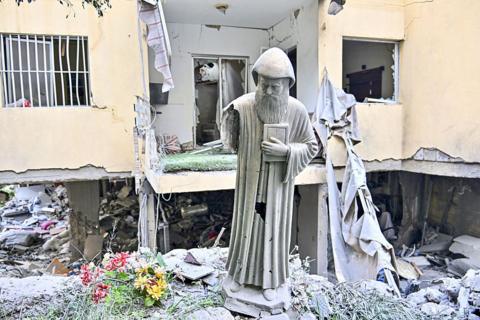
The geopolitical landscape of the Middle East shifted dramatically this Wednesday, April 8, 2026, as the Israeli military announced a fragile ceasefire with Iran although simultaneously vowing to maintain its aggressive military operations against Hezbollah in southern Lebanon. This divergent strategy creates a volatile environment where a direct state-to-state truce exists alongside an intensifying proxy war, leaving the region on a knife-edge.
The current state of the Israel-Hezbollah conflict is characterized by a stark separation of fronts. While diplomatic channels have managed to halt direct hostilities between Jerusalem and Tehran, the conflict in Lebanon remains active. This strategic decoupling suggests that the international community, led by the United States, is attempting to isolate the Hezbollah threat from the broader Iranian state apparatus to prevent a total regional collapse.
According to reports from Reuters on April 8, 2026, the Israeli Army has formally declared a ceasefire with Iran, but this agreement does not extend to the Lebanese border. In a significant development, sources indicate that Hezbollah has ceased its fire on northern Israel, though the Israeli military continues its campaign in the south RT Arabic.
The Ceasefire Paradox: Iran and Hezbollah
The decision to separate Iran from Hezbollah in the current peace negotiations is a calculated move. U.S. President Donald Trump has clarified that Lebanon was intentionally excluded from the ceasefire deal due to the presence of Hezbollah, describing the situation in Lebanon as a separate fight that requires its own resolution RT Arabic.
However, this separation is viewed with skepticism by Israeli military leadership. The Israeli Army has warned that any potential ceasefire with Iran that might eventually be expanded to include Hezbollah could inadvertently serve the interests of the organization and align with the strategic goals of Hezbollah Secretary General Sheikh Naim Qassem Al-Quds.
The tension is further complicated by Iran’s reaction to the ongoing strikes in Lebanon. Despite the ceasefire with Israel, Tehran has expressed deep dissatisfaction with the continued attacks on its allies. In a direct response to Israeli military actions in Lebanon, Iran has suspended the movement of ships through the Strait of Hormuz, one of the world’s most critical oil transit points RT Arabic.
The Road to Escalation: The March 2nd Catalyst
To understand the current volatility, one must seem back to the events of March 2, 2026. The conflict entered a new, more dangerous phase after Hezbollah launched rockets and drones toward Israel in retaliation for the death of the Iranian Supreme Leader, Ali Khamenei. Israel responded with immediate and severe force, launching airstrikes on Tehran and expanding its military campaign into Lebanon Deutsche Welle.
The human cost of the March 2 escalation was immediate. The Lebanese Ministry of Health reported that at least 31 people were killed and 149 others were injured during the Israeli raids on Lebanon, with approximately two-thirds of the fatalities occurring in the southern region Deutsche Welle.
During this period, President Trump indicated that the joint U.S.-Israeli military operations targeting Iranian assets could last for several weeks, signaling a willingness to leverage sustained pressure to degrade Iranian capabilities and their regional proxies Deutsche Welle.
Global Economic Risks and the Strait of Hormuz
The suspension of shipping in the Strait of Hormuz by Iran marks a shift from military confrontation to economic warfare. Given that a significant portion of the world’s petroleum passes through this narrow waterway, any prolonged disruption threatens global energy prices and supply chain stability.
Interestingly, while Iran uses the strait as leverage, diplomatic efforts are simultaneously exploring unconventional solutions. Reports indicate that President Trump is considering a “joint project” with Iran specifically regarding the management and security of the Strait of Hormuz, suggesting a dual-track approach of maximum pressure and pragmatic negotiation RT Arabic.
Key Takeaways: The Current Geopolitical State
- Selective Ceasefire: A ceasefire is in effect between Israel and Iran as of April 8, 2026, but does not include Hezbollah.
- Continued Hostilities: The Israeli military continues its war against Hezbollah in southern Lebanon.
- Economic Leverage: Iran has halted shipping in the Strait of Hormuz in response to Israeli attacks in Lebanon.
- US Strategy: President Trump is treating the Lebanon-Hezbollah conflict as a separate military issue from the broader Iranian state deal.
- Casualty Baseline: Early March strikes resulted in 31 deaths and 149 injuries in Lebanon.
What Happens Next?
The stability of the current ceasefire depends entirely on whether Iran can balance its desire for a truce with Israel against its obligation to support Hezbollah. If Israeli operations in southern Lebanon intensify or target high-ranking Iranian advisors within Lebanon, Tehran may feel compelled to withdraw from the ceasefire agreement entirely.
The immediate focus for the international community will be the restoration of shipping in the Strait of Hormuz and whether the “joint project” proposed by the U.S. Can provide a face-saving exit for Iran. Meanwhile, the Lebanese government continues to condemn the ongoing Israeli aggression as a violation of international law RT Arabic.
The next critical checkpoint will be the official Iranian response to the current Israeli military posture in Lebanon, which Iranian sources indicate is currently being prepared RT Arabic.
We invite our readers to share their perspectives on this developing crisis in the comments below. How should the international community handle the separation of state actors from their regional proxies? Share this report to maintain others informed.
Worth a look
- US Requests Emergency OAS Meeting Over Nicaragua’s Abolition of Elections
- Russia Imports Dual-Use Goods from UK and EU via India, Reports Medijs
- Russian Missile Strikes Across Ukraine Kill 13 and Prompt Polish Jets (archyworldys.com)
- Russian Strikes Kill Dozens in Ukraine; Poland Scrambles Fighter Jets (world-today-news.com)