
Space exploration history is often defined by the massive milestones of lunar landings and orbital stations, but the foundation of these achievements was built on smaller, precise successes. One such pivotal moment occurred more than five decades ago, marking the beginning of operational capabilities at one of the world’s most strategic launch sites.
On April 9, 1968, the Guiana Space Center (Centre spatial guyanais) achieved a significant milestone with the first operational launch of a Véronique sounding rocket launch. This event signaled the activation of the center’s first launch set, transitioning the facility into an active hub for atmospheric and space research.
The operation was characterized as a complete success, both in terms of the overall execution of the launch sequence and the technical performance of the rocket. This early victory established the operational viability of the site, paving the way for the complex space missions that would follow in the subsequent decades.
The 1968 Milestone at Guiana Space Center
The launch on April 9, 1968, was not merely a test but the official entry into operation for the first launch assembly designed for the Véronique sounding rocket. According to records from the Centre Spatial Guyanais, this date marked the moment the control center and safety room became fully operational for these specific missions.
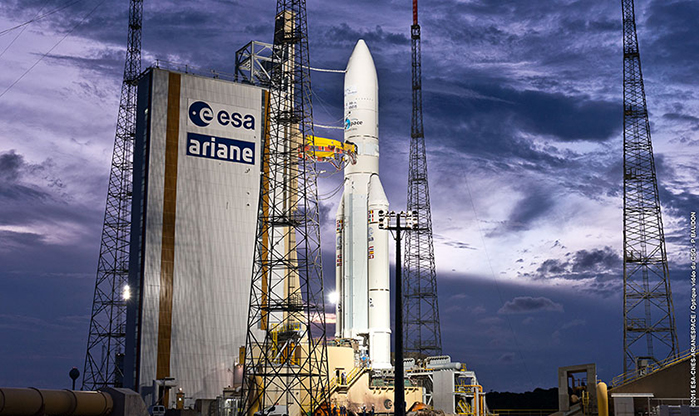
Sounding rockets, such as the Véronique, are designed to carry scientific instruments to altitudes where they can perform measurements before returning to Earth. Unlike orbital rockets, they follow a suborbital trajectory, making them essential tools for studying the upper atmosphere and the edge of space.
Operational Success and Impact
The success of the April 1968 launch was comprehensive. The mission demonstrated that the infrastructure at the Guiana Space Center—including the control systems and safety protocols—could handle the rigors of rocket launches. This reliability was critical for the center’s growth as a primary launch location for the French space program.
By verifying the effectiveness of the launch set and the control room, the 1968 operation provided the necessary confidence to scale up operations. The precision of the “Véronique” launch served as a proof of concept for the site’s geographical and technical advantages, which continue to be utilized for modern satellite deployments today.
| Detail | Information |
|---|---|
| Date | April 9, 1968 |
| Rocket Type | Véronique sounding rocket |
| Location | Guiana Space Center (Centre spatial guyanais) |
| Outcome | Complete success |
While the era of sounding rockets has evolved into the age of heavy-lift launchers and reusable spacecraft, the events of April 1968 remain a cornerstone of the Guiana Space Center’s legacy. The successful deployment of the Véronique rocket proved that the facility could operate with the precision required for high-stakes aerospace endeavors.
For those interested in the historical archives of space exploration, the records of these early launches provide a window into the technical challenges and triumphs of the 1960s space race. The transition from initial setup to operational success on that Friday in April 1968 remains a key reference point in the history of French space activities.
Further updates regarding the archives of the Guiana Space Center are typically managed through official CNES communications and historical retrospectives.
Do you have memories or family history related to early space exploration? Share your thoughts in the comments below or share this article with other history enthusiasts.
Related reading