For young professionals in their late 20s, the transition from early-career exploration to financial stabilization often necessitates a rigorous audit of their financial tools. As spending habits shift from frequent international travel and luxury experiences toward more sustainable daily living and long-term saving, the credit cards that served them in their early 20s may no longer align with their current economic priorities.
One such instrument frequently discussed in the context of “young premium” financial planning is the Shinhan The Classic-Y credit card. Designed as a bridge between entry-level cards and high-tier wealth management tools, this card offers a blend of rewards and lifestyle perks. However, for those looking to reduce their overseas travel frequency, evaluating whether the card’s premium annual fee is justified by its domestic utility becomes a critical exercise in budget optimization.
Understanding the value proposition of a premium card requires looking beyond the marketing allure of “exclusive” services. It demands a cold analysis of the cost-to-benefit ratio, specifically how the reward accumulation—such as point systems and industry-specific discounts—offsets the mandatory yearly costs. For the modern professional, the goal is to ensure that the card works for their current lifestyle, not a previous version of it.
Understanding the Premium Tier: A Seem at Shinhan The Classic-Y
The Shinhan The Classic-Y is positioned as a premium offering that caters to a demographic seeking both prestige and practical rewards. One of its primary draws is the “Gift Option” service, which allows cardholders to select one item from a curated list of options once per year, adding a tangible layer of value to the membership according to official Shinhan Card documentation.
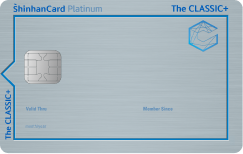
Beyond the annual gift, the card focuses on versatility through the My Shinhan Points system. Cardholders can earn rewards ranging from 0.7% up to 5% in points, depending on the spending category as reported by Card Gorilla. This flexibility is designed to reward users across various spending habits, making it a viable option for those who do not seek to be locked into a single niche of rewards.
The card further extends its utility through targeted discounts in five specific industries, as well as specialized benefits for fuel, duty-free shopping, aviation and cultural activities. This multi-pronged approach ensures that even as the card is “premium,” it remains grounded in the actual spending patterns of a working professional.
The Cost of Premium: Analyzing Annual Fees and Structures
A primary consideration for any professional auditing their wallet is the annual fee. The Shinhan The Classic-Y has a tiered pricing structure based on the chosen payment network. For those opting for the UPI brand, the total annual fee is 100,000 KRW. Those choosing VISA or MASTER will see a slightly higher total annual fee of 105,000 KRW per Shinhan Card’s official fee schedule.
To understand the breakdown of these costs, it is helpful to look at the internal structure of the fee:
- Basic Annual Fee: 5,000 KRW (applicable to both UPI and VISA/MASTER).
- Affiliate Annual Fee: 95,000 KRW for UPI and 100,000 KRW for VISA/MASTER.
For those managing household expenses or sharing benefits with family members, the card offers a family card option with a total annual fee of 30,000 KRW. Family cards must share the same brand (UPI, VISA, or MASTER) as the primary cardholder’s account. The primary cardholder’s basic annual fee of 5,000 KRW may be waived for existing Shinhan Card members who issue this as an additional card.
From a financial management perspective, the “break-even” point for this card is reached when the combination of the annual Gift Option, the My Shinhan Points accumulation, and the specific industry discounts exceeds the 100,000 to 105,000 KRW cost. If a user is significantly reducing their travel—thereby utilizing fewer aviation and duty-free perks—the calculation shifts heavily toward the domestic point accumulation and the value of the annual gift.
Balancing Travel Perks with Daily Utility
The tension for many users in their late 20s lies in the card’s travel-centric features. The Shinhan The Classic-Y provides specific advantages for international travelers, particularly for those who hold the VISA Platinum (Young Premium) version, which can be used to secure discounts on Jin Air international flights according to user reports.
However, for the professional pivoting away from overseas travel, the “daily utility” features become the primary value drivers. Key domestic benefits include:
- Fuel Discounts: A discount of 60 KRW per liter at GS Caltex stations as listed by Card Gorilla.
- Point Rewards: The ability to earn up to 5% in My Shinhan Points, which can be used across a wide ecosystem of partners.
- Cultural Services: Access to discounts and benefits within the cultural sector, providing value for leisure activities that do not require leaving the country.
When a user expresses a desire to “reduce overseas travel,” they are essentially asking if the travel-related “weight” of the card’s benefits is too heavy. If the majority of the perceived value comes from aviation and duty-free discounts, the card may feel like a liability rather than an asset. Conversely, if the user still values the annual gift and the GS Caltex fuel discounts, the card may still hold merit despite a decrease in flights.
Evaluating the “Gift Option” and Reward Systems
In the realm of premium credit cards, the “Gift Option” is often the deciding factor in retention. Because this is a tangible benefit provided once per year, it serves as a hedge against the annual fee. For a professional in their late 20s, the value of this gift should be weighed against the cost of the affiliate annual fee.
The reward system of the Shinhan The Classic-Y credit card is designed for those who prefer a “catch-all” approach rather than a highly specialized one. While some cards offer massive rewards in one category (like dining or streaming) but nothing elsewhere, the Classic-Y’s point system (0.7% to 5%) allows for a more generalized accumulation of wealth through spending.
| Brand | Total Annual Fee | Basic Fee | Affiliate Fee |
|---|---|---|---|
| UPI | 100,000 KRW | 5,000 KRW | 95,000 KRW |
| VISA/MASTER | 105,000 KRW | 5,000 KRW | 100,000 KRW |
For those considering a change, the key is to analyze the last 12 months of spending. If the “Travel” and “Duty-Free” categories have shrunk to a negligible percentage of total spend, the user is essentially paying a premium for services they no longer utilize. In such cases, transitioning to a card with a lower annual fee and higher domestic cashback or point rewards may be the more economically sound decision.
the decision to keep or replace a premium card is not just about the numbers, but about the alignment of the tool with the user’s current life stage. As priorities shift from the excitement of global exploration to the discipline of wealth building, the “perfect” card is the one that maximizes returns on the spending you actually do, not the spending you used to do.
For the most current details on fee waivers and updated gift options, cardholders are encouraged to review their specific contract terms through the official Shinhan Card portal or their designated account manager.
Do you believe premium annual fees are still justifiable in an era of high-reward “no-fee” cards? Share your thoughts in the comments below or share this analysis with a colleague navigating their own financial pivot.
Related reading