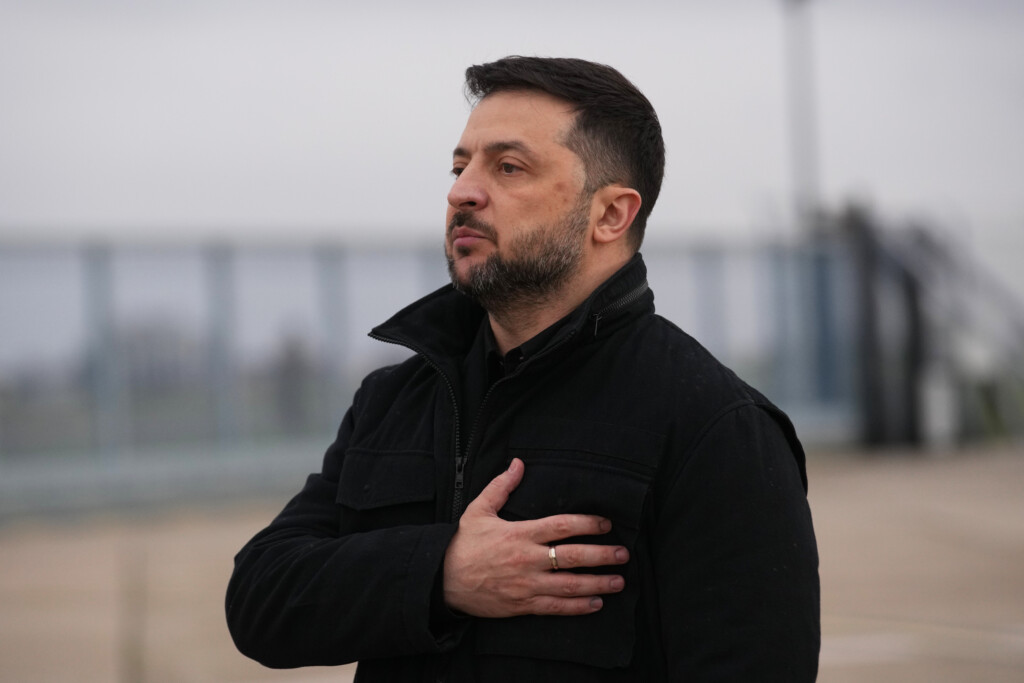
Ukrainian President Volodymyr Zelenskyy has suggested that Russia may have lobbied for the easing of oil sanctions to facilitate the sale of Lukoil’s European assets, specifically those located in Bulgaria and Romania. Speaking with journalists, Zelenskyy indicated that he expects the full restoration of sanctions on Russian oil following recent developments in the Middle East.
The Ukrainian leader’s comments come amid a complex geopolitical landscape where energy security in Eastern Europe often clashes with the goals of economic warfare against Moscow. According to Zelenskyy, the current observation of a potential ceasefire in the Middle East and the Persian Gulf provides a window for the international community to reinstate the rigorous restrictions that were previously in place via Investor.
Zelenskyy warned that if these sanctions are not fully restored, it would reinforce his belief that the easing of restrictions was a calculated “Russian game.” He argued that Moscow may have used a convenient pretext to lift energy resource sanctions, thereby granting Lukoil the opportunity to divest its assets in the region before the company faced total financial collapse.
The urgency of this timeline is underscored by Ukrainian assessments, which suggest that if full sanctions had remained in effect for another six months to a year, Lukoil’s refineries in Europe would have likely gone bankrupt via Investor.
The Strategic Role of Lukoil Assets in Bulgaria and Romania
The focus on Bulgaria and Romania is not coincidental. These two nations have been critical hubs for Russian energy infrastructure in the Balkans. Lukoil’s presence in these markets has long been a point of contention for those seeking to decouple Europe from Russian fossil fuels. By easing sanctions, the Russian energy giant potentially gains the flexibility to sell these assets to third parties, securing capital that would otherwise be lost to bankruptcy.
This maneuver is viewed by Kyiv as a tactical retreat by Moscow—selling off assets at a strategic moment to avoid a total loss, while simultaneously leveraging regional energy dependencies to secure temporary relief from international pressure. The potential involvement of sophisticated investors, such as Carlyle, has also been noted as a factor in how these assets might be managed or transitioned via News.bg.
Timeline of Sanctions and U.S. Involvement
The volatility of these restrictions is evidenced by recent policy shifts. On October 22, 2025, the United States imposed sanctions against Lukoil and Rosneft, citing Russia’s lack of commitment to the peace process aimed at ending the war in Ukraine via Business.dir.bg.
The subsequent easing of some of these measures has created the window that President Zelenskyy is now criticizing. The interplay between U.S. Treasury decisions and European energy needs continues to create “loopholes” that Moscow can exploit. The Ukrainian administration maintains that any deviation from a total embargo on Russian oil only serves to prolong the conflict by providing the Kremlin with continued financial liquidity.
Key Takeaways on the Lukoil Sanctions Dispute
- Zelenskyy’s Claim: Sanctions were eased specifically to allow Lukoil to sell assets in Bulgaria and Romania.
- Financial Risk: Ukrainian assessments indicate Lukoil’s European refineries would have faced bankruptcy within 6 to 12 months if full sanctions had persisted.
- Geopolitical Link: The restoration of sanctions is now tied to the stabilization of the Middle East and Persian Gulf regions.
- U.S. Precedent: Sanctions were previously tightened on October 22, 2025, due to Russia’s stance on the peace process.
What This Means for European Energy Security
The potential sale of Lukoil’s assets represents a pivotal moment for the energy independence of Bulgaria and Romania. If these assets are sold to Western firms or nationalized, it could accelerate the transition away from Russian oil. However, if the sales are structured to benefit Russian interests or occur under “softened” sanctions, the strategic goal of isolating the Russian economy is undermined.
For the global audience, this situation highlights the friction between immediate economic stability—preventing a refinery collapse that could spike fuel prices—and the long-term strategic goal of cutting off war funding. The “Russian game” described by Zelenskyy suggests that Moscow is adept at using these economic dependencies to force concessions from Western allies.
As the international community monitors the ceasefire developments in the Middle East, the focus returns to whether the U.S. And EU will align their energy sanctions to prevent further strategic divestments by Russian state-linked entities. The outcome will likely determine the speed at which the Balkans can fully exit the Russian energy orbit.
The next critical checkpoint will be the official review of the suspension of certain Russian oil sanctions, which is scheduled to expire this coming Saturday.
We invite our readers to share their perspectives on the balance between energy security and international sanctions in the comments below.