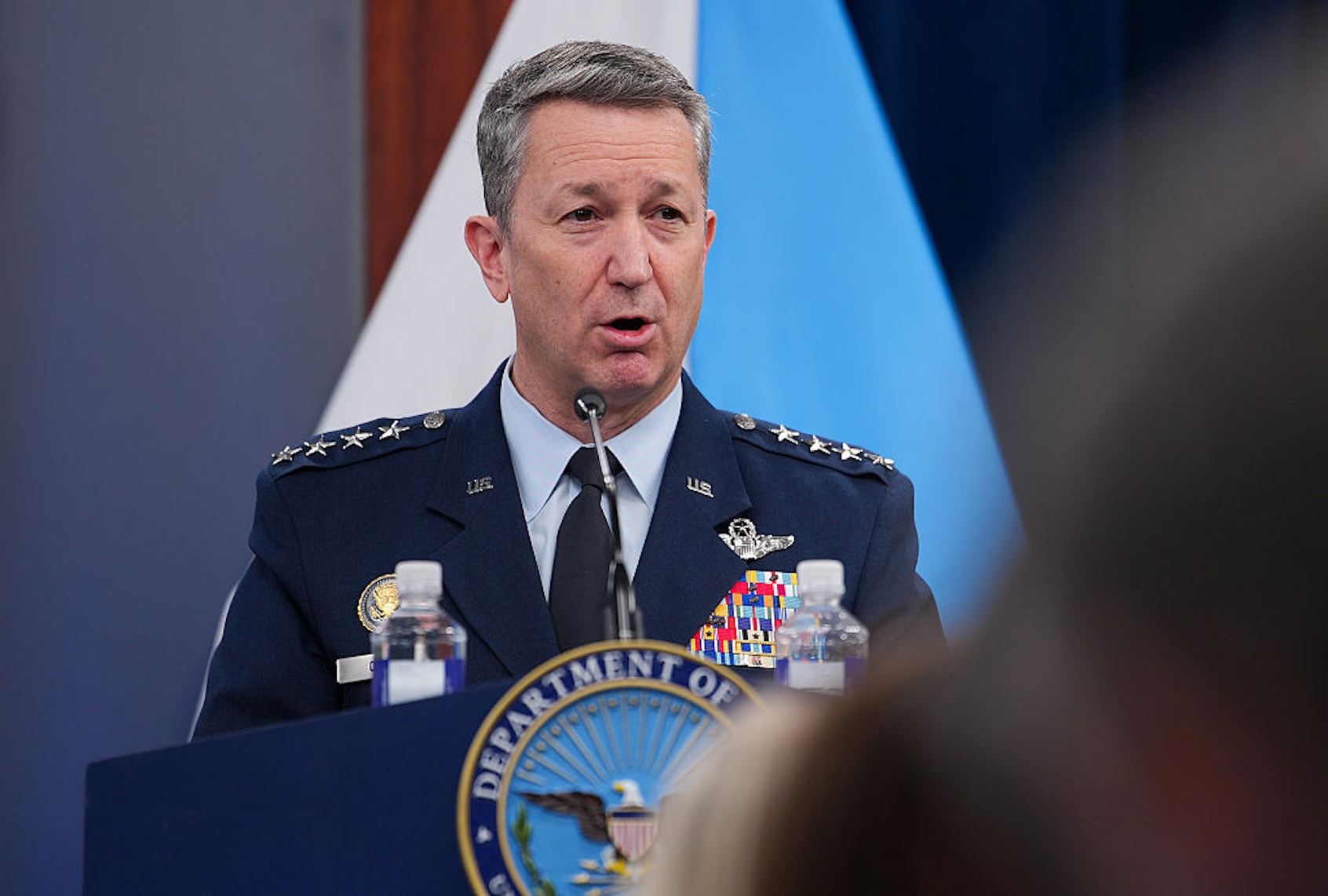
The intersection of military duty and moral obligation has become the focal point of a growing crisis within the United States Department of Defense. As the U.S. Continues its military engagement with Iran, the role of the Chairman of the Joint Chiefs of Staff, Gen. Dan Caine, has reach under intense scrutiny. Critics argue that Caine is enabling Trump’s immorality by providing tacit consent to threats that could potentially constitute crimes against humanity.
This tension reached a peak following a recent series of escalations. President Donald Trump threatened to destroy Iran—a nation of 93 million people—stating, “A whole civilization will die tonight, never to be brought back again.” While a fragile two-week ceasefire was announced just 90 minutes before a critical deadline, the stability of the truce remains precarious. To manage the crisis, the administration has dispatched Vice President JD Vance, along with envoys Steve Witkoff and Jared Kushner, to Islamabad, Pakistan, for high-stakes negotiations.
While the U.S. And Israel have seen tactical successes in the conflict, some analysts suggest the campaign is losing strategically. This phenomenon has been described by some experts as “superpower suicide,” a process where a dominant nation makes a series of poor strategic decisions that ultimately result in a loss of global power, reducing it to a regional player.
The Moral Dilemma of Gen. Dan Caine
A central question facing the Pentagon is whether the military’s highest-ranking officer is fulfilling his role as a moral compass for the armed forces. According to a report in the New York Times, Gen. Dan Caine has given tacit consent to the president’s threats rather than opposing potential crimes against humanity. This has sparked a debate over the boundaries of military subordination to civilian leadership.
During a Pentagon press conference last week, Caine struggled to provide a direct answer regarding whether the destruction of Iran’s power infrastructure, oil wells, and desalination plants would constitute a war crime. When asked by a reporter if such actions could be taken without seriously harming the civilian population, Caine initially responded that the military was “always thinking about those considerations” and had risk-mitigation processes in place.
After admitting ten minutes later that he had not fully answered the question, Caine attempted a second response. He described the U.S. Force as the “most professional in the world” and vowed that it would “always strike lawful targets.” However, observers noted that Caine continued to evade a substantive discussion on the morality and legality of the president’s specific threats.
Professional Duty vs. Ethical Responsibility
The position of the Chairman of the Joint Chiefs is uniquely constrained. The military is subordinate to the civilian commander in chief, and the Chairman does not have direct command of battlefield forces. Nevertheless, the role carries the significant responsibility of safeguarding the professional, nonpartisan ethos of the more than two million active duty, National Guard, and reserve troops.
Retired Rear Adm. John Kirby, a former senior Pentagon aide, emphasized the symbolic weight of the position. Kirby told the New York Times that the chairman is not merely a military adviser, but the “personification of the U.S. Military, the human representative of everyone who wears the uniform and their families.”
Internal reports from the New York Times indicate that Caine harbored serious doubts about the war. In White House meetings preceding the February 28 attack on Iran, Caine warned that the conflict would be significantly more difficult than previous operations, such as the June 2025 strikes on nuclear sites or the January capture of Venezuelan President Nicolás Maduro. Despite these warnings, Caine declined to weigh in on whether the president should launch the operation at all.
A Shift Toward Loyalty Over Expertise
The current climate within the Pentagon reflects a broader transformation of the national security state. There are growing concerns that professional expertise is being replaced by personal loyalty to the president’s MAGA project. This shift is exemplified by the recent removal of senior leadership based on ideological alignment rather than military merit.

On April 2, Secretary of Defense Pete Hegseth fired Gen. Randy George, the Army Chief of Staff. This move was considered unusual given that the U.S. Is actively at war with Iran. Reports suggest George was dismissed in part given that he opposed the administration’s purge of women and non-white senior officers.
In a farewell email later confirmed by an Army official, Gen. George wrote: “It has been the greatest privilege to serve beside you and lead Soldiers in support of our country… Our Soldiers are truly the best in the world — they deserve tough training and courageous leaders of character.” The statement was widely interpreted as a critique of those who prioritize power over principle.
Key Contextual Events in the Iran Conflict
| Date | Event | Outcome/Context |
|---|---|---|
| January 2026 | Capture of Nicolás Maduro | Preceded the current escalation in Iran |
| February 28, 2026 | U.S. And Israel attack on Iran | Initial major strike of the current conflict |
| April 2, 2026 | Firing of Gen. Randy George | Removal of Army Chief of Staff by Pete Hegseth |
| April 2026 (Recent) | Ceasefire Announcement | Two-week fragile truce established via Islamabad talks |
The Path Forward for the U.S. Military
The contrast between the fates of Gen. George and Gen. Caine highlights a critical choice facing civil servants and military leaders: whether to adhere to professional principles at the risk of their careers or to navigate the moods of the executive to maintain their positions.
As the war in Iran continues to impact public support for the administration, the pressure on military leadership increases. The administration has faced criticism for its strategic approach, with some arguing that the focus on tactical wins is masking a larger strategic failure.
The next critical checkpoint will be the conclusion of the current two-week ceasefire and the outcome of the negotiations in Islamabad involving Vice President JD Vance and envoys Steve Witkoff and Jared Kushner. The results of these talks will determine whether the U.S. Moves toward a sustainable peace or returns to a path of escalation.
World Today Journal encourages readers to share this report and join the conversation in the comments section below regarding the role of military ethics in civilian-led governments.