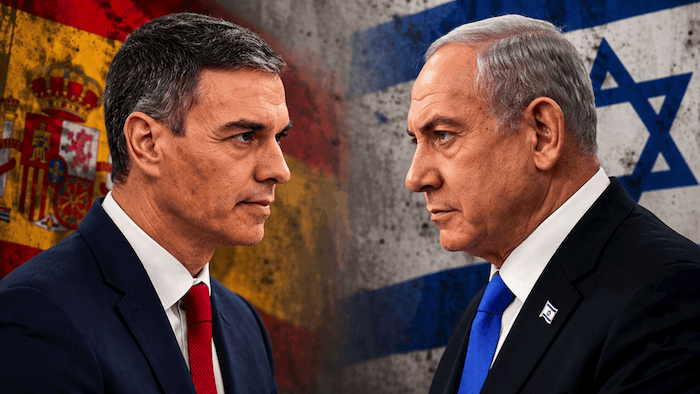
In a sharp escalation of diplomatic tensions, Israeli Prime Minister Benjamin Netanyahu has announced that Netanyahu removes Spain from Gaza coordination center, barring Madrid from participating in the U.S.-led effort to oversee the ceasefire in the enclave. The move comes amid accusations from the Israeli government that Spain has engaged in a “diplomatic war” against the state.
The decision, announced on Friday, April 10, 2026, targets Spain’s presence at the civil-military coordination center located in Kiryat Gat. This facility is central to the implementation of the U.S. President’s peace plan and is tasked with maintaining the stability of the Gaza ceasefire. The ousting marks a significant rupture in international cooperation regarding the region’s security architecture.
Prime Minister Netanyahu framed the expulsion as a necessary response to what he described as an ongoing campaign of defamation. In a video statement shared on X, Netanyahu asserted that Israel would not “remain silent in the face of those who attack us,” specifically citing Spain’s rhetoric regarding the Israeli Defense Forces (IDF).
Accusations of a ‘Diplomatic War’
The primary driver behind the expulsion is the Israeli leadership’s view that Spain has shifted from diplomatic criticism to active hostility. Netanyahu explicitly stated that Spain had “defamed our heroes, the soldiers of the IDF,” whom he described as the “soldiers of the most moral army in the world.” He noted that due to the fact that Spain has “chosen repeatedly to stand against Israel,” its representatives can no longer serve in the Kiryat Gat center according to reports from Al Jazeera.
This move is part of a broader strategy by the Israeli Prime Minister to signal that international opposition will have tangible consequences. Netanyahu has warned that countries that “wage a diplomatic war” against Israel will be forced to pay an “immediate price” as reported by The Times of Israel.
The Role of the Kiryat Gat Coordination Center
The coordination center in Kiryat Gat serves as a critical hub for the U.S.-led civil-military strategy. Its primary objective is to manage the logistics and security requirements necessary to sustain the Gaza ceasefire and ensure the delivery of humanitarian aid under the framework of the POTUS peace plan. By removing Spain, Israel effectively excludes Madrid from the operational decision-making process regarding the ceasefire’s maintenance per The Hill.
Israeli Foreign Minister Gideon Saar further intensified the rhetoric, directing his criticism toward Spanish Prime Minister Pedro Sanchez. Saar accused the Spanish government of leveling “blood libels” against Israel and its military. He argued that under Sanchez’s leadership, Spain’s “obsessive anti-Israel bias” has grow so extreme that the country has “lost all capability to serve a constructive role” in the peace plan’s implementation.
Key Drivers of the Diplomatic Rift
- IDF Defamation: Netanyahu cited the defamation of Israeli soldiers as a primary reason for the removal.
- Diplomatic Hostility: The Israeli government views Madrid’s recent foreign policy as a “diplomatic war.”
- Peace Plan Friction: Foreign Minister Gideon Saar claims Spain’s bias prevents it from constructively implementing the U.S. Peace plan.
- Long-term Deterioration: Relations between Israel and Spain have been steadily declining since the conflict began in October 2023.
Broader Geopolitical Implications
The removal of Spain from the coordination center does not occur in a vacuum. It reflects a deepening divide between Israel and several European nations over the conduct of the war in Gaza. The tension between Prime Minister Netanyahu and Prime Minister Pedro Sanchez has become a focal point of this friction, with Israel viewing Spain’s stance as an obstacle to regional stability rather than a diplomatic contribution.
The decision to push Spain out of a U.S.-led strategy center as well highlights the complex dynamics between Israel and its closest ally, the United States. Whereas the center operates under the POTUS peace plan, the operational control remains heavily influenced by Israeli security requirements, allowing Netanyahu to unilaterally remove participants he deems hostile.
As Israel continues to warn other nations about the “immediate price” of diplomatic opposition, the international community is watching to see if similar measures will be applied to other countries that have been critical of Israeli military operations. For now, the exclusion of Spain serves as a stark reminder of the fragility of the current ceasefire coordination efforts.
There are currently no scheduled dates for a diplomatic reconciliation between Madrid and Jerusalem. Further updates on the composition of the Kiryat Gat coordination center are expected as the implementation of the U.S. Peace plan continues.
World Today Journal encourages readers to share their perspectives on this diplomatic escalation in the comments below.
Related reading