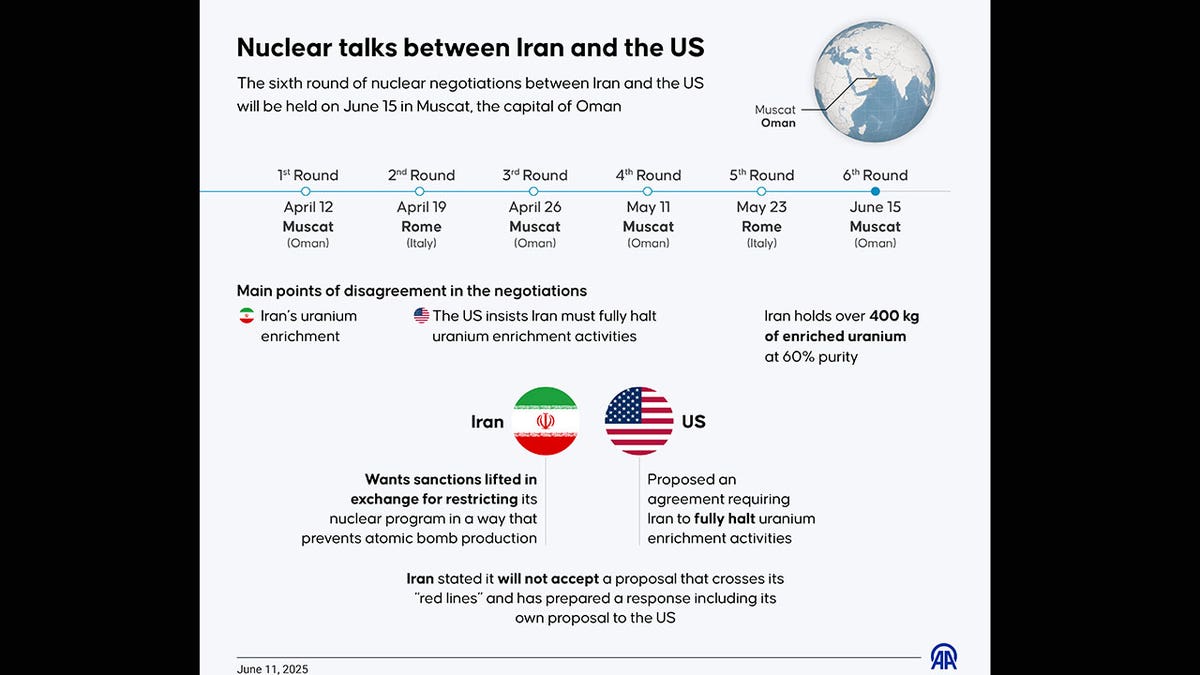
The fragile hope for a diplomatic resolution in the Middle East has dimmed as the latest round of US and Iran peace negotiations failure leaves both nations on the brink of renewed escalation. Despite a recent ceasefire, the distance between Washington’s demands and Tehran’s position remains vast, with the United States now pivoting toward a strategy of aggressive extraction of nuclear materials.
The current deadlock centers on the aftermath of the June 2025 military campaign, during which the United States launched strategic strikes against Iranian nuclear infrastructure. While the Trump administration has characterized these operations as a decisive victory that set back Iran’s nuclear ambitions by decades, the reality on the ground is a tense stalemate. The United States is now demanding the total surrender of enriched uranium, a condition Tehran has thus far failed to meet.
As the international community watches closely, the rhetoric from Washington has shifted from negotiation to ultimatums. The stakes involve not only the proliferation of nuclear weapons but also the stability of global energy markets, specifically regarding the critical maritime corridors of the Persian Gulf.
The Battle for ‘Nuclear Dust’ and Buried Uranium
At the heart of the current diplomatic collapse is a demand by President Donald Trump and Secretary of Defense Pete Hegseth for Iran to cede its remaining enriched uranium to the United States. According to recent statements, the US administration intends to extract what the President described as “nuclear dust” that remains buried deep underground following the military strikes of the previous year via Le Parisien.
This demand is a direct consequence of the June 2025 strikes, where US B-2 stealth bombers deployed powerful anti-bunker bombs against three primary nuclear sites: Fordo, Natanz, and Ispahan via Le Parisien. While the US claims these strikes were a “spectacular military success,” the exact status of the materials remains a point of contention. Before the attacks, Iran was enriching uranium to a purity of 60%, a level dangerously close to the 90% threshold required for weaponization via Le Parisien.
The US is particularly concerned with more than 400 kg of highly enriched uranium, the precise location and condition of which are not fully known following the bunker-busting raids via Le Parisien. Secretary Hegseth has reiterated that the US will not allow Iran to obtain a nuclear weapon, framing the extraction of these materials as a non-negotiable prerequisite for any lasting peace.
Ultimatums and the Strait of Hormuz
The failure of diplomatic channels has led to a sharp increase in coercive measures. In a recent escalation, President Trump issued a strict 48-hour ultimatum to the Iranian government. The US President demanded that Tehran either conclude a comprehensive agreement with Washington or reopen the Strait of Hormuz, threatening to “unleash hell” upon the country if these conditions were not met via France 24.
The Strait of Hormuz remains one of the most volatile chokepoints in global trade. Any prolonged closure or military conflict in this region would likely trigger a global energy crisis, as a significant portion of the world’s oil passes through these narrow waters. The US pressure to ensure the strait remains open is as much about global economic stability as This proves about regional security.
This “maximum pressure” approach has created a precarious environment where the existing ceasefire is viewed by many as a temporary pause rather than a path to peace. While Pakistan has urged both the United States and Iran to continue respecting the ceasefire to avoid a wider regional conflagration, the aggressive timeline set by Washington leaves little room for traditional diplomacy.
The Internal Logic of the Conflict
The path that led to this current crisis has been a subject of intense scrutiny. Reports indicate that the decision to engage in direct military conflict against Iran was driven by a small, restricted circle of advisors and heavily influenced by Israeli Prime Minister Benjamin Netanyahu via France Info.
According to a detailed account published by the New York Times on April 7, 2026, the US administration was pushed toward war despite significant doubts and warnings from within its own ranks via France Info. The report suggests that President Trump was swayed by the promise of a “rapid, spectacular, and decisive” operation, a narrative that has since clashed with the prolonged and unstable reality of the post-strike environment.
For the Iranian population, the “victory” proclaimed by Washington is often viewed through a different lens. While the US focuses on the degradation of nuclear sites, the humanitarian and social impact of the conflict and the subsequent sanctions continues to weigh heavily on the Iranian people.
Key Conflict Milestones
| Date | Event | Outcome/Impact |
|---|---|---|
| June 2025 | B-2 Bomber Strikes | Targeted nuclear sites at Fordo, Natanz, and Ispahan. |
| April 6, 2026 | White House Press Conference | Trump and Hegseth demand extraction of “nuclear dust.” |
| April 7, 2026 | NYT Report Release | Details internal doubts and Israeli influence on the war decision. |
| April 2026 (Recent) | 48-Hour Ultimatum | US demands agreement or reopening of Strait of Hormuz. |
What Happens Next?
The immediate future of the region depends on whether Tehran chooses to comply with the US demands regarding the uranium extraction or if the 48-hour window regarding the Strait of Hormuz expires without a resolution. The international community remains on high alert, as any failure to maintain the ceasefire could lead to a full-scale return to hostilities.

The next critical checkpoint will be the expiration of the US ultimatum and any subsequent official statements from the Iranian government regarding the surrender of nuclear materials. We will continue to monitor the situation for any signs of a diplomatic breakthrough or further military mobilization.
Do you believe the demand for “nuclear dust” is a realistic path to peace, or a catalyst for further conflict? Share your thoughts in the comments below and subscribe for further updates on this developing story.
Keep reading