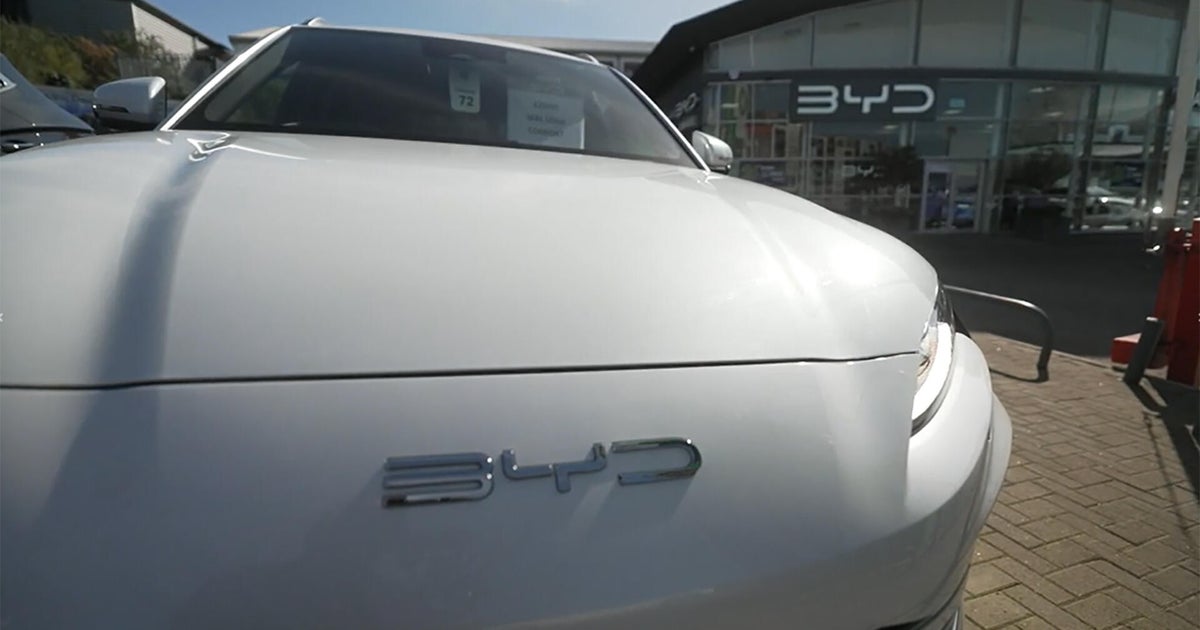
The global landscape of sustainable transportation is currently witnessing a volatile shift in power, as Chinese electric vehicles pull into the lead in a high-stakes battle for market dominance. For years, Tesla stood as the undisputed pioneer of the electric vehicle (EV) revolution, but recent data reveals a more complex reality where Chinese manufacturing scale and aggressive pricing are challenging the American giant’s supremacy.
The competition has evolved into a strategic tug-of-war. Although Tesla has historically relied on brand prestige and a streamlined product line, Chinese automakers—led by BYD—have leveraged a broader array of vehicle options and superior battery technology to capture diverse global markets. This shift is not merely about sales volume. it represents a fundamental change in how the world accesses green technology, moving from luxury-tier offerings to mass-market accessibility.
However, the crown is currently precarious. Recent figures from the first quarter of 2026 suggest a fluctuating lead, where short-term delivery spikes and long-term market share trends tell two different stories. As the industry grapples with expiring subsidies and shifting political climates, the battle between the U.S. And China is redefining the future of the automotive industry.
The 2025 Shift: BYD Dethrones Tesla
The year 2025 marked a historic turning point in the automotive sector. According to reporting from the Los Angeles Times, BYD surpassed Tesla as the world’s top electric vehicle seller in 2025, achieving significantly higher global sales. This achievement signaled that the “Tesla era” of undisputed leadership had ended, as BYD successfully expanded its footprint far beyond the borders of China.
BYD’s ascent was fueled by a multi-pronged strategy focusing on affordability and variety. While Tesla maintained a relatively narrow model range, BYD dominated key international markets by offering lower sticker prices and a wider variety of vehicle options. This approach allowed them to penetrate markets where Tesla’s premium pricing was a barrier to entry. The impact was felt acutely in regions including Germany, Mexico, Thailand, and Australia, where Tesla lost market share at an unprecedented rate (Los Angeles Times).
Industry analysts point to battery technology as a critical differentiator. BYD’s vertical integration and advancements in battery chemistry provided a competitive edge in both cost and performance, allowing them to scale production more efficiently than their competitors. This technological lead, combined with a diverse portfolio, effectively pushed Tesla off its perch as the primary global EV seller.
A Volatile 2026: The First Quarter Rebound
Despite the momentum BYD gained in 2025, the start of 2026 has introduced new volatility. In the first quarter of 2026, Tesla managed a modest rebound in electric vehicle deliveries, moving back ahead of BYD in terms of pure battery-electric vehicle (BEV) volume. Tesla delivered 358,023 vehicles during this period, representing a 6.3% increase from the previous year (AOL).
In contrast, BYD experienced a significant contraction in its BEV segment. The company sold 310,389 battery electric vehicles in the first quarter, a decline of 25.5% year-over-year (AOL). Reports indicate that BYD’s total vehicle sales—which include plug-in hybrids—were down 30% year-over-year, with March sales marking the seventh consecutive monthly decline (AOL).
However, this “win” for Tesla is nuanced. Much of Tesla’s resilience in early 2026 came from China itself; sales of China-made Teslas rose by 23.5% during the January to March period (AOL). This suggests that Tesla’s recovery is less about a global surge and more about BYD being “squeezed” in its home market, while Tesla maintains a strong hold on the Chinese premium segment.
The U.S. Market: Subsidies and Reputation
While the battle rages in Asia and Europe, the United States presents a unique set of challenges for both companies. Tesla, despite its American roots, is struggling with a decline in domestic market share. A primary driver of this slump was the expiration of the $7,500 federal EV tax credit at the complete of September 2025 (AOL). The loss of this financial incentive has bitten directly into Tesla’s U.S. Sales volume.
Beyond economics, Tesla is facing a reputational crisis. The Los Angeles Times reports that backlash against CEO Elon Musk’s political activities has damaged the company’s brand image both in the U.S. And abroad. This ideological friction has accelerated the decline of Tesla’s market share, creating an opening for competitors, although the U.S. Market remains largely closed to Chinese imports due to tariffs.
This creates a paradoxical situation: BYD is dominating globally but is restricted in the U.S., while Tesla is the dominant U.S. Player but is losing its grip on the global leadership position due to internal instability and the removal of government support.
The Cost of Growth: Record Revenue vs. Falling Profits
The aggressive expansion strategy employed by BYD has led to staggering top-line growth, but it has come at a cost to the bottom line. BYD recently reported that its annual revenue rose to a record $116 billion (AP News). This figure allows BYD to outpace Tesla in total revenue, reflecting the massive scale of its operations.
Despite this record-breaking revenue, BYD’s profit fell for the first time since 2021 (AP News). This profit dip is attributed to “cutthroat competition” within the EV sector. The industry has entered a period of intense price wars, where manufacturers are slashing prices to capture market share, effectively eroding profit margins across the board.
This financial trend highlights the risk of the current “growth at all costs” model. While BYD has successfully captured the global EV crown in terms of volume and revenue, the sustainability of this lead depends on whether the company can pivot from aggressive expansion to sustainable profitability in an increasingly crowded market.
Comparative Snapshot: Tesla vs. BYD (2025-2026)
What This Means for the Global Market
The current volatility between Tesla and BYD suggests that the EV market is entering a “consolidation phase.” The initial excitement of the transition to electric power is being replaced by the hard economics of automotive manufacturing. For consumers, this competition has been a boon, leading to lower prices and more choices in vehicle types, from budget-friendly city cars to luxury sedans.
However, for the industry, the “cutthroat competition” mentioned by BYD indicates a dangerous trend. When profit margins shrink, the ability to invest in the next generation of innovation—such as solid-state batteries or fully autonomous driving—may be compromised. Tesla is currently waiting on broader approval for its Full Self-Driving (FSD) technology in Europe, which could be a pivotal factor in regaining its technological lead (AOL).
the fact that Chinese electric vehicles pull into the lead in global volume reflects a broader geopolitical shift. Asia has effectively “taken the torch” in EV mass-production, while the U.S. Industry faces a combination of political headwinds and the end of federal financial support.
The next critical checkpoint for the industry will be the release of second-quarter 2026 delivery numbers, which will determine if Tesla’s Q1 rebound was a temporary fluctuation or the start of a sustained recovery, and whether BYD can stabilize its declining sales in the Chinese domestic market.
Do you believe the shift toward Chinese EV dominance is inevitable, or can Tesla reclaim its lead through autonomy and brand loyalty? Share your thoughts in the comments below.
Keep reading