
The fragile truce between the United States and Iran entered a critical phase this weekend as the first signs of commercial maritime activity returned to one of the world’s most volatile chokepoints. Shipping data confirms that three supertankers, carrying millions of barrels of crude oil, successfully exited the Strait of Hormuz on Saturday, signaling a tentative opening in a region paralyzed by conflict since February.
This movement comes in the wake of high-stakes diplomatic efforts that ultimately failed to produce a formal agreement. A U.S. Delegation recently departed Pakistan after intense negotiations ended without a deal, leaving the two nations in a strategic stalemate. The lack of a formal treaty has left the current ceasefire “fragile,” with both military and economic tensions remaining high.
The stakes for these US-Iran ceasefire talks and the resulting truce are global in scale. For weeks, Iran’s blockade of the Strait of Hormuz—a vital artery for approximately 20 percent of global oil and liquefied natural gas (LNG) shipments—has disrupted energy supplies and driven oil prices upward. The blockade was a direct consequence of the war between Iran and the combined forces of the U.S. And Israel, which began at the end of February 2026.
Super Tankers Breach the Blockade
According to data from the London Stock Exchange Group (LSEG) and analytics firm Kpler, three Very Large Crude Carriers (VLCCs) managed to navigate the strait on Saturday, April 11. The vessels—the Liberia-flagged Serifos and the China-flagged Cospearl Lake and He Rong Hai—utilized the “Hormuz Passage trial anchorage,” a specific route designed to bypass Iran’s Larak Island.
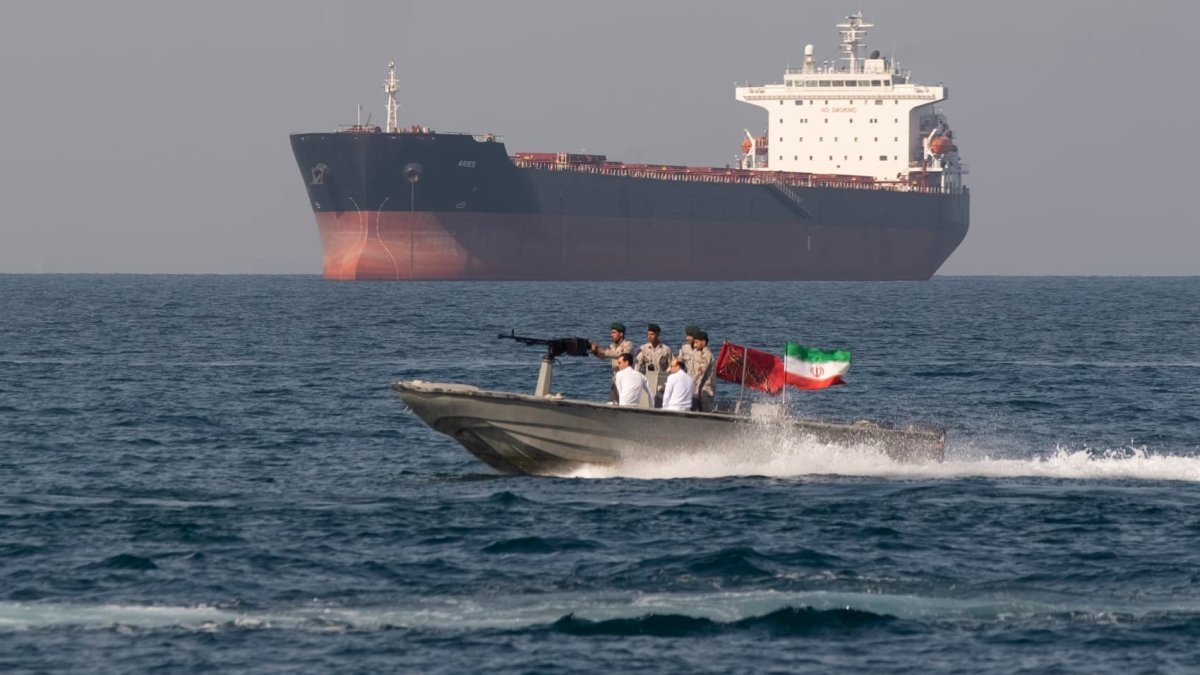
The scale of these shipments is significant, as each of the three vessels is capable of carrying 2 million barrels of oil. The Serifos, chartered by the Thai state-owned energy firm PTT, is carrying crude loaded from the United Arab Emirates and Saudi Arabia in early March. It is currently expected to arrive at Malaysia’s Malacca Port on April 21.
The transit of the Serifos is particularly noteworthy as it was one of seven vessels for which Malaysia sought clearance from Iran to transit the strait, highlighting the complex diplomatic maneuvering required to move energy resources during a truce.
Military Escalation Amid Diplomatic Failure
While commercial tankers are beginning to move, the military presence in the region remains aggressive. In a move that underscores the volatility of the ceasefire, several U.S. Navy warships crossed the Strait of Hormuz on Saturday, April 11. This marks the first time U.S. Warships have crossed the strait since the conflict with Iran began in February.
The naval movement coincides with the collapse of recent diplomatic talks. The U.S. Delegation’s departure from Pakistan without a signed agreement suggests that key sticking points remain unresolved. Following the conclusion of these talks, JD Vance issued remarks regarding the failure to reach a deal, leaving the international community to wonder how long the current “fragile truce” can hold without a formal framework.
The Economic Impact of the Hormuz Chokepoint
The Strait of Hormuz remains the most critical energy transit point in the world. The blockade imposed by Iran since late February has not only threatened the flow of oil but has fundamentally destabilized global energy markets. Because the strait is the primary exit for oil from the Persian Gulf, any disruption leads to immediate volatility in global pricing.
The recent passage of the three VLCCs provides a momentary reprieve for energy markets, but the absence of a formal deal means the threat of renewed blockades persists. The international community continues to monitor the “Hormuz Passage trial anchorage” as a litmus test for whether Iran will allow a sustainable return to normal shipping operations or if the strait will remain a tool of geopolitical leverage.
Key Developments at a Glance
| Event | Detail | Status/Date |
|---|---|---|
| US Navy Transit | Warships crossed Strait of Hormuz | April 11, 2026 |
| Commercial Transit | 3 VLCCs (Serifos, Cospearl Lake, He Rong Hai) exited strait | April 11, 2026 |
| Diplomatic Talks | US delegation left Pakistan without a deal | April 2026 |
| Conflict Start | US and Israel war on Iran begins | Late February 2026 |
As of now, the situation remains an uneasy peace. The world watches the Malacca Port for the arrival of the Serifos on April 21, which will serve as another indicator of whether the flow of oil can be stabilized. With no formal agreement in place, the region remains one miscalculation away from a return to active hostilities.
We will continue to monitor official updates regarding the U.S. Delegation’s findings and any further movements of naval or commercial vessels in the Persian Gulf. Please share this report and leave your comments below on how these energy disruptions are affecting your region.
Worth a look