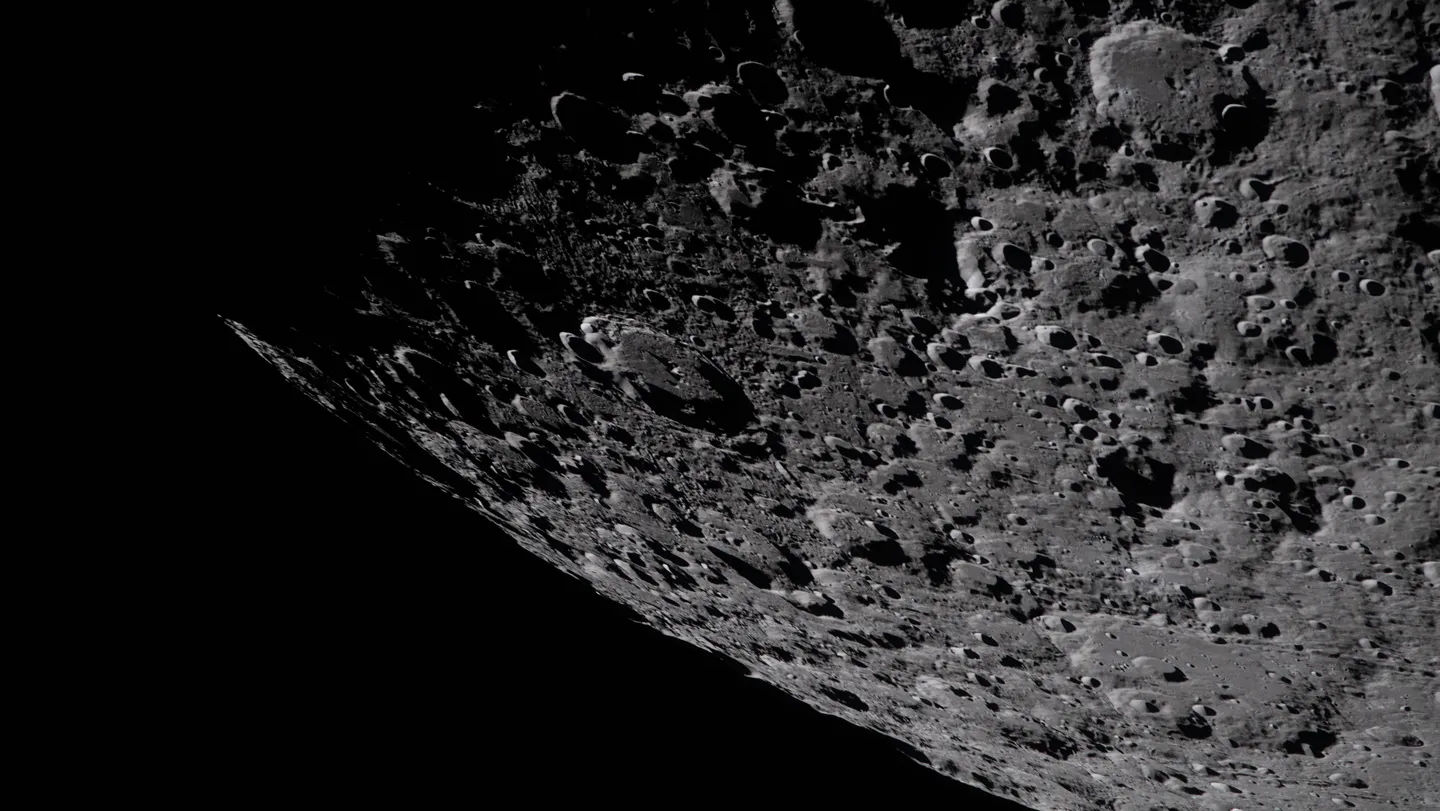
The return of humanity to the vicinity of the Moon has yielded more than just a historic milestone; it has provided a scientific treasure trove of data and imagery that is only beginning to be analyzed. On Monday, April 6, 2026, the crew of NASA’s Artemis II mission completed a daring flyby of the lunar far side, capturing views of the celestial body and our own planet from perspectives never before witnessed by human eyes.
This mission represents a critical leap in deep-space exploration, pushing astronauts farther from Earth than any humans have ever traveled. As the crew navigates their return journey, the images and data transmitted back to Earth are already reshaping our understanding of the lunar environment and the mechanics of crewed lunar transit.
For those of us in the scientific community, the value of this mission extends beyond the breathtaking photography. The Artemis II flight serves as a vital test of the Orion spacecraft’s capabilities and the crew’s ability to operate in the harsh environment of deep space, providing essential benchmarks for future landings on the lunar surface.
Unseen Vistas of the Lunar Far Side
The centerpiece of the mission’s data collection occurred on April 6, 2026, during a seven-hour pass over the lunar far side. This region, perpetually hidden from Earth-based observers, was captured in unprecedented detail by the crew. According to NASA, these images reveal regions no human has ever seen before, including the heavily cratered terrain found along the eastern edge of the Moon.
Among the most scientifically significant captures was the view of the “terminator”—the moving line that divides the day side and the night side of the Moon. The astronauts described this boundary as a stark transition, providing a unique look at the lunar topography under shifting light conditions.
The imagery also captured a rare in-space solar eclipse, a phenomenon that offers unique lighting and atmospheric data. These observations are part of a broader effort to document the lunar environment in preparation for subsequent Artemis missions that will aim to land humans on the surface.
A Cosmic Perspective: Earthset and the Crescent Earth
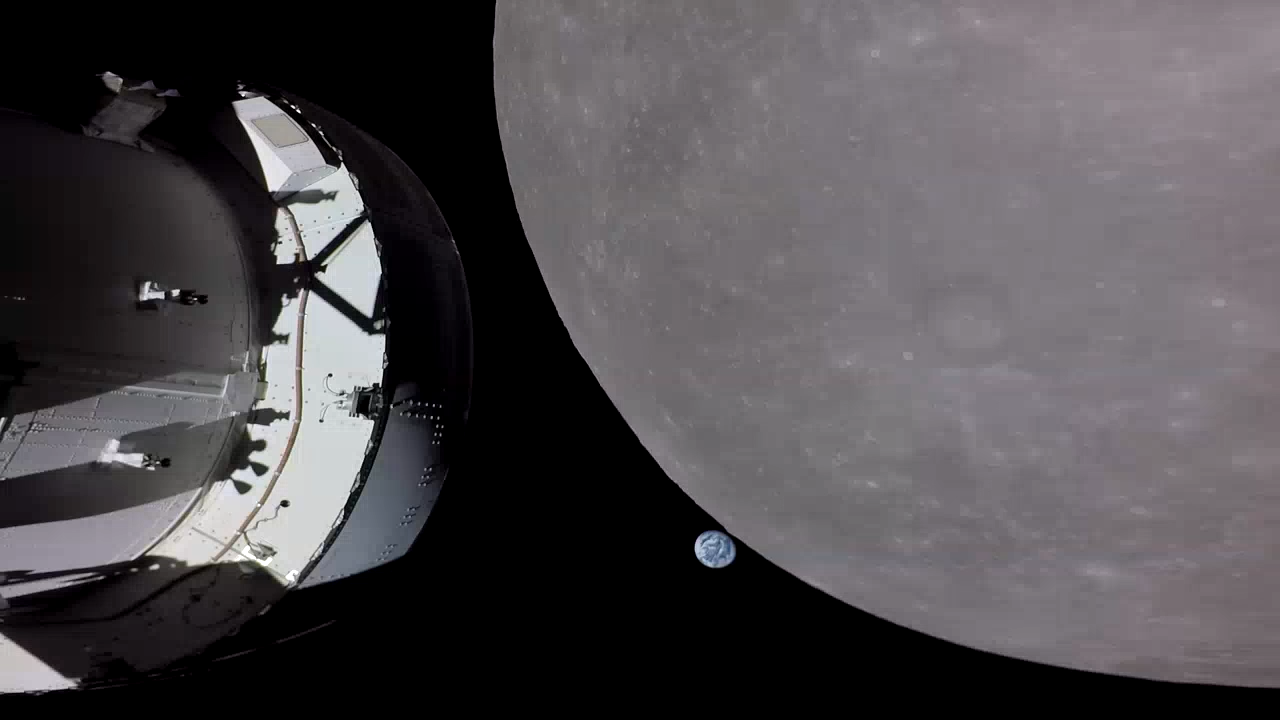
Even as the Moon was the primary target, the Orion spacecraft also provided a profound look back at Earth. At 6:41 p.m. EDT on April 6, 2026, the crew captured an “Earthset,” an image of our planet drawing closer to passing behind the Moon. This perspective highlights the extreme distance the crew has traveled and the isolation of deep-space transit.
Other images from the flyby include a faint view of a crescent Earth appearing above the lunar horizon. As the spacecraft began its journey back toward Earth, the crew continued to document their progress, capturing a thin lunar crescent on April 8, 2026, as they transitioned away from the Moon’s orbit.
The Crew and the Orion Spacecraft
The success of the Artemis II scientific treasure trove is a testament to the coordination between the ground crew and the four astronauts aboard the Orion spacecraft. The mission includes a diverse team of specialists tasked with managing the complex systems of the craft while conducting scientific observations.
Key crew members identified in the mission’s documentation include:
- Victor Glover: Serving as the Artemis II Pilot.
- Jeremy Hansen: A Mission Specialist from the Canadian Space Agency (CSA).
- Christina Koch: Serving as a Mission Specialist.
The Orion spacecraft acted as both a vessel and a laboratory, allowing the crew to capture high-resolution imagery and monitor the effects of deep-space radiation and microgravity. The ability of the crew to operate the spacecraft’s imaging systems during the high-velocity pass over the lunar far side was critical to the acquisition of the data now being studied by researchers.
Timeline of the Artemis II Lunar Flyby
The sequence of events during the lunar flyby provides a clear window into the mission’s operational tempo and the timing of its scientific discoveries.
| Date | Event | Scientific/Operational Detail |
|---|---|---|
| April 6, 2026 | Lunar Far Side Pass | Seven-hour pass; capture of the lunar terminator and eastern cratered terrain. |
| April 6, 2026 | Earthset Capture | Image taken at 6:41 p.m. EDT showing Earth passing behind the Moon. |
| April 7, 2026 | Image Release | NASA officially releases the first flyby images to the public. |
| April 8, 2026 | Return Transit | Crew captures a thin lunar crescent while traveling back to Earth. |
What This Means for Future Exploration
The data collected during this flyby is not merely for archival purposes; it is foundational for the future of human spaceflight. By analyzing the imagery of the lunar far side and the behavior of the Orion spacecraft during the transit, NASA and its international partners can better plan the logistics for the Artemis III landing.
The mission’s ability to capture a solar eclipse and detailed views of the lunar terminator provides insight into the lighting conditions that future astronauts will face. This represents particularly important for identifying safe landing sites and understanding the thermal environment of the lunar poles, where water ice is believed to exist.
the successful execution of the flyby confirms the viability of the Orion spacecraft for long-duration missions. The “treasure trove” of data includes not only photos but also telemetry and systems performance metrics that will be used to refine spacecraft design for the next phase of lunar exploration.
As the crew continues their journey home, the global scientific community awaits the full release of the telemetry and high-resolution datasets. The Artemis II mission has proven that humanity can once again navigate the void between Earth and the Moon, turning a test flight into a significant scientific victory.
The next confirmed checkpoint for the mission is the crew’s splashdown on Earth, which will mark the conclusion of this historic test flight and the beginning of a comprehensive debriefing process for the astronauts and engineers involved.
We invite our readers to share their thoughts on the Artemis II mission in the comments below. How do you reckon these discoveries will impact the future of human colonization of the Moon?