
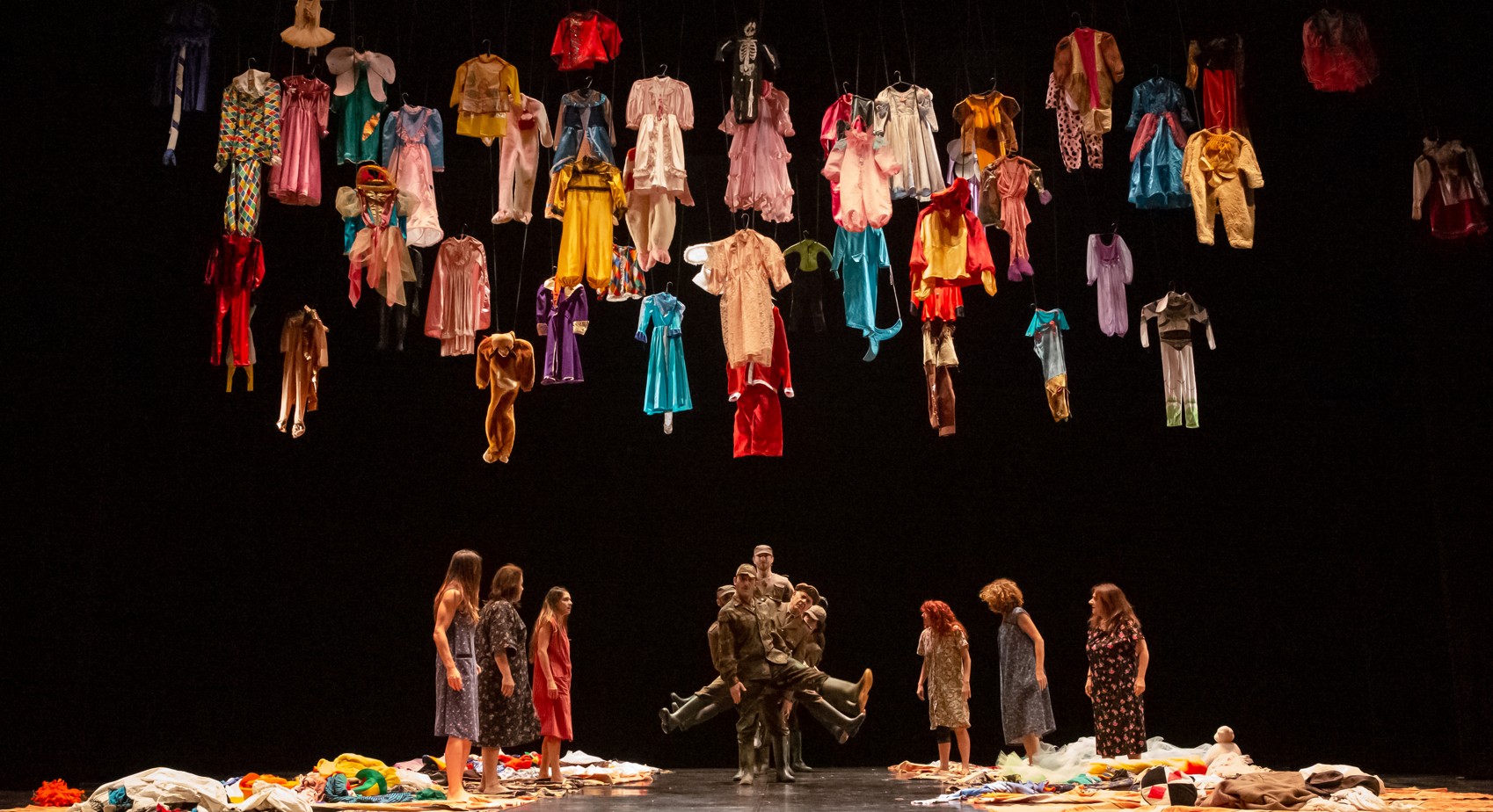
The intricate relationship between a playwright’s vision and an actor’s delivery is often a delicate dance of language and breath. For the renowned French dramatist Valère Novarina, few performers have captured this synergy as effectively as Olivier Martin-Salvan, a collaborator whom Novarina once aptly termed his “soldat du langage” (soldier of language).
This unique artistic bond is currently being highlighted through a specialized reading-performance designed by Martin-Salvan, which invites audiences to explore the “underside” of words. By diving into the dense, sonic landscapes of Novarina’s work, the performance transcends traditional theater, turning the act of reading into a visceral, musical experience that challenges the boundaries of linguistic expression.
The collaboration between the two artists is rooted in a deep understanding of Novarina’s unconventional writing style, which often prioritizes the sound and rhythm of words over conventional narrative structure. Martin-Salvan’s role as a “soldier of language” underscores the discipline and precision required to navigate these texts, treating the script not just as a story, but as a musical score to be executed with rigor and passion.
The Artistic Evolution of Olivier Martin-Salvan
Olivier Martin-Salvan’s journey into the world of professional performance began in 2001 when he joined the école Claude Mathieu. From these academic beginnings, he quickly established himself as a versatile actor capable of handling both classical and avant-garde material. His early career was marked by significant collaborations with director Benjamin Lazar, including roles in street performances such as Tabarin et son maître and Molière’s Le Bourgeois Gentilhomme.
Martin-Salvan’s range extended further through work with Jean Bellorini and Marie Ballet, appearing in productions such as Joseph Stein’s Fiddler on the Roof and Novarina’s own The Imaginary Operetta. These diverse experiences laid the groundwork for his specialized ability to interpret the complex, often sprawling texts of Valère Novarina, where the actor must balance the intellectual weight of the prose with the physical demands of the performance.
Since 2007, Martin-Salvan has become a recurring presence in Novarina’s productions. A notable milestone in this partnership was his appearance in L’Acte Inconnu, performed in the prestigious Cour d’honneur of the Palais des papes. This level of exposure at major venues like the Festival d’Avignon has solidified his reputation as one of the primary interpreters of Novarina’s linguistic experiments.
Exploring the ‘Underside of Words’
The concept of “L’envers des mots” (The Underside of Words) is more than just a title; it is a methodology for engaging with Novarina’s oeuvre. In a recent musical reading presented at the Cité internationale de la langue française, Martin-Salvan explored a vast trajectory of texts, ranging from the early L’Atelier Volant (1971) to the more recent Le Vivier des noms (2015).

This performance was designed to echo the exhibition “Traces d’écriture, peintures, renversement. Valère Novarina envahit la Cité,” which remained open until April 27. By pairing the spoken word with the violin accompaniment of Mathias Lévy, the production emphasized the sonic quality of the language. The presence of other interpreters—Romane Buunk, Mathilde Hennegrave, and Fabien Coquil—further expanded the auditory landscape, transforming the reading into a collective exploration of breath and sound.
The selection of texts for such performances often includes a wide array of Novarina’s works, such as:
- Le théâtre des paroles (1989)
- Vous qui habitez le temps (1989)
- L’Espace furieux (1997)
- L’Opérette imaginaire (1998)
- L’Origine rouge (2000)
- L’Acte inconnu (2007)
- Le vrai sang (2011)
By weaving these pieces together, Martin-Salvan creates a “sur-mesure” (custom-made) evening that allows the audience to experience the evolution of Novarina’s style. The actor describes his experience in this process as being “a color of his painting, an instrument in the orchestra,” illustrating how the performer becomes a tool for the playwright’s broader artistic vision.
The Impact of Linguistic Theater
What makes the work of Novarina and Martin-Salvan significant is the shift away from traditional plot-driven theater toward a “theater of language.” In this framework, the word itself is the protagonist. The “soldier of language” must fight through the density of the text to find the emotional core, using the breath as a bridge between the written word and the listener’s ear.

This approach is particularly evident in the cycle “Entrer dans la langue” (Entering the Language), where the goal is to immerse the audience in the physical reality of speech. When Martin-Salvan takes the stage, he is not merely reciting lines but is engaged in a physical act of creation, where the rhythm of the violin and the cadence of the voice work in tandem to evoke images and emotions that transcend literal meaning.
For the global theater community, this collaboration serves as a testament to the enduring power of the avant-garde. By focusing on the “underside” of language, Martin-Salvan and Novarina challenge the audience to listen differently, transforming the theater into a space of sonic discovery and intellectual provocation.
Key Collaborations and Works
| Year | Work/Event | Role/Context |
|---|---|---|
| 2001 | École Claude Mathieu | Academic training and start of acting career |
| 2007 | L’Acte Inconnu | Performance at the Palais des papes |
| 2015 | Le Vivier des noms | One of the latest texts interpreted by Martin-Salvan |
| 2025 | L’envers des mots | Musical reading at Cité internationale de la langue française |
As these performances continue to tour and evolve, the focus remains on the symbiotic relationship between the creator and the interpreter. The “soldier of language” continues to march through the complex terrains of Novarina’s mind, ensuring that the playwright’s linguistic revolutions are heard and felt by audiences worldwide.
For those following the developments of contemporary French theater, the next key checkpoint is the ongoing integration of these musical readings into larger cultural festivals and exhibitions focusing on the intersection of literature and performance.
We invite readers to share their thoughts on the intersection of music and spoken word in the comments below.