
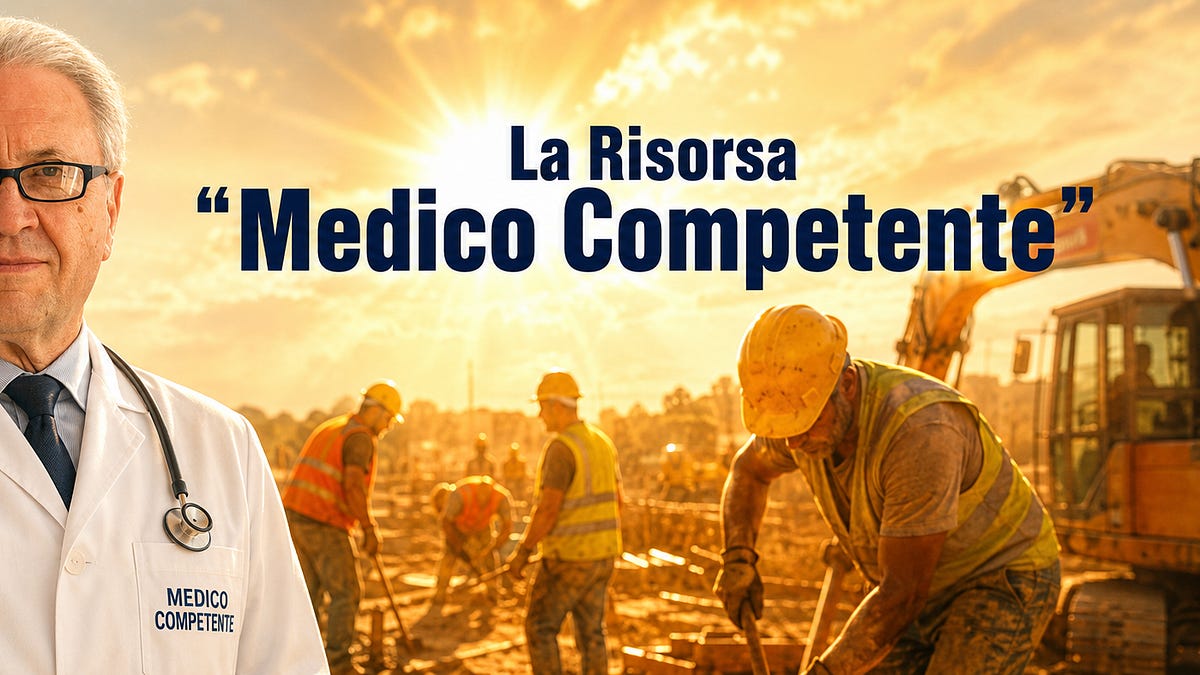
The role of the Medico Competente, or occupational physician, is facing increased scrutiny in Italy as workplace regulations struggle to keep pace with extreme weather conditions and evolving delegation practices. Recent administrative challenges have highlighted a dual pressure on these professionals: the necessity to enforce safety protocols during record-breaking heatwaves and the temptation for employers to offload liability through formal delegation. At the center of these discussions is the professional conduct of figures like Graziano Frigeri, whose work underscores the broader systemic tensions within Italian workplace safety management.
Occupational health standards in Italy are governed by the Testo Unico sulla Salute e Sicurezza sul Lavoro (Legislative Decree 81/2008), which establishes the specific duties of the Medico Competente in monitoring worker health and advising employers on risk mitigation. According to the National Institute for Insurance against Accidents at Work (INAIL), these physicians act as essential consultants who must bridge the gap between clinical health data and the environmental realities of the workplace.
Managing Occupational Health During Extreme Heat
The recent surge in summer temperatures across Southern Europe has forced occupational physicians to re-evaluate traditional safety thresholds. As heatwaves become more frequent, the Medico Competente is increasingly tasked with drafting specific protocols to prevent heatstroke and exhaustion among outdoor workers. These efforts are often complicated by local municipal ordinances that may conflict with or exceed national workplace safety guidelines, creating a fragmented regulatory environment for employers.

Professional discourse, often reflected in technical analysis by practitioners such as Graziano Frigeri, points to the difficulty of maintaining consistent safety standards when environmental factors shift rapidly. The primary challenge remains the implementation of technical and organizational measures—such as mandatory hydration breaks, shade provision, and the rescheduling of strenuous tasks—which require both employer cooperation and rigorous medical oversight. The Italian Ministry of Health regularly issues bulletins detailing these preventative measures, which serve as the baseline for legal compliance during the summer months.
The Risks of Delegating Safety Responsibilities
A significant point of tension in current Italian labor law is the “temptation of delegation.” Under Legislative Decree 81/2008, the employer maintains the primary responsibility for the safety of the workplace, yet there is a recurring trend where administrative duties are passed down the chain of command, potentially diluting the efficacy of safety oversight. This practice, often described in professional circles as a risk to the integrity of the Medico Competente’s role, can lead to a situation where the physician is isolated from decision-making processes.

Experts in the field argue that when safety management is treated as a bureaucratic checkbox rather than a dynamic medical and technical process, the risk of workplace accidents increases. The legal framework requires that any delegation of functions must be explicit and documented, yet critics note that this often fails to address the underlying need for direct, informed communication between the physician and the workforce. The National Labour Inspectorate (Ispettorato Nazionale del Lavoro) continues to emphasize that the delegation of tasks does not equate to the delegation of legal responsibility, a distinction that remains critical for all parties involved.
Professional Accountability and Future Outlook
The debate surrounding these issues is not merely academic; it has direct implications for how companies navigate inspections and liability. As stakeholders like Graziano Frigeri engage with these topics, the focus remains on ensuring that the Medico Competente retains the autonomy necessary to prioritize worker health over administrative convenience. This professional independence is protected by law, yet it requires constant vigilance against organizational pressures that prioritize production speed over safety protocols.

Looking ahead, the integration of digital health monitoring and more standardized climate-risk assessments is expected to change how these physicians operate. The next major checkpoint for these regulations involves potential updates to the national guidelines for high-temperature work environments, which are expected to be discussed in upcoming sessions of the Permanent Conference for Relations between the State, the Regions, and the Autonomous Provinces. Readers interested in the evolution of these standards can monitor official updates from the Ministry of Labour and Social Policies to understand how new mandates will affect workplace operations in the coming seasons.
This report provides an overview of current occupational health debates in Italy. For further analysis on professional conduct in the medical sector or to share insights regarding your workplace safety experiences, please leave a comment below or join the discussion on our social channels.