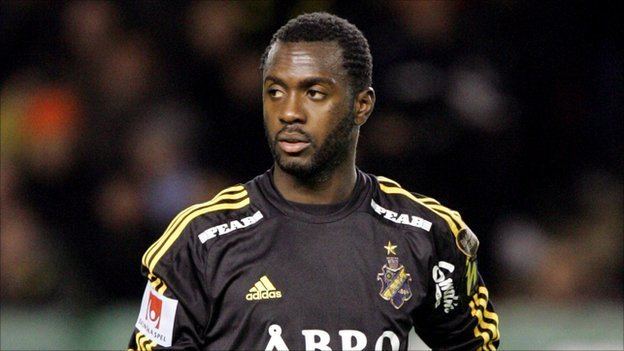
The trajectory of a professional athlete’s life can often be a study in extremes, shifting from the roar of a stadium to the silence of a courtroom. For Dulee Johnson, a man once celebrated as a creative force in Swedish football, the narrative has shifted dramatically. The former Liberian international is currently embroiled in significant Dulee Johnson legal troubles in Sweden, facing both a custodial sentence and severe professional criticism regarding his conduct as a football agent.
Once a pivotal figure for AIK and a mainstay of the Liberian national team, Johnson’s recent history is defined less by his skill on the pitch and more by a series of legal battles. From convictions for violent crimes to allegations of exploiting young athletes, the fall from grace for the former midfielder has been precipitous, leaving a trail of controversy in his wake.
The most recent developments are the most severe. In July 2025, a Swedish court delivered a verdict that fundamentally alters the former player’s standing in the country where he spent the prime of his career. The court found Johnson guilty of multiple counts of assault and molestation, marking a grim turning point for the 41-year-old.
Prison Sentence and Assault Convictions
On July 4, 2025, Dulee Johnson was sentenced to seven months in a Swedish prison. The conviction follows a series of incidents that occurred between March and May of the same year, during which the court determined that Johnson repeatedly assaulted a female victim. The judicial ruling emphasized that these actions were not isolated incidents but demonstrated a pattern of aggression that violated Swedish criminal law.
Beyond the loss of his liberty, the court imposed financial penalties to address the harm caused. Johnson was ordered to pay $3,665 in damages. The court explicitly stated that this restitution would not serve to reduce or replace the mandatory custodial sentence, underscoring the gravity of the assault and molestation charges.
Despite the court’s findings and the resulting sentence, Johnson has not admitted guilt. Following the verdict, he denied all allegations and stated his intention to appeal the conviction within the legally permitted timeframe. This denial stands in contrast to the court’s determination of a clear pattern of aggression.
Controversies in Football Recruitment
While the criminal convictions have dominated recent headlines, Johnson’s transition into the role of a football agent has been equally fraught with turmoil. Serious allegations have emerged regarding his handling of young African talent seeking opportunities in Europe. Reports indicate that Johnson flew three young African players to Sweden with the promise of professional opportunities, only for the arrangement to end in disappearance and distress.
Of the three players brought to the country, two disappeared shortly after their arrival. The situation was further complicated by the age of the participants; one of the players was only 16 years old at the time he was brought to Sweden to undergo trial training with BK Häcken. This incident has sparked sharp criticism regarding the ethics of Johnson’s agency and the vulnerability of young athletes lured by the promise of European stardom.
For any agent, reputation is the primary currency. The disappearance of minors and young adults under his care has led to claims that Johnson deceived the players and their families. These allegations suggest a failure of duty of care, painting a picture of a recruitment process that lacked transparency and safety for the athletes involved.
A History of Legal Turmoil
The 2025 conviction is not the first time Johnson has faced the Swedish legal system. His history in the country is punctuated by a significant legal crisis that occurred over a decade ago. In October 2010, Johnson was detained on suspicion of rape after being accused of sexually assaulting a 22-year-old woman at his apartment in Solna.
At the time, reports indicated that investigators had gathered strong evidence, which included witness testimony from a friend of Johnson who was allegedly present during the incident. This earlier brush with the law established a precedent for the legal challenges that would continue to shadow his life long after his playing days ended.
The Sporting Legacy of Dulee Johnson
To understand the depth of this fall, one must glance at the heights Johnson once reached. Born on November 7, 1984, in Monrovia, Liberia, Johnson arrived in Sweden in the late 1990s via Floda BoIF, having been discovered at the Gothia Cup. He eventually moved to the top flight, where he became a highly respected player.
His most successful period came with AIK, where he was a key component of the squad that won the 2009 Allsvenskan and 2009 Svenska Cupen. Known for his creativity as both a midfielder and a striker, Johnson’s technical ability made him a fan favorite and a valuable asset in the Swedish league.
On the international stage, Johnson’s contributions to Liberian football were significant. Between 2001 and 2016, he earned 35 caps for the Liberia national team and represented his country at the 2002 African Cup of Nations. His career spanned numerous clubs across Europe and Africa, including stints with BK Häcken, Maccabi Tel Aviv, and Panetolikos, totaling 454 club appearances and 74 goals.
Career Summary and Achievements
| Category | Details |
|---|---|
| National Team | Liberia (35 caps, 2001–2016) |
| Major Honors | Allsvenskan (2009), Svenska Cupen (2009) |
| Primary Position | Midfielder / Striker |
| Key Club | AIK (Sweden) |
Impact on the Sporting Community
The intersection of professional sports and criminal activity often creates a ripple effect that impacts more than just the individual. In this case, the allegations regarding the recruitment of young African players highlight a systemic vulnerability in football scouting. When agents operate without strict oversight, young athletes—often from economically disadvantaged backgrounds—grow susceptible to exploitation.

The fact that a 16-year-old was brought into a professional environment under these circumstances raises questions about the due diligence performed by clubs and the regulatory frameworks governing player transfers and trials. The disappearance of two players further underscores the danger of unregulated “talent pipelines” that bypass official channels and legal safeguards.
For the Liberian football community, Johnson was once a symbol of success and a pathway to Europe. His current legal status and the nature of his crimes serve as a cautionary tale about the volatility of fame and the necessity of accountability, regardless of an individual’s sporting achievements.
As the legal process continues, the focus remains on the victims of the assault and the missing players who were promised a future in football. The Swedish justice system has made its initial determination, but the full extent of the damage caused by Johnson’s actions as both an individual and an agent may take longer to fully uncover.
The next confirmed checkpoint in this matter is the appeal process initiated by Dulee Johnson regarding his seven-month prison sentence. Further updates will depend on the Swedish court’s schedule for hearing the appeal.
We invite our readers to share their thoughts on the ethics of football recruitment in the comments section below.