
Tensions between the United States and the Vatican reached a new peak on Sunday, April 12, 2026, as President Donald Trump launched a scathing social media attack against Pope Leo XIV. The dispute, which has now gone viral globally, centers on the pontiff’s criticism of the ongoing U.S. War in Iran and his calls for peace and dialogue.
In a series of provocative posts on Truth Social, President Trump criticized the American-born Pope, describing him as “Weak on Crime” and “terrible for Foreign Policy.” The escalation follows a week of public friction between the two leaders, highlighting a deep ideological divide regarding international diplomacy and the role of the Catholic Church in political affairs.
The conflict intensified after Pope Leo XIV suggested that an “illusion of omnipotence” was fueling the conflict involving the U.S., Israel and Iran. In response, Trump utilized social media to suggest that the Pope is “a very liberal” person who should “stop catering to the Radical Left” and focus on being a “Great Pope, not a Politician,” according to reports from USA Today.
AI Imagery and Claims of Idolatry
Beyond the textual attacks, the President shared a controversial image generated by artificial intelligence. The image depicted Trump in a position of divine power, appearing to cure an ill man. Observers and reports have noted that the imagery delved into idolatry and echoed a similar post from nearly a year prior in which Trump appeared dressed as a pontiff.
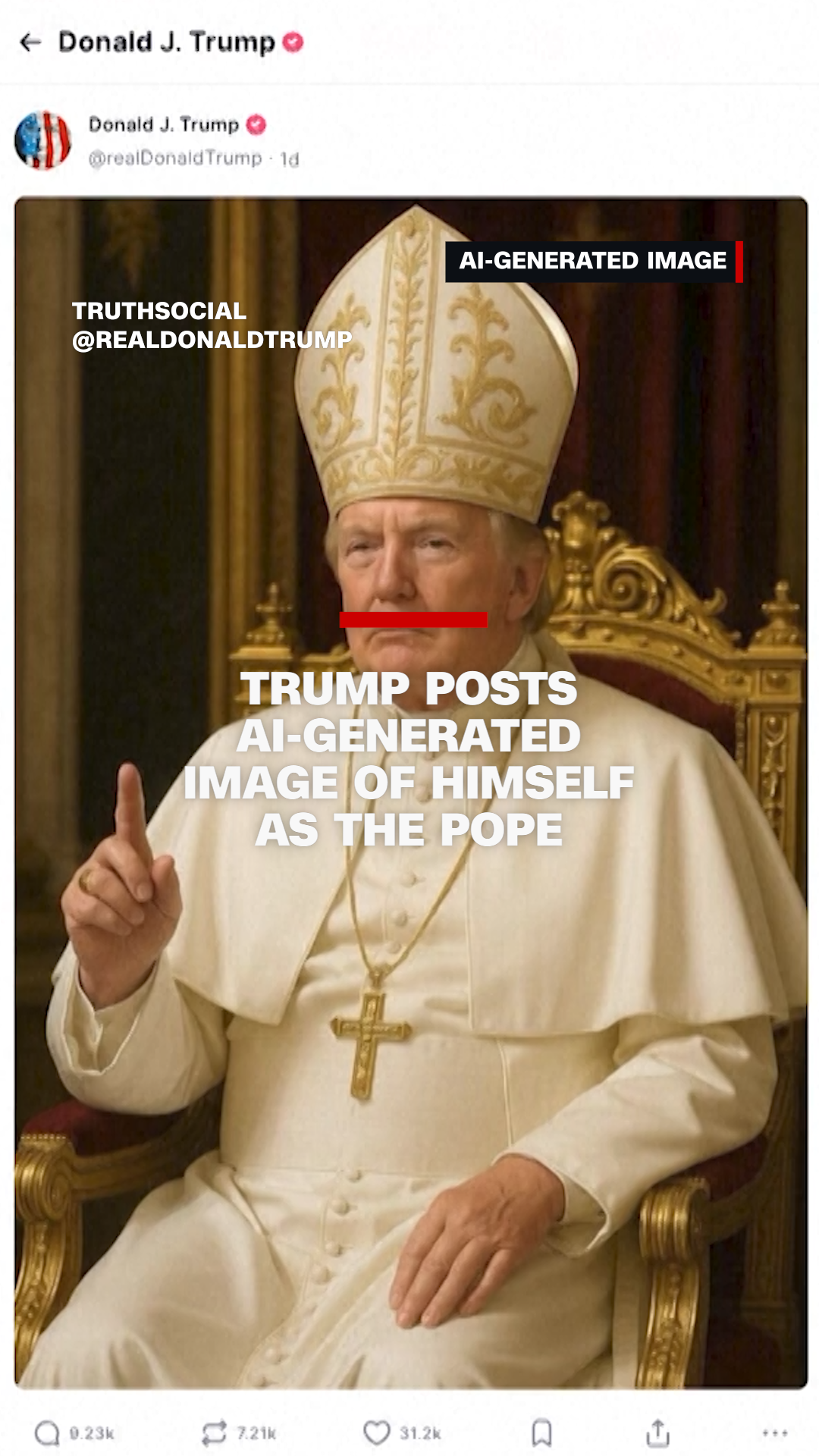
This digital display coincided with a broader critique of the Pope’s leadership. Trump claimed that Leo XIV’s ascension to the papacy was a “shocking surprise” and argued that the Church only selected him because he was American, believing it would be the best way to manage the relationship with the Trump administration. “If I wasn’t in the White House, Leo wouldn’t be in the Vatican,” Trump wrote on Truth Social, as detailed by CNBC.
The Iran Conflict and Diplomatic Rift
The core of the disagreement lies in the U.S. Military strategy toward Iran. While Pope Leo XIV has condemned the war effort and called for peace in his Easter message, President Trump has maintained a hardline stance. On Easter Sunday, the President posted a demand for Tehran to “Open the F****** Strait,” threatening that they would be “living in Hell” if they did not comply, and specifically mentioned that civilian infrastructure, such as power plants and bridges, would be targeted.
Trump further criticized the Pope’s views on nuclear proliferation, stating, “I don’t want a pope who thinks it is okay that Iran has a nuclear weapon.” This clash of perspectives represents a rare instance of a U.S. President directly and harshly attacking a pontiff, particularly one born in the United States.
Key Points of Contention
- Foreign Policy: The Pope advocates for dialogue and peace in the Iran war, while Trump threatens military escalation and blockades.
- Domestic Policy: Pope Leo XIV and other church leaders have been critical of Trump’s domestic immigration policies.
- Political Affiliations: Trump criticized the Pope for meeting with “Obama Sympathizers,” specifically mentioning former political aide David Axelrod.
- Church Governance: Trump argued that the Pope’s political leanings are “hurting the Catholic Church.”
Impact on the Catholic Church and Global Diplomacy
The public rift has created a complex dynamic for the global Catholic community. Pope Leo XIV, who hails from Chicago, is the first U.S.-born pope. His efforts to mediate the conflict in the Middle East have been met with accusations of weakness by the U.S. Executive branch.
The President’s comments, delivered both via social media and to reporters at the Joint Base Andrews in Maryland on April 12, 2026, underscore a shift in the traditional diplomatic relationship between the White House and the Holy See. According to AP News, Trump told reporters on the tarmac that he is “not a fan of Pope Leo.”
The situation remains volatile as the U.S. Continues its military posture toward the Strait of Hormuz and the Iranian government. The intersection of religious leadership and geopolitical strategy continues to fuel the viral debate across social media platforms.
As the administration continues its operations in the Middle East, the next critical checkpoint will be the outcome of the U.S. Blockade threats and any official response from the Vatican regarding the President’s accusations of political bias.
We invite our readers to share their perspectives on this developing story in the comments section below.
Keep reading