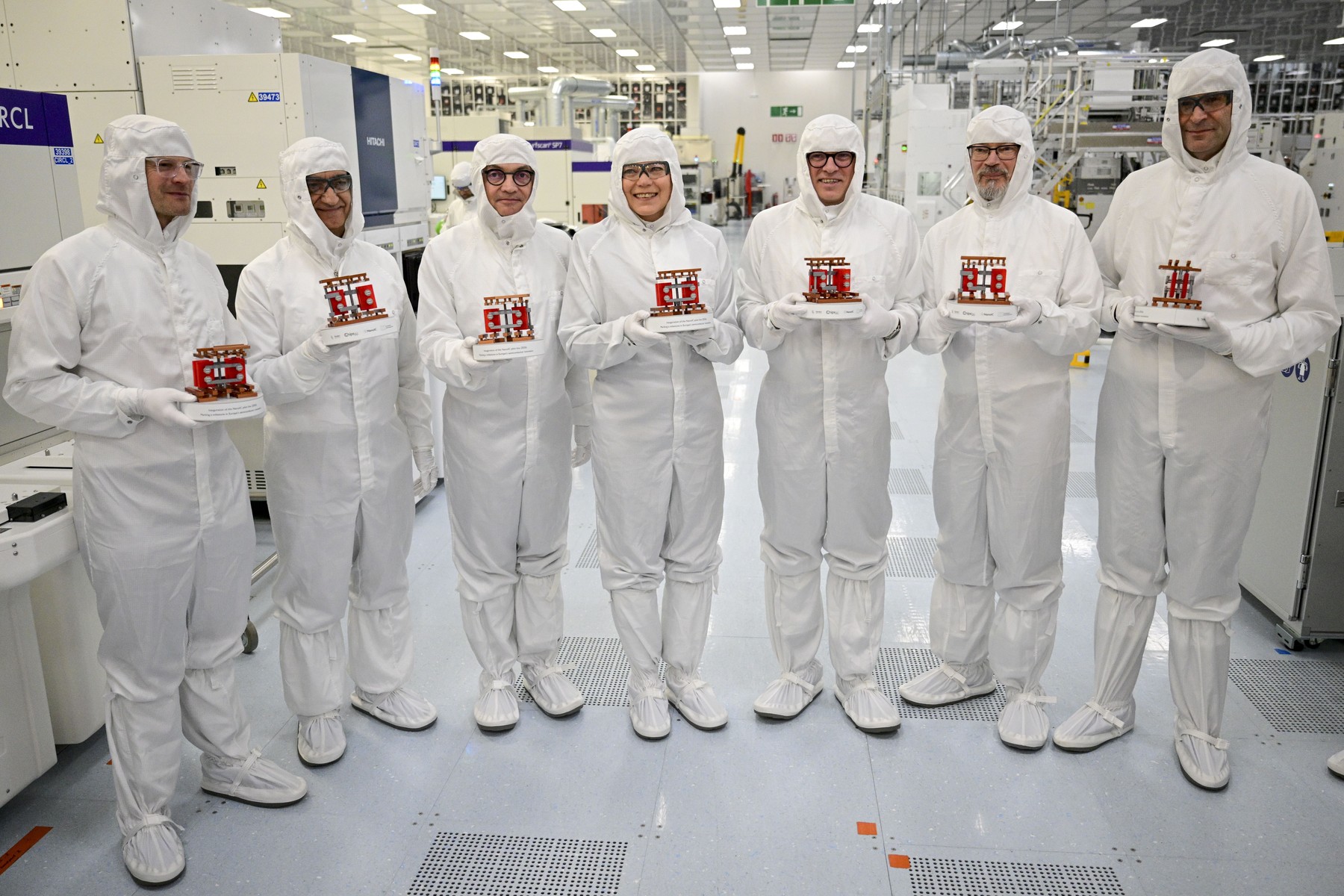
The landscape of global technology is shifting as Europe attempts to carve out a dominant role in the artificial intelligence race. While much of the public discourse focuses on the software giants of Silicon Valley, a different kind of power is emerging within the European Union—the providers of the fundamental infrastructure, often described as the “shovels and picks” of the AI revolution.
In the gold rush of the 19th century, the most consistent profits were not made by the miners searching for gold, but by the merchants selling the tools required to dig. Today, the most valuable company in Europe is mirroring this strategy by focusing on the essential hardware and systems that allow generative AI to function, rather than just the end-user applications.
This strategic positioning is critical as European firms seek to establish digital sovereignty and compete with American and Chinese counterparts. By controlling the underlying technology—the semiconductors, data centers, and automation frameworks—Europe is attempting to ensure that the AI transition is built on a foundation of regional stability and technical excellence.
The Infrastructure Play: Why ‘Shovels and Picks’ Matter
The term “shovels and picks” refers to the foundational components of a technological shift. In the context of AI, this encompasses the high-performance computing power, specialized chips, and the enterprise-grade automation tools that allow businesses to integrate machine learning into their daily operations. Without these tools, the most advanced large language models (LLMs) cannot be deployed at scale.
European companies are increasingly specializing in these enabling technologies. For instance, the region has seen a surge in firms focusing on enterprise intelligence and automation. According to recent industry data, companies like SAP AI are utilizing AI capabilities to automate complex workflows and forecast operations, specifically within HR systems and supply chain management.
This shift toward infrastructure is not merely about profit, but about the “real-world apps” that drive industrial productivity. While consumer-facing chatbots capture headlines, the true economic value is being generated in sectors such as healthcare, finance, robotics, and aviation, where AI is used to simplify operations and increase precision.
Leading the Charge: Europe’s AI Powerhouses
The European AI ecosystem is currently expanding rapidly, supported by a combination of government initiatives and world-class research laboratories. Several firms have emerged as global competitors in the fields of generative AI and machine learning platforms.
Among the most prominent players is DeepMind, a UK-based leader in the development of safe AI systems. DeepMind is recognized for its research into neural networks and has contributed significant innovations to the energy and healthcare sectors via its function in advanced science and intelligence.
Parallel to the research-heavy approach of DeepMind, other firms are focusing on the pragmatic application of AI in the corporate world. UiPath has established itself as a global leader in robotic process automation (RPA), utilizing AI and machine learning to help enterprises automate repetitive tasks and streamline workflows through the use of AI copilots.
Diversification of AI Applications
The “shovels and picks” strategy extends into specialized niches of generative AI. Boltzbit, for example, provides data-efficient solutions focused on recommendations and forecasting, catering to companies that require high-precision models without the overhead of massive, inefficient datasets.
This diversification allows Europe to challenge the dominance of Silicon Valley by focusing on “digital sovereignty”—the ability of a region to control its own digital destiny without relying entirely on external providers for critical infrastructure.
The Economic Impact of European AI Sovereignty
From an economic perspective, the focus on infrastructure is a hedge against the volatility of the software market. Software applications can be disrupted overnight by a new release or a change in consumer preference, but the demand for the hardware and automation frameworks that power those applications remains constant.
The integration of AI into the European industrial core—particularly in Germany and the UK—is transforming how the region approaches sustainability and manufacturing. By automating the “boring” parts of business operations, European firms are freeing up human capital for higher-level strategic innovation.
Key Sectors Benefiting from AI Infrastructure
- Healthcare: Implementation of AI-driven diagnostics and operational efficiency.
- Finance: Use of machine learning for risk forecasting and automated compliance.
- Aviation and Robotics: Integration of AI for precision navigation and autonomous industrial systems.
- Supply Chain: Automation of logistics and predictive inventory management.
What Happens Next for the European AI Market?
As the industry moves toward 2026, the focus will likely shift from the initial deployment of generative AI to the optimization of the infrastructure that supports it. The “shovels and picks” phase is evolving into a phase of refinement, where energy efficiency and data privacy become the primary competitive advantages.
European regulators continue to shape the environment in which these companies operate, emphasizing ethical AI and data protection. This regulatory framework, while often seen as a hurdle, may actually serve as a quality seal for European AI tools, making them more attractive to global enterprises that prioritize security and transparency over raw speed.
The next critical checkpoint for the industry will be the continued rollout of enterprise-grade AI suites and the further integration of machine learning into the EU’s industrial manufacturing base. As these companies scale, their ability to provide the “tools” for the rest of the world will determine if Europe remains a powerhouse in the global AI economy.
We invite our readers to share their perspectives on Europe’s role in the AI revolution. Do you believe the “infrastructure-first” strategy is the right move for the region? Let us know in the comments below.