The way we seek medical guidance is undergoing a fundamental shift, as the consumer adoption of AI for health and self-care accelerates at a pace that often outstrips traditional clinical integration. For many, the first point of contact for a mysterious symptom or a question about a prescription is no longer a search engine or a phone call to a clinic, but a conversational AI interface.
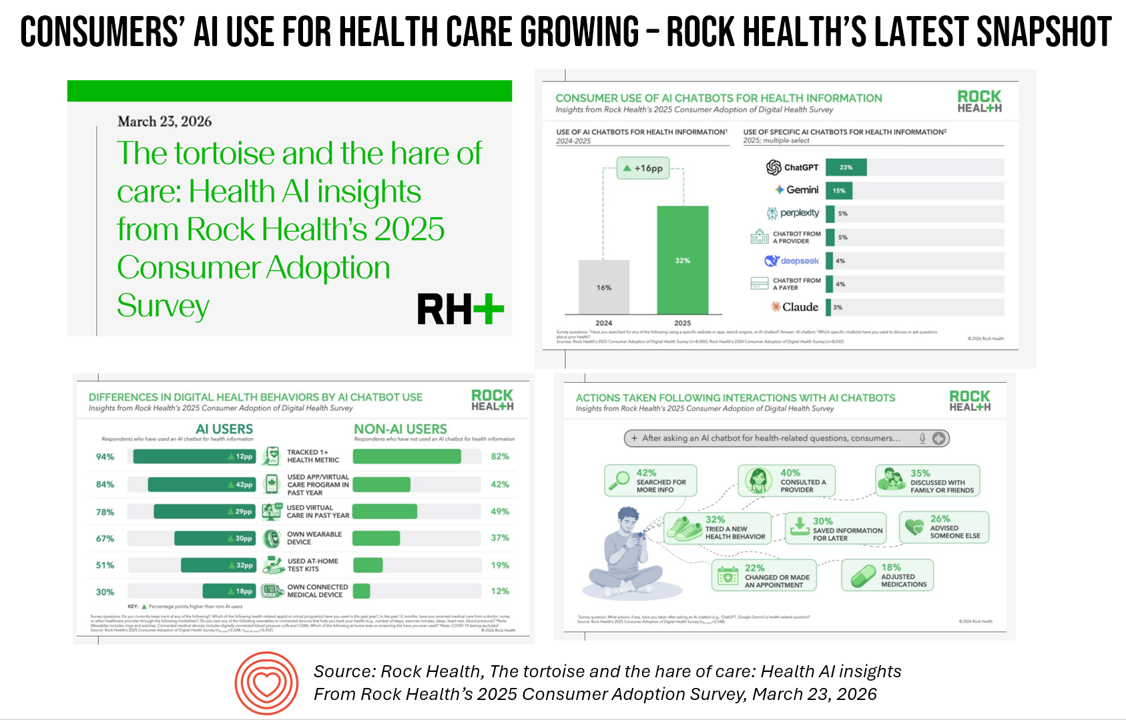
According to a recent consumer health adoption survey from Rock Health, the use of AI chatbots for health information doubled in just one year, rising from 16% of consumers in 2024 to 32% in 2025 Rock Health Survey: 32% of Consumers Now Use AI for Health Information. This surge reflects a broader trend in the state of AI in healthcare as users move toward more interactive, personalized tools for pre-diagnosis and ongoing wellness management 2025: The State of AI in Healthcare.
As a physician and journalist, I view this trend with a mixture of optimism, and caution. Even as these tools can democratize access to information, the gap between “information seeking” and “clinical accuracy” remains a critical area for patient safety. The data suggests that millions of U.S. Consumers are now leveraging these bots for everything from symptom checks to researching prescription drug treatments.
The Dominant Players in Health AI
Not all AI tools are created equal in the eyes of the consumer. The Rock Health data reveals a clear hierarchy in brand preference. ChatGPT, developed by OpenAI with significant partnership from Microsoft, leads the pack, used by 23% of those seeking health information. Google’s Gemini follows as the second most popular choice, utilized by 15% of consumers. Other AI vendors currently hold only single-digit shares of the market.
This preference for general-purpose Large Language Models (LLMs) over specialized medical AI indicates that consumers value the conversational ease and versatility of these platforms, even when the stakes—their personal health—are high.
Digital Health Ecosystems and User Behavior
There is a strong correlation between the use of AI for health and the adoption of other digital health technologies. Consumers who utilize AI for health purposes are significantly more likely to be “digital health natives.” For instance, 84% of AI users have utilized a health app or virtual care program in the past year, compared to only 42% of non-AI users.
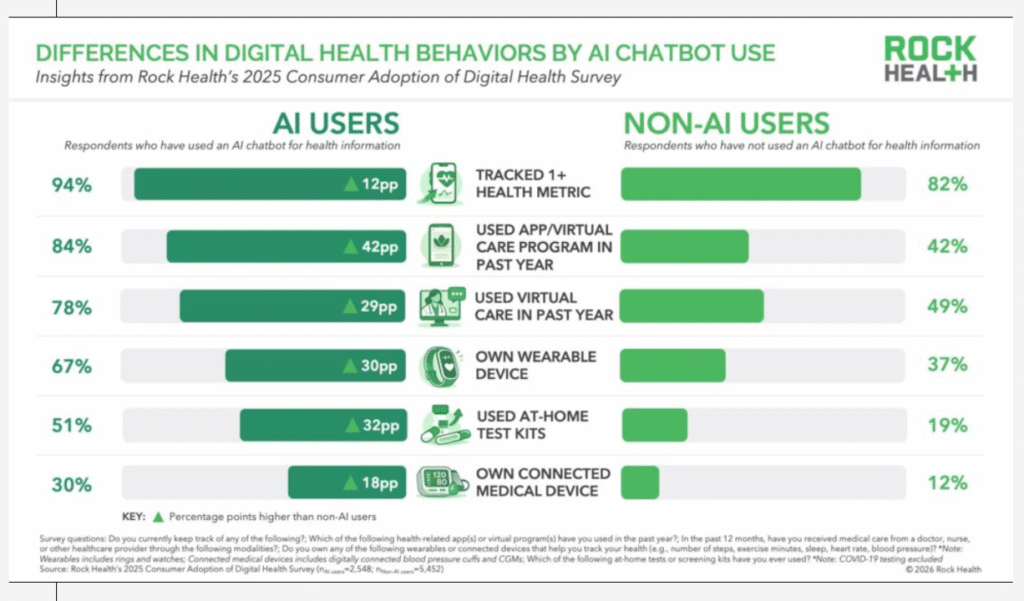
This suggests that AI is not acting as a standalone replacement for care, but rather as another layer in a broader digital health stack that includes wearables and at-home test kits. For these users, the AI chatbot serves as a synthesis tool, helping them produce sense of the data generated by their other devices.
From Digital Dialogue to Clinical Action
One of the most vital questions for healthcare providers is what happens after a patient interacts with an AI. The Rock Health survey provides a detailed breakdown of the actions taken following AI use. Interestingly, the most common response is further verification: 42% of users searched for more information, and 40% consulted a healthcare provider.
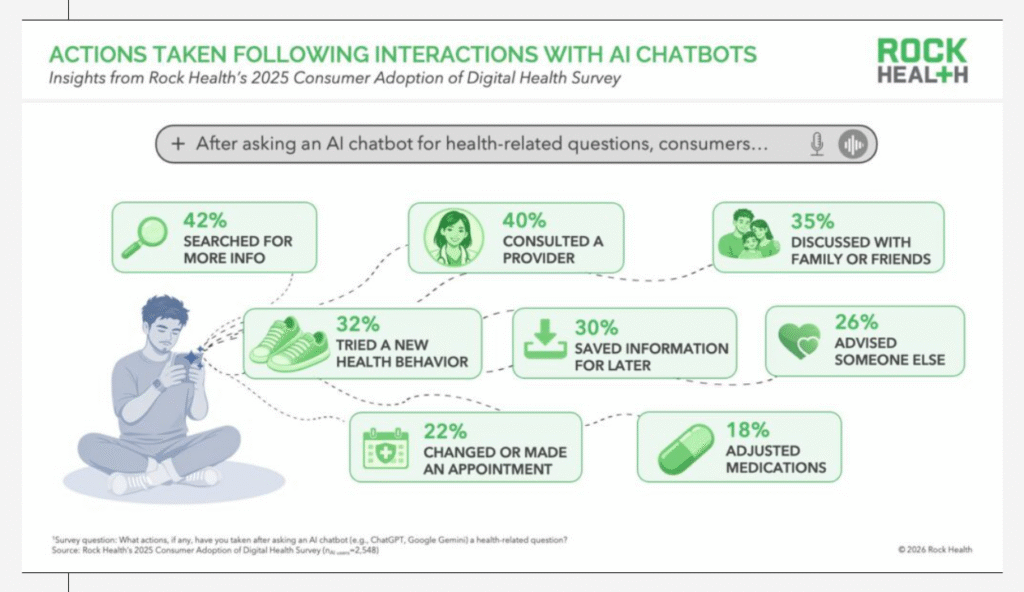
While many use AI as a bridge to professional care, some take more direct, and potentially riskier, actions. Approximately 32% tried a fresh health behavior, 22% changed or scheduled an appointment, and 18% adjusted their medications based on AI-generated information. From a clinical perspective, the 18% who adjust medications without professional oversight represents a significant public health concern.
The depth of these inquiries is too noteworthy. Among AI users, 59% explored treatment options based on a diagnosis, while 55% used the tools to research prescription drugs or their potential side effects.
The Trust Paradox: Usage vs. Reliance
Despite the rapid consumer adoption of AI for health, there is a profound disconnect between how much people use these tools and how much they trust them. An updated study from the Employee Benefit Research Institute (EBRI), which surveyed 2,001 online Americans ages 21 to 64 with private health insurance between October and November 2025, highlights this tension.
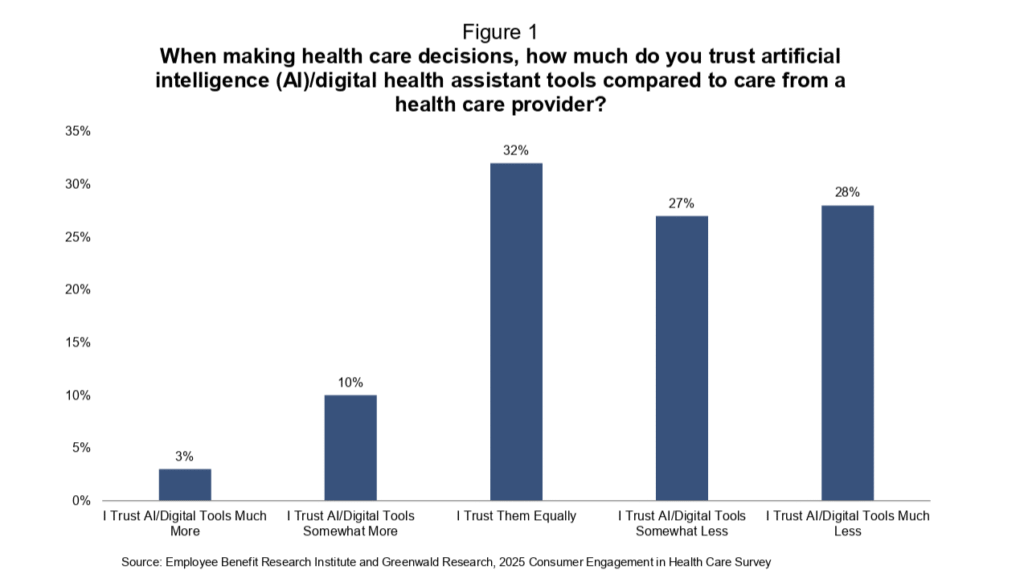
The EBRI findings indicate that 55% of working-age Americans still trust AI and digital tools less than they trust care from a human health provider. While 56% of consumers are comfortable with smart health technology using AI, only 47% actually trust the healthcare decisions provided by AI.
This “trust gap” is further complicated by conflicting views on data. While 59% of surveyed consumers believe the data collected by their smart health technology is secure, an equal 59% question the actual accuracy of that data. This suggests a consumer base that is comfortable with the process of digital health but skeptical of the output.
The Opportunity for Integration
Perhaps the most actionable finding from the EBRI study is the desire for better integration between consumer tools and clinical practice. Approximately 64% of consumers wish their health data could be shared more effectively with their physicians. This indicates that patients do not want AI to replace their doctor, but rather to empower their doctor with better data.

42% of respondents expressed a desire to use AI tools for healthcare decisions or to choose a health plan but admitted they “don’t know where to start.” This reveals a significant market opportunity for healthcare systems to provide curated, safe, and vetted AI pathways for their patients.
Key Takeaways for Patients and Providers
- Rapid Growth: AI chatbot use for health information has doubled from 16% to 32% between 2024 and 2025 AI chatbot use for health information up 16% from 2024.
- Verification is Key: A plurality of users (42%) use AI as a starting point but search for more information afterward.
- Clinical Risk: Nearly one in five AI users (18%) reported adjusting medications based on AI suggestions, emphasizing the need for physician intervention.
- The Trust Gap: While usage is high, 55% of users trust AI less than their human providers.
- Integration Demand: 64% of users want a more seamless way to share their digital health data with their doctors.
As we move further into 2026, the challenge for the medical community will be to move from a posture of resistance to one of guidance. We cannot stop the adoption of these tools, but we can help patients navigate them safely.
There are currently no scheduled government hearings or official regulatory mandates announced for the next quarter specifically targeting consumer-facing health chatbots, but the industry continues to monitor the evolving guidelines for AI in clinical settings. We will provide updates as official frameworks for AI-patient interaction are released.
Do you use AI to help manage your health or research symptoms? How has it changed your conversations with your doctor? Share your experiences in the comments below.
Worth a look
- 7.7-Magnitude Earthquake Hits Flores Region of Indonesia, Triggering Tsunami Warning
- Newborn Circumcision Does Not Increase Autism Risk, Study Finds
- Blue Jackets’ Zach Werenski Doubles Down on Desire to Stay in Columbus: NHL Trade Talk and Future Plans for Star Defenseman” Keywords: – Zach Werenski – Columbus Blue Jackets – NHL trade talk – Columbus Blue Jackets news – Zach Werenski future plans – NHL rumors (archyworldys.com)
- New PBS Lawsuit Shows Why You Should Not Completely Trust Cloud Storage (world-today-news.com)