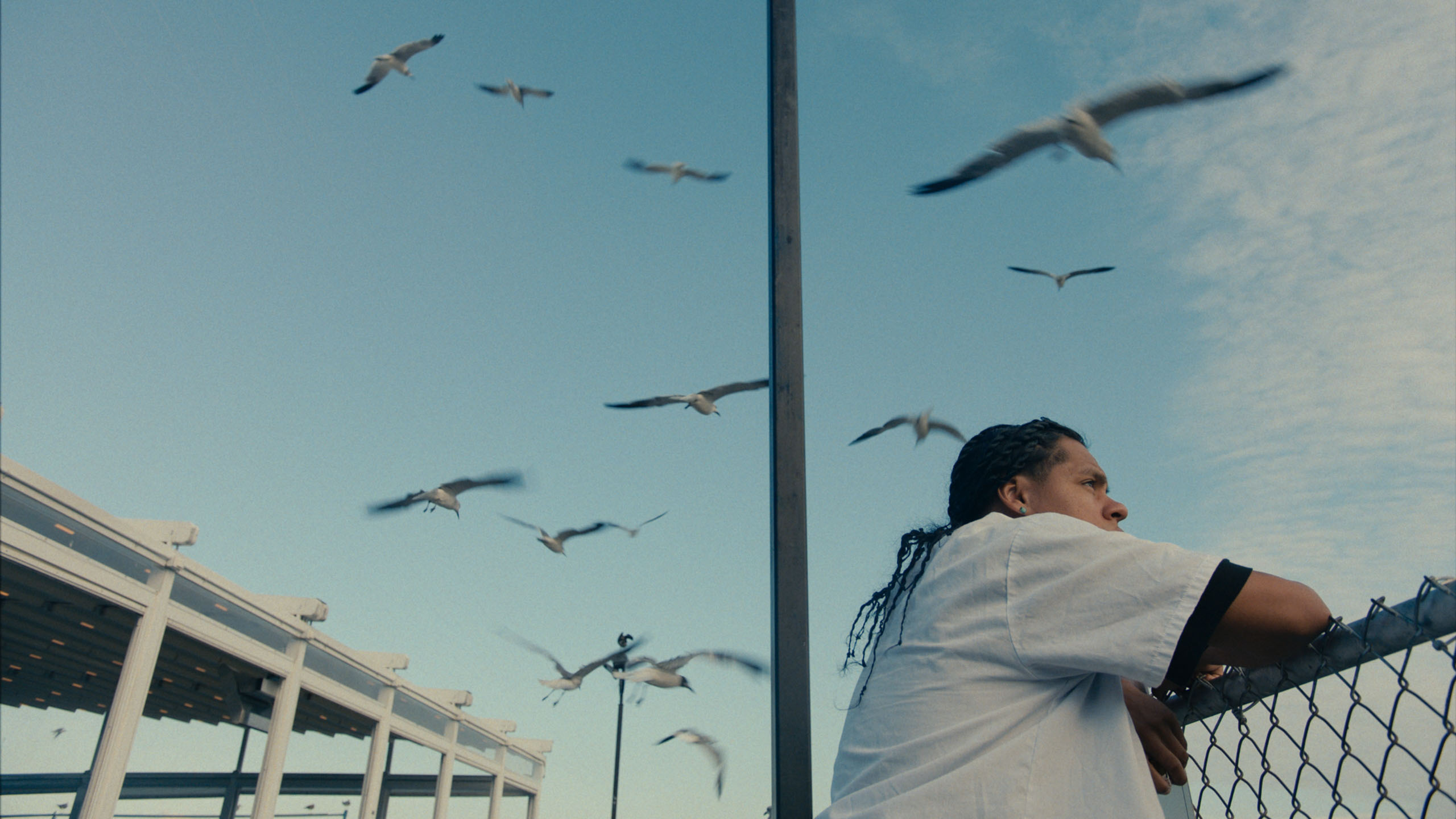
The landscape of independent cinema is often defined by the arrival of a singular voice that can translate the specific textures of a neighborhood into a universal story of human struggle. For Joel Alfonso Vargas, that translation is rooted in the grit, heat, and complex social hierarchies of the Bronx. His feature debut, Mad Bills to Pay (or Destiny, dile que no soy malo), has emerged as a poignant exploration of forced maturity and the fragile boundary between childhood and adulthood for young men of color.
The film recently captured significant attention at the 2025 Sundance Film Festival, where it was honored with the NEXT Special Jury Award for Ensemble Cast. By centering on the lived experience of the Dominican diasporic community, Vargas does more than share a story of survival; he documents a specific cultural intersection in New York City that is rarely afforded a three-dimensional portrayal on screen. The result is a perform that feels less like a scripted narrative and more like a vivid, atmospheric memory.
At its heart, Mad Bills to Pay follows Rico, a teenage hustler in the Bronx whose life is upended when his pregnant girlfriend moves in with him and his family. Through Rico, Vargas examines the crushing weight of the “man of the house” expectation—a role often thrust upon young men in low-income, single-parent households long before they have the emotional tools to handle it. It is a study of the tension between the social pressure to “man up” and the inherent naïveté of a boy who is still, in every meaningful sense, a child.
Vargas’s approach to the project was deeply personal, drawing from his own history as a Dominican immigrant who moved to New York at the age of four. This duality—of being both an insider in the Bronx and a student of global cinema—allowed him to return to his hometown with a perspective that is simultaneously intimate and analytical. For Vargas, the film is not merely a creative exercise but an act of advocacy for a community often reduced to tropes in mainstream media.
From the Dominican Republic to the Bronx: A Cinematic Awakening
The trajectory of Joel Alfonso Vargas as a filmmaker began not in a classroom, but in the aisles of a local Blockbuster. Influenced by his older brother, Vargas spent his youth immersed in the raw, honest storytelling of Martin Scorsese’s Italian-American classics. These films resonated with him because they mirrored the “characters” and the neighborhood dynamics he witnessed daily in the Bronx. He recognized early on that cinema could serve as both a mirror to his own reality and a window into worlds far removed from his immediate surroundings.
His formal entry into the craft was a grassroots effort. As a teenager, Vargas funded his first video camera through savings earned from working at a car wash. This initial phase of his career was defined by a DIY spirit, shooting skate videos, fashion vlogs, and music videos with a creative circle of friends. This period was heavily influenced by the disruptive energy of West Coast creatives like Tyler, The Creator and the Odd Future collective, fostering a visual style that prioritized authenticity and raw energy over polished production.
This foundation in cinematography provided Vargas with a technical shorthand that would later prove invaluable as a director. By the time he pursued graduate studies at the University of Southern California (USC), he was already a visual thinker who processed stories as images first. However, it was a gap year spent studying documentary filmmaking in London under a Fulbright scholarship that fundamentally shifted his artistic goals. The documentary experience taught him to approach the world with openness and a lack of judgment, a philosophy that now defines his narrative work.
“Mad Bills to Pay”: Deconstructing the Myth of the “Man of the House”
In Mad Bills to Pay, Vargas tackles a sociological crisis: the lack of positive male role models for young men of color in low-income urban environments. The film posits that when the criminal justice system or generational trauma removes father figures from the home, the resulting vacuum is filled by a rigid, often damaging, definition of masculinity. Rico, the protagonist, becomes an amalgamation of the young men Vargas grew up around—boys who were forced to navigate adult identities and financial responsibilities while still inhabiting the psyche of a child.

The narrative is further complicated by the intersection of poverty and education. Vargas notes the correlation between low high school graduation rates among young men of color and the prevalence of teen pregnancy, arguing that the pressure to provide often accelerates a transition into adulthood that denies these young men the essential stage of identity exploration typically reserved for those in more privileged strata of society. By focusing on the Dominican diasporic community in the Bronx, the film provides a nuanced appear at how these pressures are felt within a specific cultural and linguistic framework.
The film’s title itself—Mad Bills to Pay (or Destiny, dile que no soy malo)—reflects this duality. It balances the crushing material reality of financial survival with a more poetic, internal struggle for redemption and understanding. The bilingual nature of the title mirrors the linguistic fluidity of the Bronx, where Spanish and English blend to create a unique cultural dialect.
The Art of the Hustle: Guerilla Production in New York City
Bringing Mad Bills to Pay to life required a production strategy that mirrored the “hustle” of its characters. Shot in a guerilla style across New York City, the production often operated with a stealthy approach to avoid the bureaucratic hurdles of city permits and authority. This method was not merely a financial necessity but a creative choice; the urgency and unpredictability of the environment contributed to the film’s organic, lived-in feel.
The technical challenges were immense. To maintain a high aesthetic standard while operating with limited resources, Vargas implemented a rigorous production discipline. According to production notes, the team shot 100 scenes over the course of just 16 days, averaging 10 to 12 script pages per day—a pace two to three times faster than a standard independent production. To achieve this, Vargas limited variables by reducing the number of set-ups to one per scene and minimizing on-set lighting to maximize efficiency.
Vargas describes this process as a balance between “organic treatment” and “rigid precision.” While the acting was often exploratory and minimally scripted to allow for improvisation, the logistical side of the shoot was handled with industrial discipline. This tension between the loose and the tight created a bonding experience for the cast and crew, who had to rely on non-verbal communication and a shared “wavelength” to survive the demanding schedule.
Casting Authenticity: Finding the Face of the Bronx
To ensure the film felt authentic, Vargas eschewed traditional casting calls in favor of “street-casting.” This involved flyering in parks and beaches, utilizing social media, and searching through platforms like Backstage and Actor’s Access for individuals who possessed a genuine “New York flavor.” The goal was to find people who didn’t just act like they were from the Bronx but who carried the borough’s specific energy in their demeanor.
The discovery of Juan Collado (Rico) and Destiny Checo (Rico’s girlfriend) was a pivotal moment in the project. Vargas recalls that the chemistry between the two leads was “magic” from the first meeting, with an electrifying banter that informed the rhythm of the film’s dialogue. Checo, in particular, was discovered through her social media presence, where her ability to lip-sync and inhabit various cinematic personas signaled a natural talent for the screen.
The supporting cast was equally curated for authenticity. Yohanna, a longtime collaborator of Vargas, brought a deep understanding of the Dominican background to her role, while the character of Sally was cast based on a playfulness that reminded Vargas of his own sister. The cast spent significant time rehearsing at the Ghetto Film School in the Bronx, where they dissected and rewrote scenes together, ensuring the dialogue felt natural to the environment it represented.
A Documentary Lens on Narrative Fiction
Vargas’s creative philosophy is heavily influenced by a diverse array of “naturalist” and “poetic” filmmakers. He cites the likes of John Cassavetes, the Dardenne brothers, and Andrea Arnold as inspirations for his commitment to raw, unvarnished human emotion. This influence is evident in his suspicion of films that attempt to “say” something too explicitly, which he believes can veer into propaganda. Instead, he views the role of the artist as one who grapples with complexity and ambiguity.
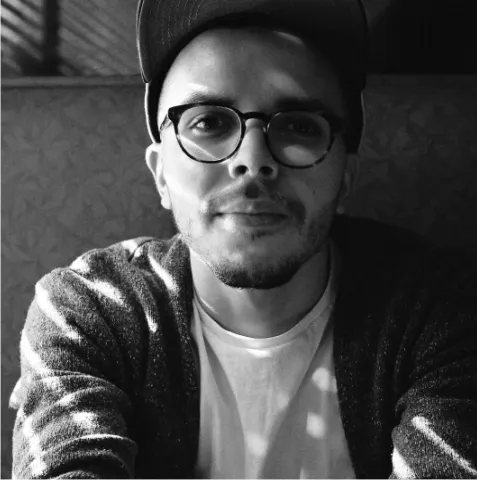
This approach is a direct result of his documentary training. Vargas aims to portray the world as a “massive grey area” full of imperfect people and situations. By embracing open-endedness and elliptical forms, he invites the audience to actively participate in the storytelling—connecting the dots and arriving at their own conclusions rather than being fed a reductive narrative. This “experiential” style of filmmaking is intended to heal the divisiveness caused by the simplistic stories often told about marginalized communities.
Beyond the screen, Vargas maintains a disciplined daily routine of research, reading, and film study, treating his creative work not as a pedestal-worthy art form but as a daily task. This grounded approach helps him manage the pressures of the industry and ensures that his work remains rooted in a constant state of learning and observation.
Key Takeaways: The Vision of Joel Alfonso Vargas
- Cultural Documentation: The film serves as a three-dimensional document of the Dominican diasporic community in the Bronx during 2024–25.
- Thematic Focus: Explores the “crisis of masculinity” and the psychological impact of premature adulthood on young men of color.
- Production Innovation: Utilized a high-efficiency guerilla filmmaking model, completing 100 scenes in 16 days.
- Casting Philosophy: Prioritized “street-casting” and chemistry testing over traditional acting credentials to achieve local authenticity.
- Artistic Influence: Blends the raw naturalism of John Cassavetes with the observational rigor of documentary filmmaking.
As Mad Bills to Pay (or Destiny, dile que no soy malo) moves beyond its Sundance premiere, it stands as a testament to the power of resourceful, identity-driven storytelling. By refusing to simplify the struggle of his characters, Joel Alfonso Vargas has created a work that demands the viewer’s attention and empathy, offering a rare and honest glimpse into the heart of the Bronx.
Details regarding the film’s wider theatrical release and streaming availability are expected to be announced following its festival run. We will continue to monitor official updates from the production team.
Do you think cinema is the best medium for documenting displaced communities? Share your thoughts in the comments below or share this article with fellow indie film enthusiasts.
Related reading