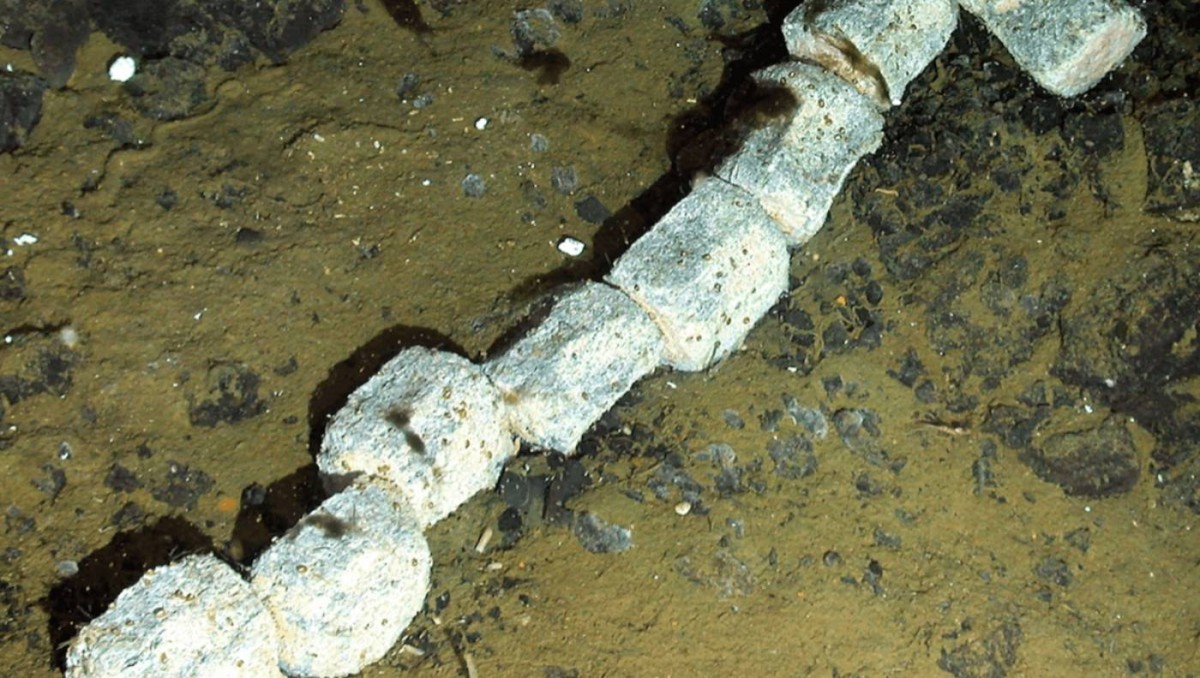
A rare discovery on the ocean floor has revealed new insights into one of the deep sea’s most fascinating ecological phenomena: the whale fall. In 2010, a British research team aboard the RRS James Cook made an unexpected find although exploring the seafloor near the South Sandwich Islands in the Southern Ocean. Using a remotely operated vehicle named Isis, scientists spotted a series of light-colored blocks scattered across the seabed at a depth of 1,444 meters (4,737 feet). Upon closer inspection, these were identified as vertebrae from a whale skeleton, marking the beginning of a significant scientific observation.
The remains belonged to an Antarctic minke whale (Balaenoptera bonaerensis) measuring approximately 10.7 meters in length. Genetic analysis later confirmed the species, which is one of the more widespread baleen whale populations globally. The carcass had settled within a marine depression in an environment of extreme cold, where temperatures hover near freezing—a condition that contributes to the preservation and slow decomposition of organic material in the deep sea.
This event exemplifies what scientists call a “whale fall,” a term used to describe when a whale’s body sinks to the ocean floor at depths exceeding 1,000 meters. Unlike in shallow waters, where scavengers quickly consume a carcass, the high-pressure, low-temperature conditions of the deep ocean allow whale falls to sustain complex ecosystems for years, even decades. These organic enrichments create isolated hotspots of biodiversity in an otherwise nutrient-poor landscape.
According to research cited in the Arabic Wikipedia entry on whale falls, a typical 40-ton whale carcass contains about two tons of carbon. This amount of organic material is comparable to the carbon exported to a hectare of abyssal seafloor over 100 to 200 years under normal conditions. The sudden influx of nutrients triggers a succession of biological stages: first, mobile scavengers like hagfish and sharks consume soft tissue; then, opportunistic colonizers such as crustaceans and polychaete worms settle in; finally, sulfophilic bacteria break down lipids in the bones, releasing hydrogen sulfide that supports chemosynthetic organisms, including specialized clams and tube worms.
The discovery near the South Sandwich Islands adds to a growing global record of natural and experimental whale falls studied since the late 1970s, when advances in deep-sea submersibles and remotely operated vehicles first enabled direct observation. Scientists have used these events to understand succession patterns, species adaptation, and the role of whale falls as potential stepping stones for the dispersal of deep-sea organisms across vast oceanic distances.
While the 2010 find was made incidentally during a broader expedition, it underscores the importance of continued deep-sea exploration. The Southern Ocean, encircling Antarctica, remains one of the least studied marine environments due to its remoteness and harsh conditions. Yet it plays a critical role in global ocean circulation and carbon cycling, making discoveries like this whale fall valuable for understanding broader ecological processes.
Whale falls similarly contribute to long-term carbon sequestration. By locking away carbon within bone and sediment for extended periods, they represent a natural mechanism that influences marine carbon budgets. Research suggests that the lipid-rich bones of whales can support sulfophilic communities for up to 50 years or more, depending on size and environmental factors.
As climate change alters ocean temperatures and circulation patterns, scientists are increasingly interested in how such changes might affect the frequency and fate of whale falls. Shifts in whale migration, population dynamics, or ocean chemistry could influence where and how these events occur, though current data remains limited.
The observation from the RRS James Cook mission serves as a reminder of the ocean’s hidden interconnectedness—how the life and death of a single massive creature can ripple through ecosystems in ways that sustain life far removed from sunlight. It also highlights the value of serendipitous discovery in science, where routine surveys can yield profound insights when guided by careful observation and technological capability.
For readers interested in following developments in deep-sea biology and ocean science, reputable sources such as the National Oceanic and Atmospheric Administration (NOAA), the Woods Hole Oceanographic Institution, and peer-reviewed journals like Deep Sea Research Part I: Oceanographic Research Papers regularly publish updates on related research.
What do you think about the hidden roles marine giants play even after death? Share your thoughts in the comments below, and consider sharing this article to help spread awareness about the wonders of the deep ocean.
Keep reading