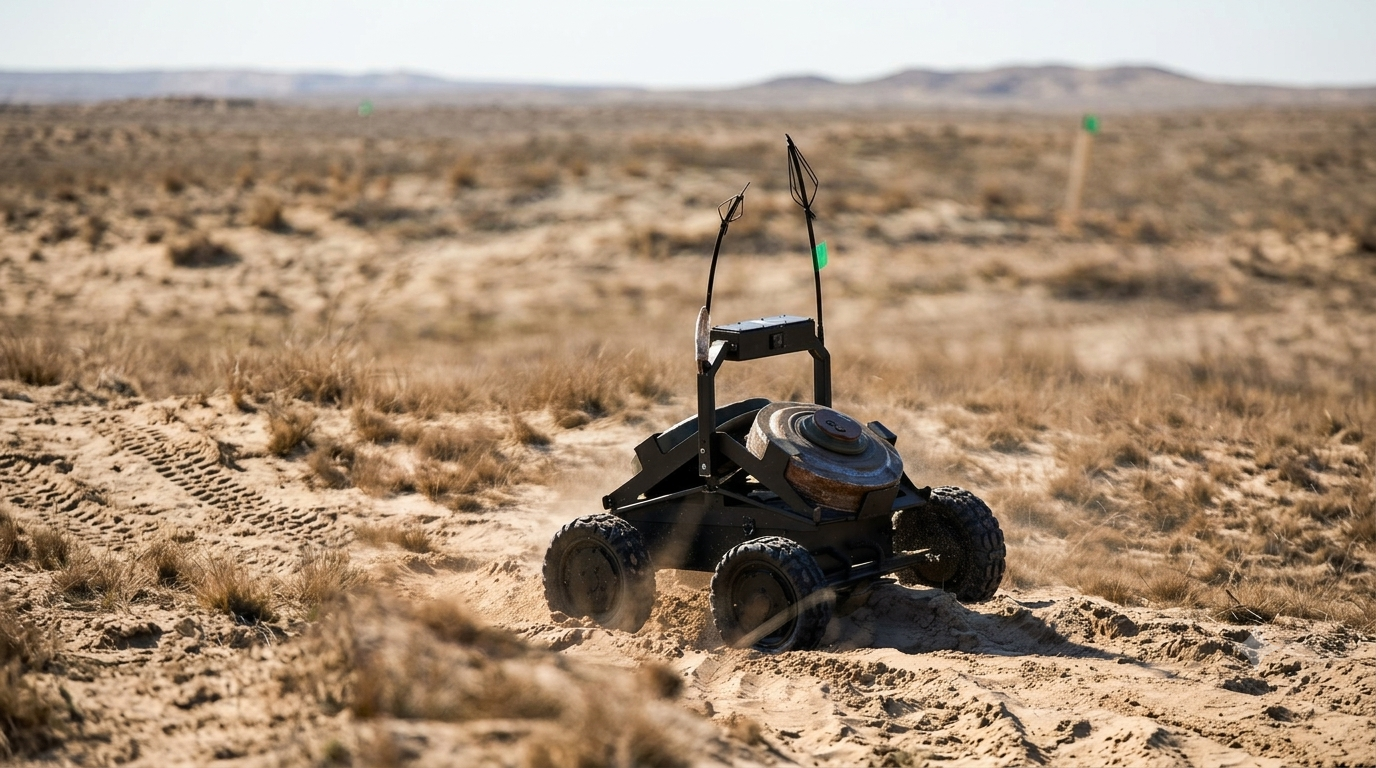
Ukrainian military forces have reportedly integrated heavy bomber drones with ground robotic systems, using aerial platforms to transport and deploy unmanned ground vehicles directly behind Russian lines. According to battlefield footage released by Russian military channels, including the Telegram channel Arkhangel Spetsnaza, a large hexacopter was documented lowering an ARK-1 robotic platform using suspension cables in contested operational areas.
This tactical innovation addresses a persistent challenge in modern drone warfare: protecting delicate ground hardware during long transits across hazardous terrain. By utilizing heavy aerial transport, Ukrainian operators can bypass heavily monitored zones and deliver explosive payloads closer to intended targets without exposing ground platforms to direct enemy observation during the initial approach phase.
The operation highlights a broader shift in the ongoing conflict toward multi-domain unmanned warfare. As both sides rapidly iterate on battlefield technologies, military engineers are increasingly combining aerial, ground, and maritime robotic assets to execute complex logistical and combat missions.
The Mechanics of Aerial Delivery for Ground Drones
The ARK-1 is a compact, four-wheel-drive unmanned ground vehicle developed by a Ukrainian company associated with the Brave1 defense technology initiative. According to available battlefield assessments, the platform can reach speeds of up to 45 kilometers per hour while maintaining a low acoustic signature during movement.
By suspending the ARK-1 beneath a heavy hexacopter via cables, operators can lower the vehicle directly into position once the aerial drone reaches a designated drop point. This delivery method prevents the ground robot from exhausting its battery or getting stuck while traversing difficult terrain over extended distances. Furthermore, it keeps the higher-value aerial drone further away from frontline air defense threats.
Once deployed independently on the ground, the ARK-1 is designed to carry TM-series anti-tank mines toward enemy positions. Depending on its specific mission configuration, the platform can also transport logistical supplies such as food, ammunition, and medical equipment for frontline units, or carry built-in explosives for one-way demolition operations where retrieval is unnecessary.
Expanding Unmanned Combat Operations
The reported deployment of the ARK-1 follows other recent innovations combining distinct types of unmanned military hardware. Earlier in the month, Ukrainian defense officials reported an operation in which an unmanned surface vessel transported and deployed an armed ground robot behind Russian positions on the Kinburn Spit. Kyiv described that engagement as the first documented combat mission utilizing a direct combination of maritime and ground robotic platforms.
The integration of heavy drones, ground rovers, and uncrewed maritime vessels illustrates how unmanned systems are evolving beyond simple reconnaissance tasks. Both sides in the conflict now rely heavily on autonomous and remote-controlled machinery for supply transport, tactical attacks, and specialized engineering tasks in high-risk zones.
Despite these technological strides, independent verification of specific operational outcomes remains difficult. Details regarding the exact location, frequency, and tactical success of the ARK-1 aerial-delivery method rely primarily on circulating battlefield footage and military channel reports. Observers note that while the available video demonstrates the technical capability of air-dropping ground robots, it provides limited data on how effectively the systems perform under sustained electronic warfare and intense combat conditions.
Next Steps and Operational Outlook
As the conflict continues to drive rapid hardware adaptations, military analysts are monitoring official updates from defense technology clusters like Brave1 for further scaling of multi-domain drone operations. Observers await forthcoming defense briefings and official military assessments regarding the durability and combat scalability of air-dropped ground platforms.
We welcome your insights and analysis on this developing story. Please share your thoughts or join the conversation in the comments section below.
Related reading