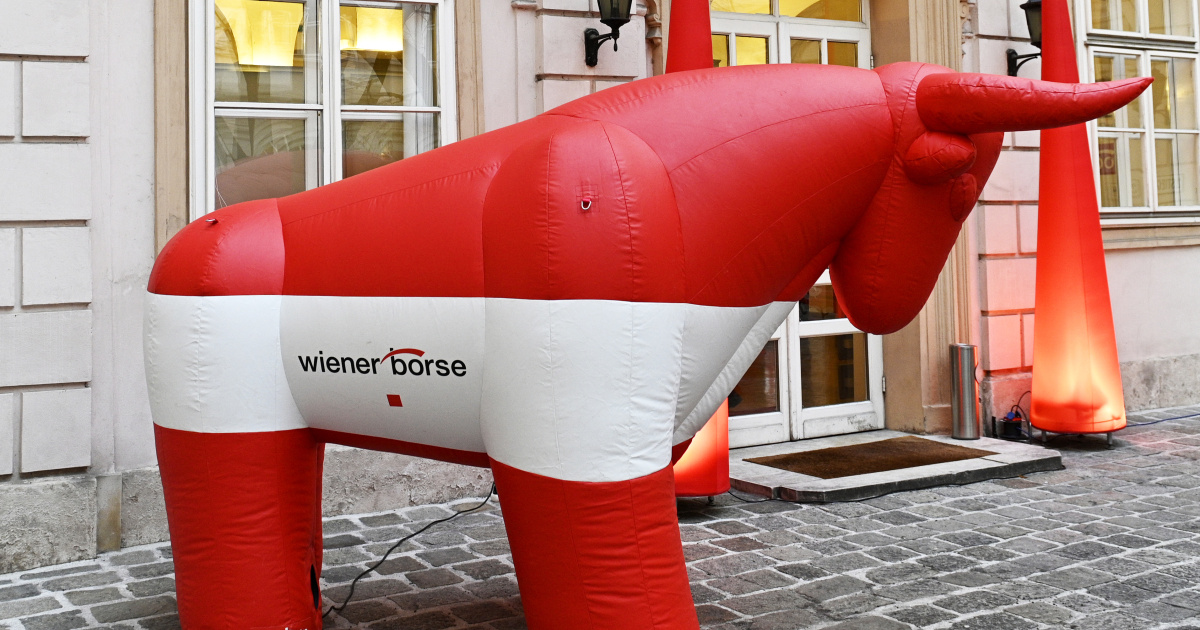
Vienna Stock Exchange Gains After Hormuz Strait Reopening
The Vienna Stock Exchange closed higher on Friday, April 17, 2026, following news that Iran declared the Strait of Hormuz “completely open” during a ceasefire, easing regional tensions that had previously weighed on energy markets. The Austrian Traded Index (ATX), which tracks the 20 largest and most liquid stocks listed on the Vienna exchange, rose 1.5% to close at 5,957.70 points, according to real-time data from the Vienna Stock Exchange.

The rebound came after a volatile week marked by geopolitical uncertainty, with investors reacting positively to the de-escalation in the Gulf region. Energy stocks, which had been under pressure due to fears of supply disruptions, led the recovery, though gains were broad-based across multiple sectors.
Among the top performers, semiconductor manufacturer AT&S surged 13.24% to close at €84.70, while aerospace supplier FACC gained 7.59% to reach €14.74. Building materials group Wienerberger added 6.02% to trade at €26.42. These advances were partly offset by declines in energy-linked stocks, with oil and gas group OMV falling 3.65% to €56.70 and utility Verbund dropping 3.92% to €61.20.
The intraday trading range for the ATX spanned from a low of 5,850.09 to a high of 5,972.19, reflecting the sensitivity of the market to shifting geopolitical developments. The index’s performance contrasts with its weekly trend, which had shown modest gains earlier in the period despite ongoing volatility.
Market Reaction to Hormuz Strait Developments
The positive shift in sentiment followed reports that Iran confirmed the Strait of Hormuz remained open for commercial shipping during a ceasefire period, countering earlier fears of a potential blockade. The strait is a critical chokepoint for global oil supplies, with approximately one-fifth of the world’s petroleum passing through it each day. Any disruption to traffic through the waterway typically triggers immediate reactions in energy markets and related sectors.

According to real-time market data, the news prompted a short-covering rally in energy-linked equities, though the gains were tempered by profit-taking in some segments. The Vienna Stock Exchange’s ATX index, which includes major energy producers like OMV and Verbund, showed mixed performance within the sector, highlighting the nuanced impact of the development on different companies based on their exposure to oil prices, refining margins, and geographic operations.
Financial analysts noted that while the immediate risk of supply disruption had diminished, underlying concerns about regional stability and long-term energy transition pressures continued to influence investor behavior. The mixed performance across the energy sector underscored the complexity of assessing geopolitical risks in a diversified portfolio.
Top Movers and Sector Performance
Leading Gainers
- AT&S: +13.24% to €84.70 – The semiconductor manufacturer benefited from strong demand in automotive and industrial applications, with investors reacting to better-than-expected order books and positive guidance for the second quarter.
- FACC: +7.59% to €14.74 – The aerospace components supplier saw renewed confidence as air travel demand continued its post-pandemic recovery, supported by rising aircraft production rates from major manufacturers.
- Wienerberger: +6.02% to €26.42 – The building materials group gained on expectations of sustained construction activity in Central Europe, bolstered by infrastructure spending and residential demand.
Notable Decliners
- OMV: -3.65% to €56.70 – The integrated oil and gas company faced pressure as easing geopolitical tensions reduced the risk premium previously embedded in energy prices, despite stable refining margins.
- Verbund: -3.92% to €61.20 – The Austrian utility, which has significant hydroelectric and renewable generation, saw profit-taking after a strong run, with some investors rotating into more cyclical exposures.
- Schoeller-Bleckmann: -2.33% to €35.65 – The oilfield services provider declined as reduced geopolitical risk lessened near-term demand expectations for certain niche products.
The broader market advance was supported by gains in banking and industrial stocks, with Erste Group Bank rising 3.13% to €108.60 and Raiffeisen Bank International adding 3.32% to €46.70. Industrial conglomerate Andritz increased 3.39% to €70.20, reflecting optimism about global manufacturing trends.
Context and Market Outlook
The Vienna Stock Exchange’s performance on April 17, 2026, occurred against a backdrop of evolving geopolitical dynamics and cautious optimism about economic resilience. The ATX index had shown resilience in recent weeks, maintaining levels near its yearly high despite periodic fluctuations tied to international events.
Market participants noted that the index’s sensitivity to energy prices and international trade flows makes it particularly responsive to developments in regions like the Middle East. Although, the diversity of the ATX’s composition — spanning technology, industrials, banking, and utilities — helps buffer against sector-specific shocks.
Trading volume remained robust throughout the session, with several stocks seeing significantly elevated activity. AT&S recorded over 333,000 trades, while FACC and Wienerberger also experienced heightened investor interest, indicating strong engagement from both institutional and retail participants.
As of the close, the ATX stood approximately 53% above its 52-week low of 3,881.08, reached during earlier periods of market stress, though still below its peak of 5,972.19 achieved intraday on the same day. The year-to-date performance reflected a gradual recovery trajectory, supported by improving economic indicators and stabilized energy markets.
Looking Ahead
Investors will continue to monitor developments in the Gulf region for any signs of renewed tension, while also tracking key economic data releases from the Eurozone, and Austria. Upcoming corporate earnings reports and guidance updates from major ATX constituents are expected to provide further insight into sector-specific trends.
The Vienna Stock Exchange maintains regular trading hours, with real-time index data available through its official website and financial data platforms. Market participants are advised to consult official sources for the most accurate and timely information regarding index movements and constituent stock performance.
For ongoing coverage of market developments and economic policy impacts, readers are encouraged to follow updates from trusted financial news outlets and regulatory bodies.
Worth a look