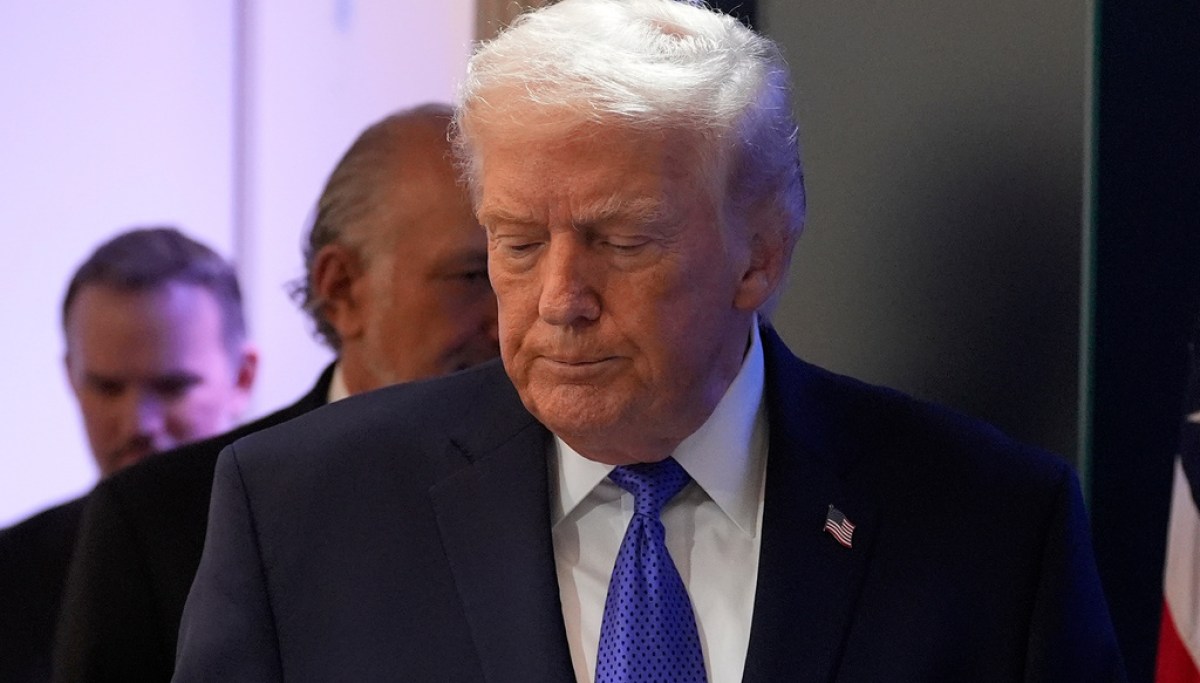
The Supreme Court has issued a ruling invalidating a significant portion of the tariff policies enacted by the Trump administration, marking a legal setback for the president’s trade agenda. This judicial action coincides with heightened international scrutiny regarding U.S. relations with Iran, as the administration balances potential military posturing with ongoing diplomatic efforts. These developments arrive during a week defined by a high-profile Board of Peace assembly focused on Gaza reconstruction and a series of domestic economic engagements in Georgia.
The Supreme Court’s decision to strike down the majority of the administration’s tariffs represents a notable shift in the legal landscape for trade policy. The economic impact of these trade barriers has been a point of contention, with some data indicating that tariffs paid by midsized U.S. firms have tripled over the past year.
Tensions regarding Iran remain a focal point of the administration’s foreign policy, with the White House signaling that the window for a negotiated nuclear deal is narrowing. While the administration has reportedly positioned military assets, including naval and aerial units, in the region, polling data suggests a significant divide in public opinion. Recent surveys indicate that up to 70% of Americans are opposed to military intervention in Iran, highlighting the political stakes as the White House weighs its next move. This strategy follows recent progress in separate diplomatic tracks involving both U.S. and Iranian officials.
During a speech before the newly formed Board of Peace, President Trump outlined his administration’s approach to international diplomacy and internal governance, specifically highlighting the roles of Vice President JD Vance and Secretary of State and national security adviser Marco Rubio. Trump described both men as “extraordinary” statesmen, despite their differing political styles. He characterized Vance as a tough negotiator who sometimes requires a measured approach, while describing Rubio’s diplomatic methodology as a “velvet glove” that achieves the same intended outcomes. These comments have already begun to fuel speculation regarding the political landscape leading into 2028.
The administration’s domestic agenda also saw movement this week, particularly regarding environmental and energy regulations. The Environmental Protection Agency (EPA) has moved to overturn previous findings from 2009 that designated greenhouse gases—including carbon dioxide, methane, and nitrous oxide—as threats to public health and welfare under the Clean Air Act. The agency’s current stance suggests that previous emissions standards were based on junk science. This shift is expected to impact automotive manufacturing requirements, specifically the regulations concerning engine idle-stop technologies. Supporters of the move argue that these changes could reduce the purchase price of new vehicles by approximately $2,500, though legal challenges from environmental advocacy groups are anticipated.
Economic indicators released this week have provided a mixed picture of the U.S. financial state. GDP growth for the final quarter was recorded at 1.4%, a figure that fell short of the 2.5% expansion projected by many economists. Compounding these figures is a trade deficit that some analysts describe as perhaps the worst since 1960, driven by a 3.6% increase in the value of imports alongside a concurrent decline in exports.
As the administration prepares for the upcoming State of the Union address, political leaders are focused on decorum and the presentation of future policy goals. House Minority Leader Hakeem Jeffries (D-NY) has urged Democratic members to maintain professional conduct during the speech, referencing previous instances of bipartisan friction during similar events. The address is expected to serve as a platform for the administration to articulate its legislative priorities, though specific details on future plans remain forthcoming.
The administration also addressed recent public interest in unidentified aerial phenomena. Following public comments made by former President Barack Obama, the White House confirmed that it would move to declassify government files related to extraterrestrial inquiries. President Trump told reporters that while he remains agnostic regarding the existence of extraterrestrial life, he suggested that the declassification might provide transparency regarding the history of these government records.
The next major checkpoint for the administration is the State of the Union address, scheduled for Tuesday. The White House continues to coordinate with various stakeholders regarding the upcoming legislative session and ongoing foreign policy engagements. Further updates on the administration’s trade, environmental, and national security policies are expected through official government channels and upcoming press briefings.
Worth a look
- Germany’s 2027 Budget: Concerns Grow Over New Debt and Climate Fund Shifts
- JPMorgan CEO Jamie Dimon Invests $24 Million to Boost U.S. Shipbuilding
- Blanche Leads Justice Department Amid Scrutiny Over Targeting of Trump’s Political Foes (newsdirectory3.com)
- Why Performance Improvement Plans Became a Quiet Layoff Tool (daybreakwire.com)