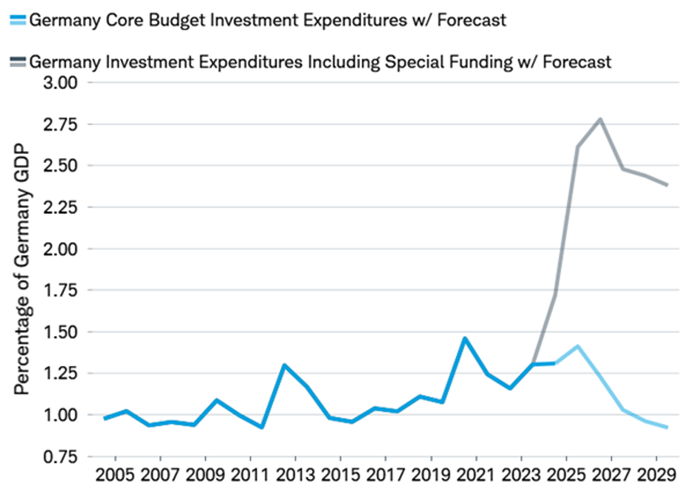
The German federal government’s draft budget for 2027 has sparked intense scrutiny from fiscal policy experts and opposition lawmakers, primarily due to proposed reallocations from the Climate and Transformation Fund (KTF). These adjustments, which critics argue effectively circumvent constitutional debt constraints, center on the government’s strategy to bridge funding gaps by shifting billions of euros originally earmarked for climate-related initiatives into the general federal budget.
According to the Federal Ministry of Finance, the draft planning for the coming years necessitates a recalibration of spending priorities as the government attempts to adhere to the constitutional debt brake (*Schuldenbremse*) while managing significant economic pressures. The controversy stems from the utilization of special funds—a mechanism that has faced increased legal and political pressure following the November 2023 ruling by the Federal Constitutional Court, which limited the government’s ability to retroactively repurpose emergency credit authorizations.
Fiscal Tensions and the Climate Fund
The Climate and Transformation Fund was established as a central pillar of Germany’s industrial and environmental policy, designed to finance the transition to green energy, semiconductor manufacturing, and decarbonization of the transport sector. However, the current budgetary planning suggests that the government is looking to pull back on these specific allocations to address broader deficits in the core federal budget. Economic analysts have noted that this move risks undermining the predictability of long-term climate investments.
The Federal Court of Auditors has consistently warned that relying on special funds to bypass the standard budgetary process creates a “shadow budget” that lacks transparency. By shifting funds between these accounts, the government risks violating the spirit of the debt brake, which limits structural deficits to 0.35% of GDP under normal economic conditions. As reported by the Deutsche Bundesbank, the structural deficit remains a primary concern for Germany’s long-term fiscal stability, particularly as the country faces sluggish economic growth and aging demographics.
Economic Implications and Industry Impact
The uncertainty surrounding the KTF has direct consequences for German industry, particularly for companies that have relied on promised subsidies for green technology and hydrogen production. When funding is reallocated, private sector actors often pause planned investments until the legal and financial framework is clarified. This “wait-and-see” approach, according to data from the German Institute for Economic Research (DIW Berlin), can hinder the pace of industrial modernization, which is vital for Germany’s competitiveness in global markets.
Opposition parties in the Bundestag have criticized the coalition’s approach as a “creative accounting” exercise. They argue that the government is attempting to obscure the true level of federal debt by shifting liabilities into off-budget vehicles. The government, conversely, maintains that these adjustments are necessary to respond to the changing economic climate and to ensure that essential social and infrastructure programs remain funded without exceeding the debt brake’s legal limits.
The Path Forward for the Federal Budget
The legislative process for the 2027 budget is still in its preliminary stages. The next critical checkpoint will be the formal introduction of the draft budget to the Bundestag, followed by a series of committee hearings where the Ministry of Finance must defend its fiscal projections. These sessions typically involve rigorous questioning from the Budget Committee, which has the authority to request amendments to the planned expenditures.
As the debate continues, international observers and institutional investors are watching for signs of whether Germany will prioritize fiscal consolidation or continue to utilize complex funding structures to maintain public spending. The European Commission also monitors these developments, as Germany’s fiscal health is a key component of the broader Eurozone stability framework. For now, the government faces the dual challenge of meeting climate targets and maintaining the integrity of its constitutional fiscal rules.
We will continue to track the developments of the federal budget as they progress through the legislative calendar. Readers are encouraged to monitor the official Bundestag portal for upcoming committee hearing schedules and finalized budget documents.
Worth a look