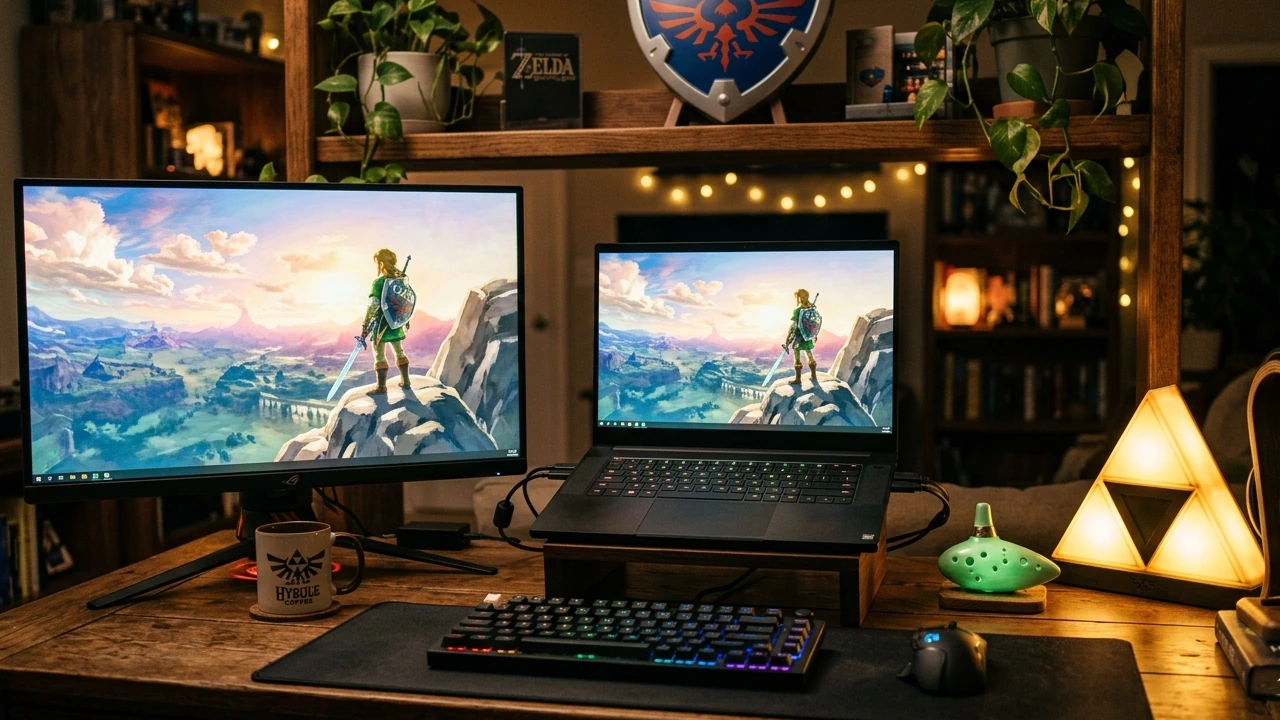
The Legend of Zelda is a video game series created by Japanese game designers Shigeru Miyamoto and Takashi Tezuka and primarily developed and published by Nintendo. While the franchise is exclusive to Nintendo platforms, many players seek ways to experience these titles on personal computers. This article outlines verified methods for playing The Legend of Zelda games on PC, based on current emulation practices and official releases, while emphasizing the importance of respecting intellectual property rights.
Playing The Legend of Zelda on PC typically involves using emulator software that mimics the hardware of original Nintendo consoles. Emulators themselves are legal to download and apply, but running commercial game software on them requires obtaining the game through legitimate means, such as creating a personal backup of a game cartridge or disc one already owns. Distributing or downloading ROMs or ISOs of games without authorization violates copyright law in most jurisdictions.
One of the most common approaches is to use emulators for older Nintendo systems. For example, the Nintendo Entertainment System (NES) emulator allows users to play the original The Legend of Zelda, released in 1986. Similarly, Super Nintendo Entertainment System (SNES) emulators support titles like A Link to the Past. More advanced emulators exist for the Nintendo 64, enabling play of Ocarina of Time and Majora’s Mask and for the GameCube and Wii, supporting games such as The Wind Waker and Twilight Princess. Each emulator must be matched to the correct console generation for optimal compatibility.
Setting up an emulator involves downloading the software from a reputable source, configuring input controls (often via keyboard, mouse, or USB gamepad), and loading a legally obtained game file. Users should ensure their PC meets the emulator’s system requirements, which vary depending on the console being emulated. While NES and SNES emulation has modest demands, emulating newer systems like the Wii U or Nintendo Switch may require more powerful hardware, including a modern CPU, and GPU.
as of April 2026, there are no official releases of mainline The Legend of Zelda games for PC through Nintendo’s own channels. Nintendo has not published any Zelda titles directly on Windows, macOS, or Linux platforms. But, the company has expanded its presence on PC through other means, such as releasing select titles via the Nintendo Switch Online service on compatible devices, though this service remains tied to Nintendo hardware.
Recent developments include the release of Hyrule Warriors: Age of Imprisonment for the Nintendo Switch 2 in November 2025, as confirmed by Nintendo’s official website. While this title is not available on PC, its launch highlights ongoing investment in the Zelda franchise. Players interested in official PC availability should monitor announcements from Nintendo, as shifts in platform strategy—such as those seen with other franchises releasing on PC—could influence future availability.
For those seeking to play Zelda games on PC, best practices include using only emulators and game files derived from legally owned copies, keeping software updated for security and performance, and consulting official documentation from emulator developers. Communities around projects like RetroArch, which consolidates multiple emulator cores, often provide user guides and forums for troubleshooting.
while PC play of The Legend of Zelda is technically feasible through emulation, it requires careful attention to legality and ethical use of software. Supporting official releases ensures continued development of future entries in the series. As of now, the most reliable way to experience new Zelda games remains through Nintendo’s dedicated hardware, including the Nintendo Switch and its successor, the Nintendo Switch 2.
For updates on official platform expansions or emulator compatibility, users are encouraged to refer to Nintendo’s press releases and trusted technology news sources. Sharing experiences and tips within legal, respectful communities helps foster informed discussion about preserving and accessing classic games.
Related reading