Microsoft Releases Historic 6502 BASIC Code as Open Source
Microsoft has made the original source code for its 1976 version of BASIC for the MOS 6502 microprocessor publicly available under an open-source license. The release, announced in September 2025, includes the assembly language code that powered early home computers such as the Commodore PET, VIC-20 and Commodore 64, as well as systems like the Apple II and Ohio Scientific platforms. This move allows developers, historians, and computing enthusiasts to study, modify, and distribute the foundational software that helped bring programming to a generation of users in the late 1970s and early 1980s.
The code, consisting of 6,955 lines of assembly language, was originally developed by Bill Gates and Ric Weiland, Microsoft’s second employee, after the company’s initial BASIC for the Altair 8800 based on the Intel 8080 processor. Commodore International licensed the 6502 version in 1977 for $25,000 and integrated it into its line of home computers, where it became known as BASIC V2. The version released by Microsoft is labeled 1.1 and incorporates fixes to the garbage collection system jointly developed by Gates and Commodore engineer John Feagans in 1978.
Hosted on GitHub under the MIT License, the repository permits unrestricted use, modification, and even commercial resale of the code. Microsoft emphasized in its announcement that the release includes conditional compilation support for multiple pioneering computer systems, allowing the same codebase to be adapted for different hardware configurations of the era. The commit timestamps in the repository are labeled as originating “48 years ago,” reinforcing the historical significance of the codebase.
This initiative aligns with Microsoft’s broader efforts to preserve and share early computing history through its open-source programs. By making this foundational software accessible, the company aims to support education, retrocomputing projects, and software archaeology. The release also underscores the lasting influence of Microsoft’s first product on the evolution of personal computing and software licensing models.
Historical Context of Microsoft’s First Software Product
Before the 6502 version, Microsoft’s inaugural product was a BASIC interpreter for the Altair 8800, developed by Bill Gates and Paul Allen in 1975 for the Intel 8080-based system. This early work established the company’s foothold in the emerging microcomputer market. The subsequent adaptation to the 6502 processor expanded Microsoft’s reach, as the chip was widely used in affordable home computers during the late 1970s and throughout the 1980s.

Commodore’s adoption of Microsoft BASIC played a significant role in the success of the PET line introduced in 1977 and later the VIC-20 and Commodore 64, which became some of the best-selling single computer models of all time. The widespread use of BASIC V2 on these machines meant that millions of users first learned programming concepts through Microsoft’s interpreter, helping to democratize access to computing long before the rise of graphical user interfaces or widespread internet access.
The 1978 improvements to the garbage collector, credited to both Bill Gates and John Feagans, addressed performance issues that had affected earlier versions, enhancing the reliability of the interpreter during extended use. These refinements were incorporated into the version 1.1 release now shared by Microsoft.
Technical Details and Licensing of the Released Code
The source code published by Microsoft is written in 6502 assembly language and totals 6,955 lines. It includes conditional compilation directives that enabled the same source to generate binaries for various target systems, including the Apple II, Commodore PET, Ohio Scientific computers, and the MOS Technology KIM-1 evaluation kit. This modular approach allowed Microsoft to maintain a single codebase while supporting diverse hardware configurations—a notable engineering practice for the time.
By releasing the code under the MIT License, one of the most permissive open-source licenses, Microsoft enables anyone to use, copy, modify, merge, publish, distribute, sublicense, and sell copies of the software without restriction. This stands in contrast to the proprietary licensing models under which the original BASIC interpreters were distributed in the 1970s and 1980s, when end-users typically received the software embedded in ROM with no access to the underlying source.
The GitHub repository includes documentation and build instructions to assist users in compiling and running the code in emulators or on period-correct hardware. Microsoft noted that the release is intended not only as a historical artifact but also as a functional resource for those interested in low-level programming, retrocomputing, or the evolution of language runtimes.
Impact on Retrocomputing and Software Heritage
The open-sourcing of Microsoft’s 6502 BASIC has been welcomed by the retrocomputing community, which preserves and celebrates early computer systems through emulation, hardware restoration, and software development. Access to the original source code allows enthusiasts to verify how the interpreter functioned at the machine level, create accurate emulators, and develop new tools or extensions for legacy systems.
Educators and historians also benefit from the ability to study a real-world example of early microcomputer software, offering insights into the constraints and innovations of 1970s-era programming. With memory limits often under 64 KB and processors running at 1–2 MHz, developers of that era employed sophisticated techniques to maximize functionality within tight hardware boundaries—practices visible in the structure and optimization of the BASIC interpreter.
By providing this code under an open-source license, Microsoft contributes to the preservation of software heritage, ensuring that a foundational piece of computing history remains accessible and usable for future generations. The release joins other historical source code publications by major technology companies, such as the open-sourcing of MS-DOS and early versions of Word for Windows, which have similarly enabled research and nostalgic recreation of seminal software.
Where to Access the Code and Related Resources
The Microsoft 6502 BASIC source code is available on GitHub at the official Microsoft Open Source repository, where users can view the file structure, review commit history, and download or fork the project. The repository includes a README file detailing the origins of the code, its historical significance, and instructions for building and running it in emulators such as VICE (Versatile Commodore Emulator) or AppleWin.
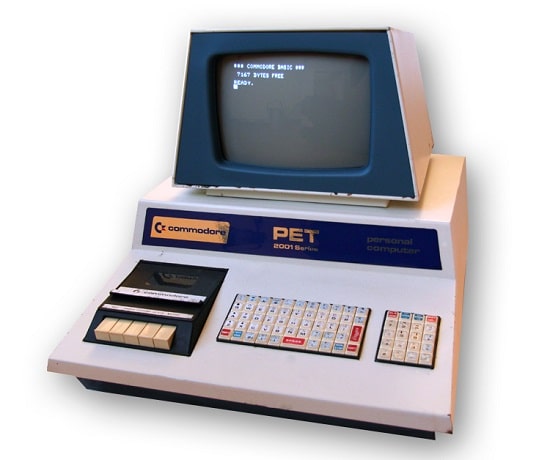
For those interested in running the code on original hardware, the release supports target configurations for systems that used the MOS 6502 processor, including the Commodore 64, which remains widely available through retro computing markets and preservation groups. Emulators provide a accessible alternative for users without access to physical machines, allowing immediate experimentation with the interpreter in a modern computing environment.
Microsoft has not announced any additional releases of historical source code beyond this 6502 BASIC publication as of September 2025. The company continues to engage with the developer community through its open-source initiatives, including contributions to projects like GitHub Copilot and various AI-assisted development tools, while maintaining its commitment to sharing historical artifacts that shaped the personal computing revolution.
As interest in computing history grows, particularly among new generations of programmers curious about the roots of modern software, accessible resources like this BASIC release serve as valuable touchstones. They illustrate how early innovations in language design, memory management, and hardware abstraction laid the groundwork for the sophisticated development environments used today.
Those wishing to explore the code, contribute to related projects, or share insights about its historical role can do so through the GitHub repository’s issue tracker and discussion forums. Microsoft encourages feedback and collaboration from the public as part of its ongoing effort to honor and preserve the legacy of its earliest technological contributions.