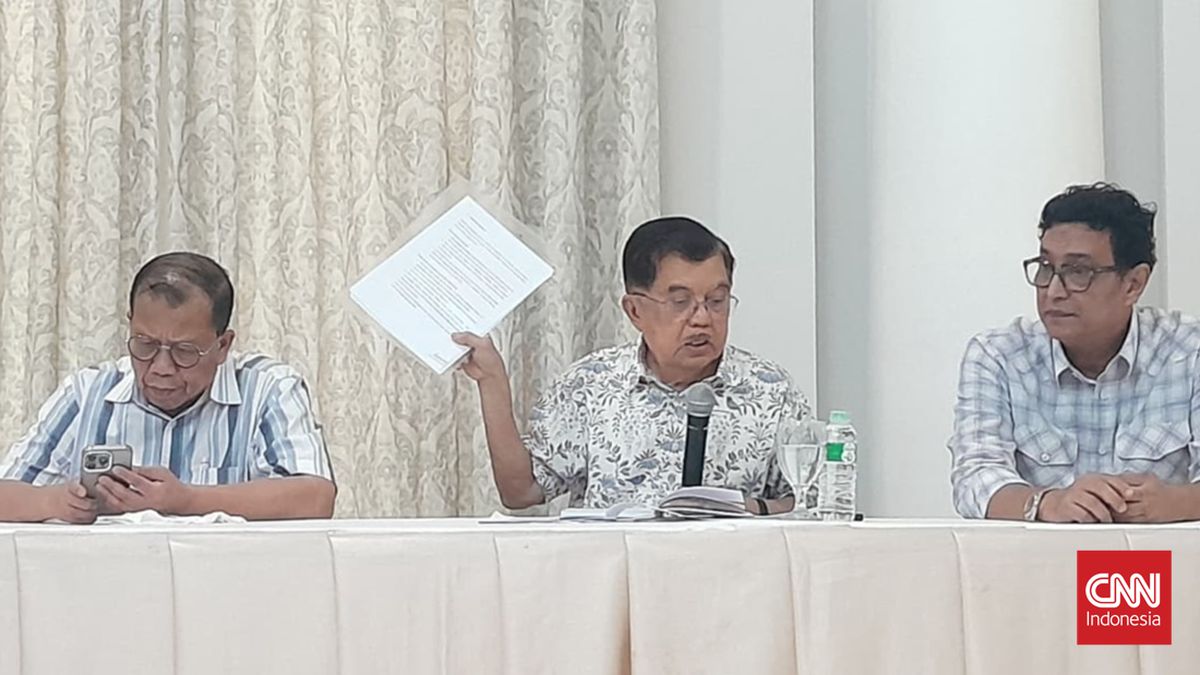
Former Indonesian Vice President Jusuf Kalla has spoken publicly following a police report filed against him over allegations of religious insult stemming from a lecture he delivered at Universitas Gadjah Mada (UGM) in Yogyakarta. The former vice president, who served two non-consecutive terms from 2004 to 2009 and 2014 to 2019, addressed the media in Jakarta on Saturday, April 18, 2026, to clarify the context of his remarks and deny any intent to disparage any religion.
JK, as he is widely known, emphasized that his UGM lecture focused on peacebuilding and conflict resolution, particularly referencing past communal violence in Poso and Ambon. He stated that his discussion of religion-related conflicts was limited to one or two minutes within a broader talk on peace, and that he did not engage with religious doctrine. “I did not talk about religious dogma. I talked about conflict incidents, how people use religion to wage war,” he said, according to verified reports from his press conference.
The former vice president noted that in both the Poso and Ambon conflicts, which resulted in approximately 7,000 deaths over three years, some actors justified violence through religious interpretations. He maintained that neither Islam nor Christianity permits such violence, describing the conflicts as deviations from authentic religious teachings. “There is no religious teaching that permits killing each other,” JK asserted, adding that the violence represented a distortion of faith.
He further explained that the controversial segment of his lecture had been taken out of context, with only a minor portion circulated publicly. JK urged the public to consider the full message of his talk, which aimed to promote reconciliation rather than division. His remarks came after he was formally named a suspect in a police investigation initiated following a report alleging blasphemy.
The case has drawn attention to Indonesia’s blasphemy laws, which have been criticized by human rights groups for being used to suppress dissent and religious minorities. Under the country’s Criminal Code, articles related to blasphemy can carry penalties of up to five years in prison. Even as the police have confirmed the investigation is ongoing, no formal charges have been filed against JK as of the date of his statement.
Supporters of the former vice president have rallied online, with some calling for the dismissal of the case on grounds of free expression and historical accuracy. Others have cautioned against politicizing religious sensitivities in a pluralistic society like Indonesia, where official recognition is given to six religions: Islam, Protestantism, Catholicism, Hinduism, Buddhism, and Confucianism.
JK reiterated his commitment to national unity and interfaith harmony, referencing his long-standing role in facilitating peace dialogues during and after his vice presidency. He pointed to his involvement in the Malino II Accord of 2001, which helped finish violence in Poso, and subsequent reconciliation efforts in Ambon as evidence of his consistent stance on peace.
As of now, the police investigation remains active, with no public indication of when it might conclude or whether prosecutors will proceed with charges. Legal experts note that the burden of proof in blasphemy cases often hinges on demonstrating intent to insult, which can be subjective and demanding to establish.
The incident underscores ongoing tensions in Indonesia between freedom of expression and legal protections against perceived religious offense. Observers suggest the outcome could influence how public figures discuss historical conflict and religion in academic and civic settings.
For updates on the case, the public is advised to monitor official statements from the Jakarta Metropolitan Police or the Attorney General’s Office. World Today Journal will continue to follow developments as they unfold.
We invite readers to share thoughtful comments below and help spread awareness of this important discussion on speech, faith, and reconciliation in Indonesia.
Keep reading